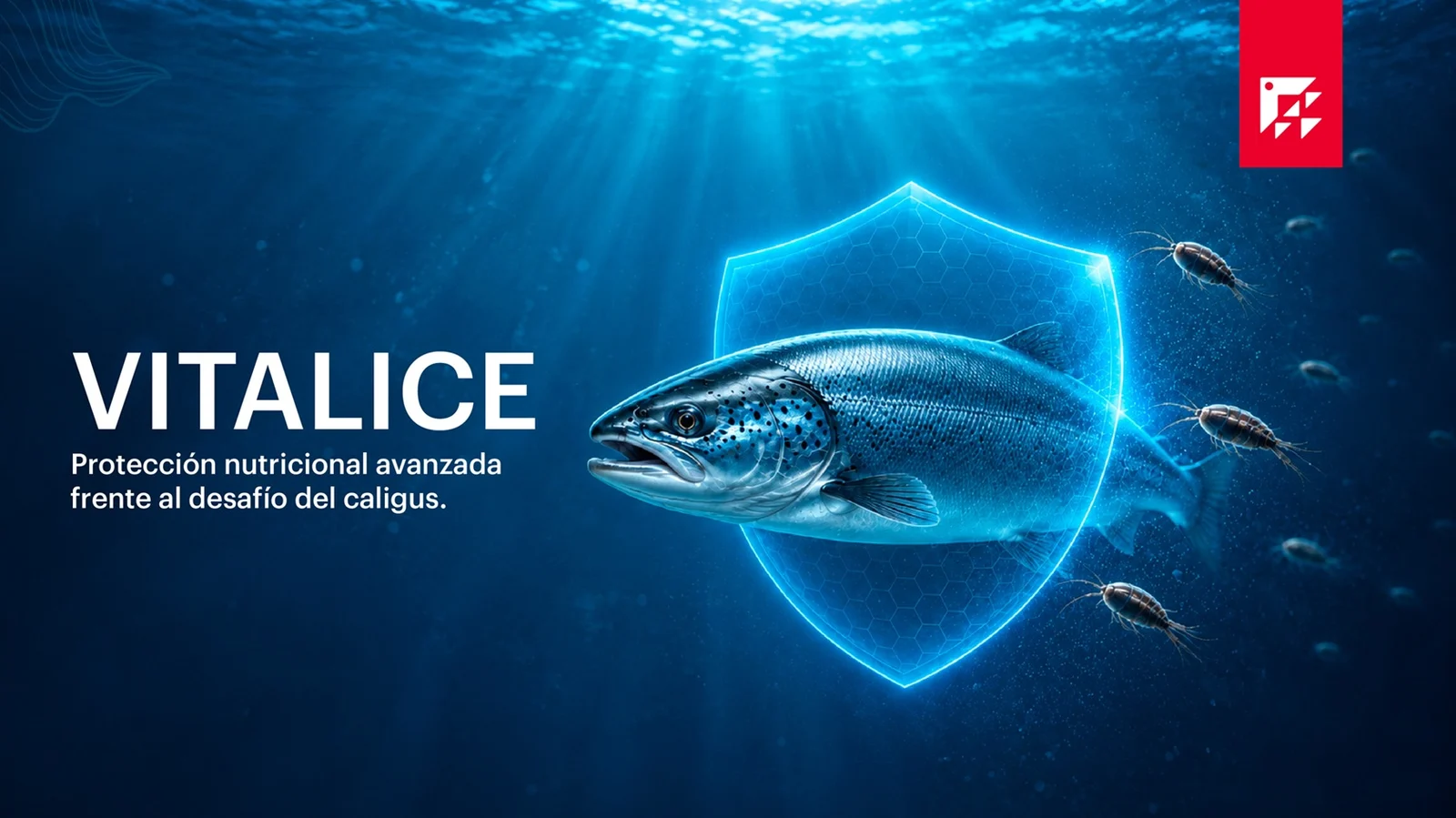
The company developed and validated the formulation at its Aquaculture Experimental Center (CEA). The trials showed outstanding performance: it reduced by more than 60% the number of ovigerous females of Caligus rogercresseyi per fish and maintained its effectiveness for more than 30 days after the last intake.
Salmofood, brand of Vitapro Chile presented Vitalice, a natural nutritional solution that is incorporated into the feed as a complementary tool in integrated management programs Caligus rogercresseyi in salmonids, achieving a reduction in parasite load and their reproductive capacity. The launch took place at the Aquaculture Solutions Meeting (ESA Magallanes), on Tuesday 20 October, in Punta Arenas.
Vitalice was presented by Rodrigo Sánchez, Research and Development Manager of Vitapro Chile, in the technical talk Nutrition as a health tool. There he presented the results of two studies developed and scientifically validated at the company's Aquaculture Experimental Center (CEA), where natural nutritional formulations were evaluated as non-pharmacological strategies for the control of Caligus rogercresseyi in Atlantic salmon.
The executive recalled that the Vitapro Aquaculture Experimental Center (CEA) has nearly a decade of applied research and has become a reference in innovative, sustainable and evidence-based nutritional solutions for Chilean salmon farming. Its bioassays in nutrition, health and nutrigenomics, carried out under controlled conditions before commercialization, allow the development and validation of products, Evaluate the sustainable replacement of raw materials and study the quality of the final product and the health of the fish. This work is carried out in collaboration with national and international institutions, among others Nofima, NIFES, Matís, INCAR and various universities in the country.
An non-pharmaceutical alternative
In his presentation the expert highlighted that the Caligus rogercresseyi it is the ectoparasite with the greatest health impact in the industry, as it affects the welfare and immunity of the fish, as well as the productivity of the marine farming centres. Its control has traditionally been based on the use of oral antiparasitic agents or baths, treatments that require fasting periods, stress the fish through handling and generate resistance in the parasite, conditions that also have an economic impact. significant in the production process.
In this context, the supplementation of the diet with natural bioactive compounds emerges as a complementary strategy of increasing scientific interest, aimed at strengthening the fish's immunity and reducing its parasitic load.
"We have developed a formulation with natural origin compounds that act synergistically. On one hand, they modulate the fish's immune response, and on the other, they interfere with the parasite's development, as they affect its arrival at the adult stage and achieve a significant reduction in gravid females. Thus we obtain a more resilient fish with a stronger mucosal barrier against infestation," explained Sánchez.
60% fewer gravid females
The tests were carried out using an infestation challenge methodology designed, validated and standardized by the CEA. Atlantic salmon were exposed to a controlled infestation with copepodites of Caligus rogercresseyi and monitored until the parasite reached the adult stage. The different diets developed by the company were compared with a control group without supplementation and with a conventional pharmacological treatment at therapeutic dose.
"We carried out two trials where on average we supplemented the fish for 45 days. Consistently, Vitalice showed notable performance, reducing by more than 60% the average number of ovigerous females per fish. This is a key indicator, as it reduces the pressure of reinfestation in the farming center," he highlighted.
Added that, in a second test, the product showed a protection response of more than 30 days after the last intake, a finding that supports the potential of Vitalice as a complementary tool in the integrated management of Caligidosis. "To the reduction of gravid females is added an important operational advantage: it is administered orally, without fasting periods, does not cause the stress of bath treatments and maintains its Effectiveness even after the last intake. We consider it to be a high value-added alternative for national salmon farming, which contributes to reducing the use of anti-parasitics, strengthens animal welfare, improves productive indicators and allows us to move towards sustainable production certifications," said the expert.
Why Magallanes?
Rodrigo Sánchez indicated that the company decided to launch Vitalice in Magallanes as a way of reaffirming its commitment to the region, which has become one of the most promising poles of salmon farming in Chile. "Magallanes offers favorable conditions for cultivation, but also faces environmental, sanitary, logistical and connectivity challenges that require nutritional solutions adapted to the reality of each" center. That is why we decided to present here our new development and show that behind each Salmofood food there is science applied in the service of the health and well-being of the fish.”
He explained that for decades Magallanes was the frontier of caligidosis: the low temperatures and the more recent development of the productive activity kept the parasitic loads very much below those recorded in Los Lagos and Aysén. However, climate change, sea temperature records and the developing El Niño phenomenon have created environmental conditions that favor the establishment of Caligus in the region and pose a new challenge for the local aquaculture activity.
According to data from Sernapesca, in 2024 eight Salmon Cultivation Concession Groups (ACS) reported the presence of the parasite, with a regional maximum of 0.10 gravid females (HO) per fish. In 2025, ten ACS reported it and the maximum increased to 0.30 HO. At the same time, the highest weekly prevalence of centers with loads of 3 HO or more dropped from 5.56% to 2.60%. "This means that there is no general increase in loads, but the parasite has spread to more areas." and has become a permanent health challenge in the region. Changes in susceptibility to traditional antiparasitics are also observed. That is why this low-load stage is the window to anticipate: the time to prevent is now," he emphasized.
This is Magallanes
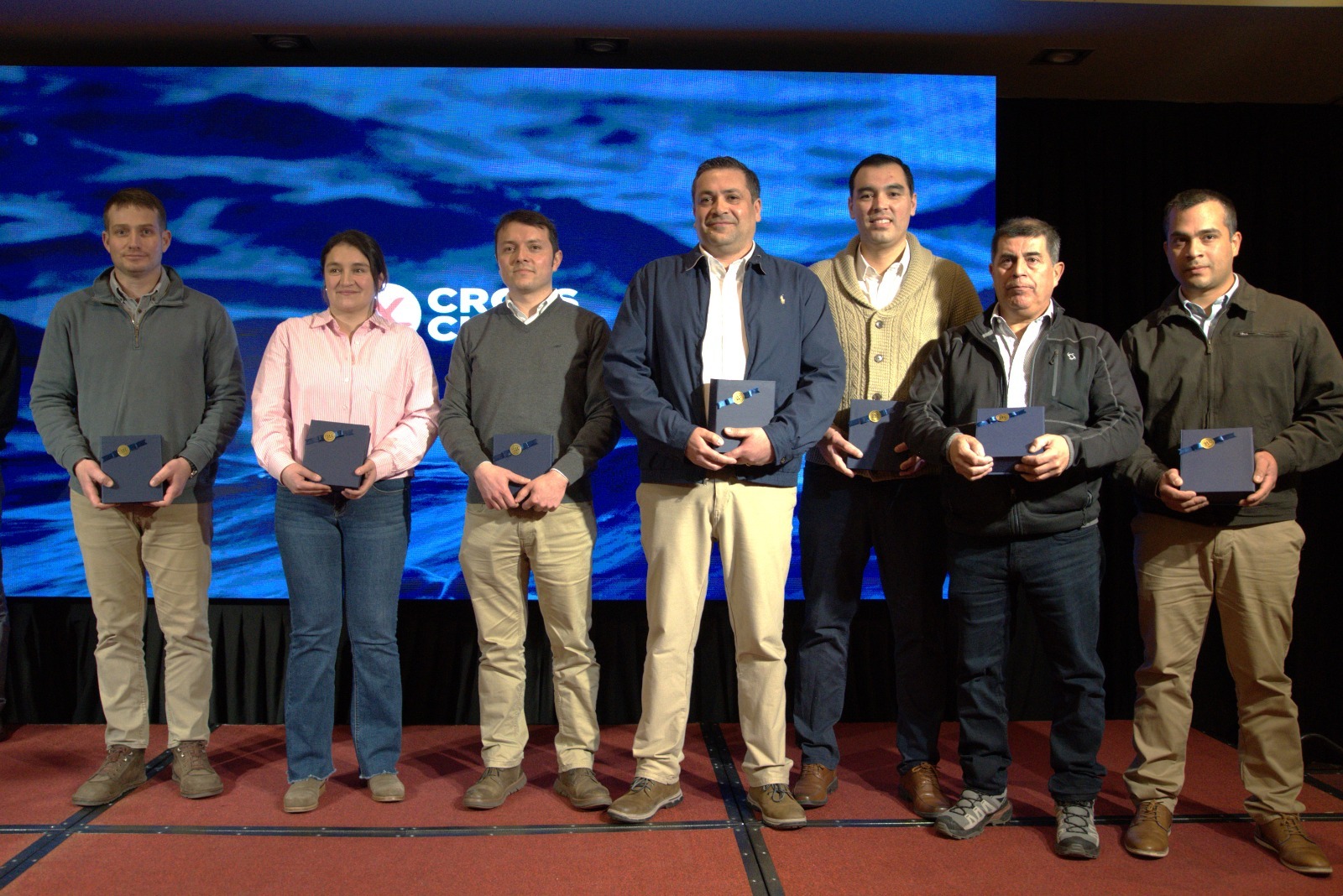
The second edition of the Aquaculture Solutions Meeting brought together nearly 700 participants, including salmon farming companies, suppliers, entrepreneurs, students, authorities and other actors linked to the industry.
The event sought to bring regional suppliers closer to salmon farming companies operating in Magallanes, through spaces of networking and meetings directed in which companies presented their products, services and innovations and learned first-hand about the needs of the sector. In addition, a seminar was held that addressed the regulatory challenges of the industry and topics such as energy alternatives, technological solutions, nutritional tools and sustainability.