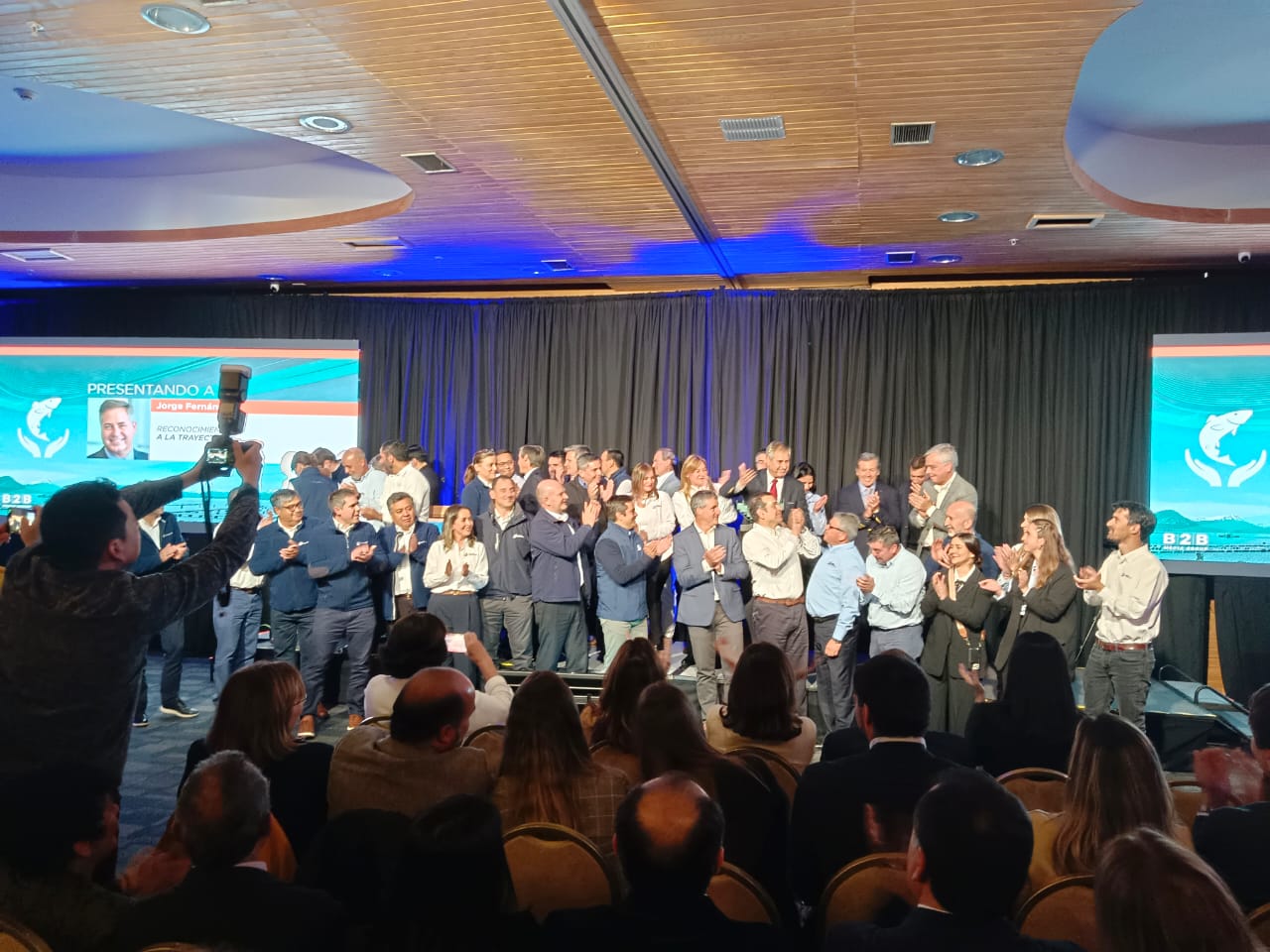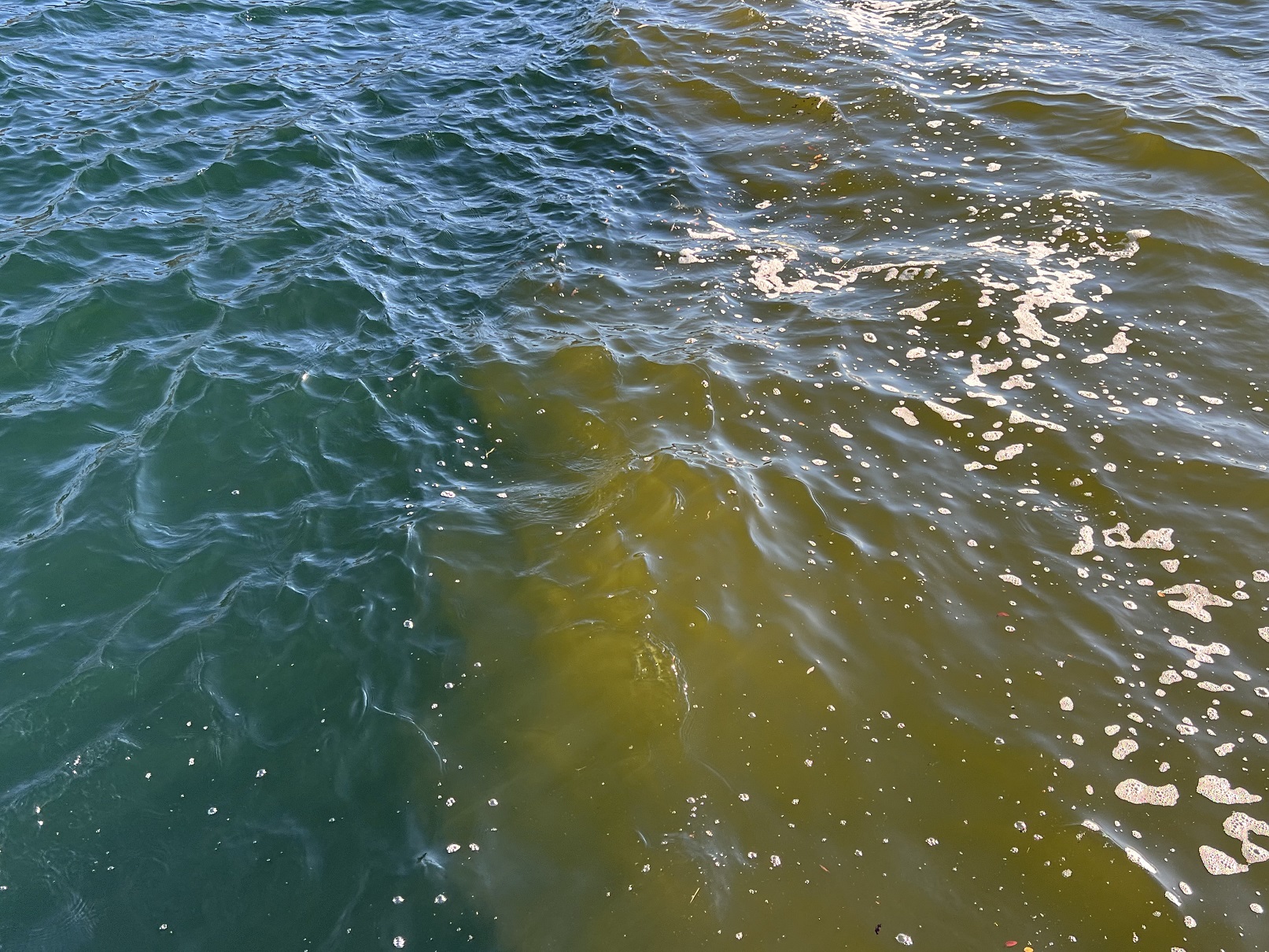
At a time in history when the seas and oceans of southern Chile live in periodic harmful algal blooms (FAN), representatives of public and private organizations gathered to share experiences at the Seminar Analysis and Learning Season FAN 2023-2024, organized by the Salmon Technology Institute (INTESAL) in Puerto Varas.
In this context, doctors Patricio Díaz and Daniel Varela, researchers from the Center i~mar of the Los Lagos University, participated the module dedicated to science and surveillance, which addressed the knowledge acquired in the last event of Heterosigma akashiwo in the Hornopirén area, through oceanographic cruises. Experience that took place in April, with the aim of characterizing the phenomenon and its scopes, using drone technology that flew over the area to conduct monitoring based on hyperspectral images.
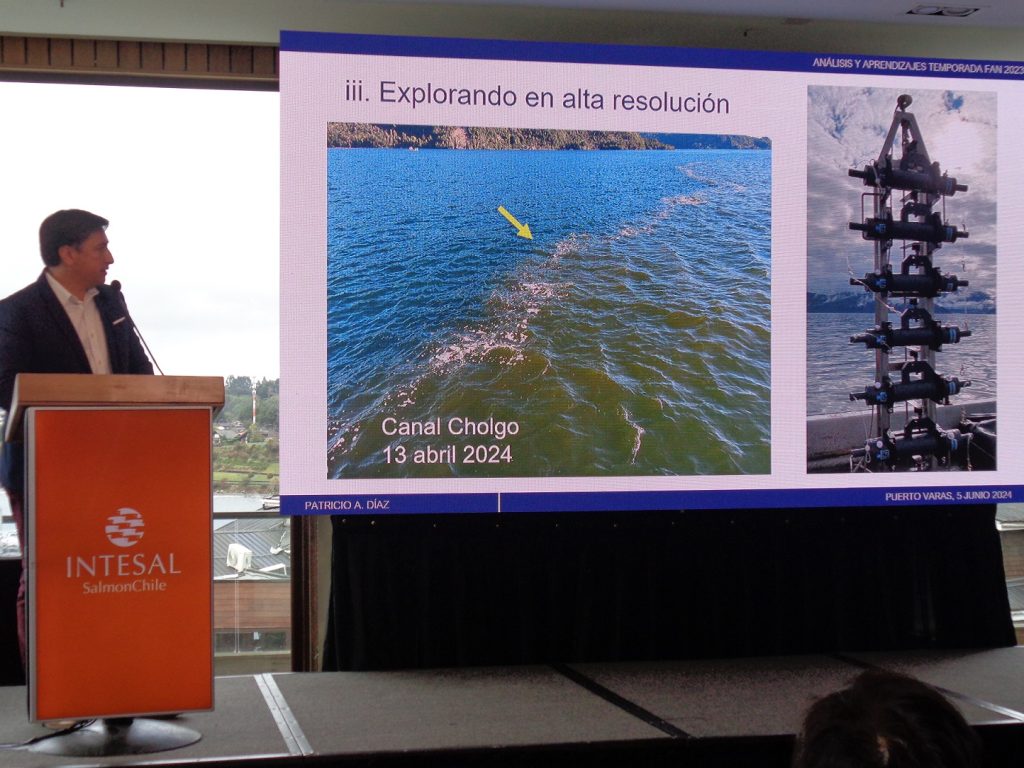
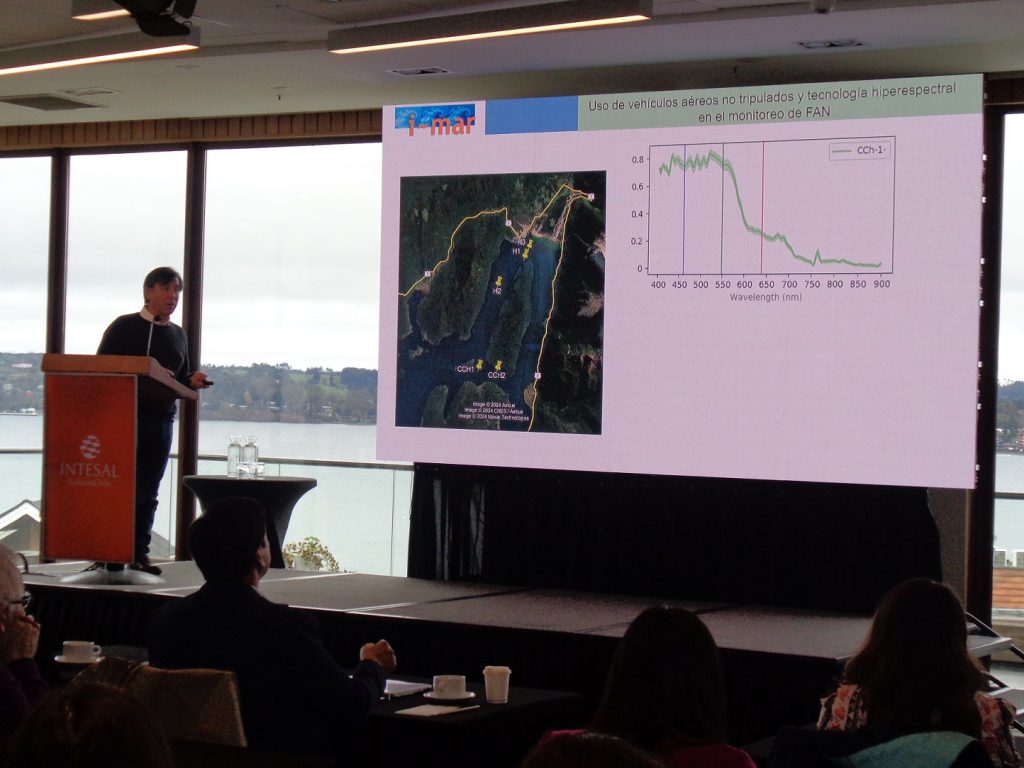
Esteban Ramírez, general manager of the Salmón Technological Institute (INTESAL), appreciated the presence of both researchers. “Intestesal has a joint role and in this regard, we highly appreciate that these activities have been joined by representatives of the i~mar Center, with whom we maintain a bond that has led us to collaborate in some projects. It's good that they can come and show what they're doing, because with that we are generating not only collaboration, but also antennas for example, with the drone project that could be a concrete monitoring tool in the future,” said the representative of INTESAL.
The general manager of INTESAL added that with these types of projects that integrate new technologies, companies emerge as potential clients of these services and authorities, as observers of innovative strategies that could be incorporated into the regulation. “This way we have a public-private partnership that promotes a articulation that allows the emergence of new solutions for the industry. In this sense we value that the researchers of i~mar are here and that also shows that we are in a new stage of collaboration. It cannot be denied that a few years ago there was some suspicion between industry and universities, but as INTESAL we have worked a lot in recent years, by creating trust. In fact, we work on a science plan with different academic institutions, collaborate on projects of the i~mar Center and even support the Congreso de Ciencias del Mar in 2023,” Esteban Ramírez emphasized.
Dr. Patricio Díaz agreed on the importance of public-private cooperation in addressing the increasingly recurring FAN events in southern Chile. “Collaboration allows us to better understand the flowerings. That is why this seminar is important because it includes the vision of all actors, the Navy, the salmon industry, universities and technical bodies, who come together in a space to dialogue, show their vision and seek solutions,” said Dr. Díaz.