According to the projections of the National Oceanic and Atmospheric Administration (NOAA), the conditions associated with the El Niño phenomenon will continue to strengthen until the end of the year. During the October to December season there is a 75% probability of a historic event exceeding in intensity all existing measurements since 1950, with a scenario of over 90% that the event will reach a strong or very strong between October and February next year.
While this phenomenon on its own does not explain the occurrence of certain events, experience indicates that higher temperatures and luminosity are key elements for the development of microalgae blooms, if these happen to be harmful algae (HABs), no one can predict it. We also know that the reproductive cycle of the parasite Caligus is shortened, possibly increasing the number of cohorts available in a period for infestation. This double challenge raises preventive alerts in the salmon farming industry.
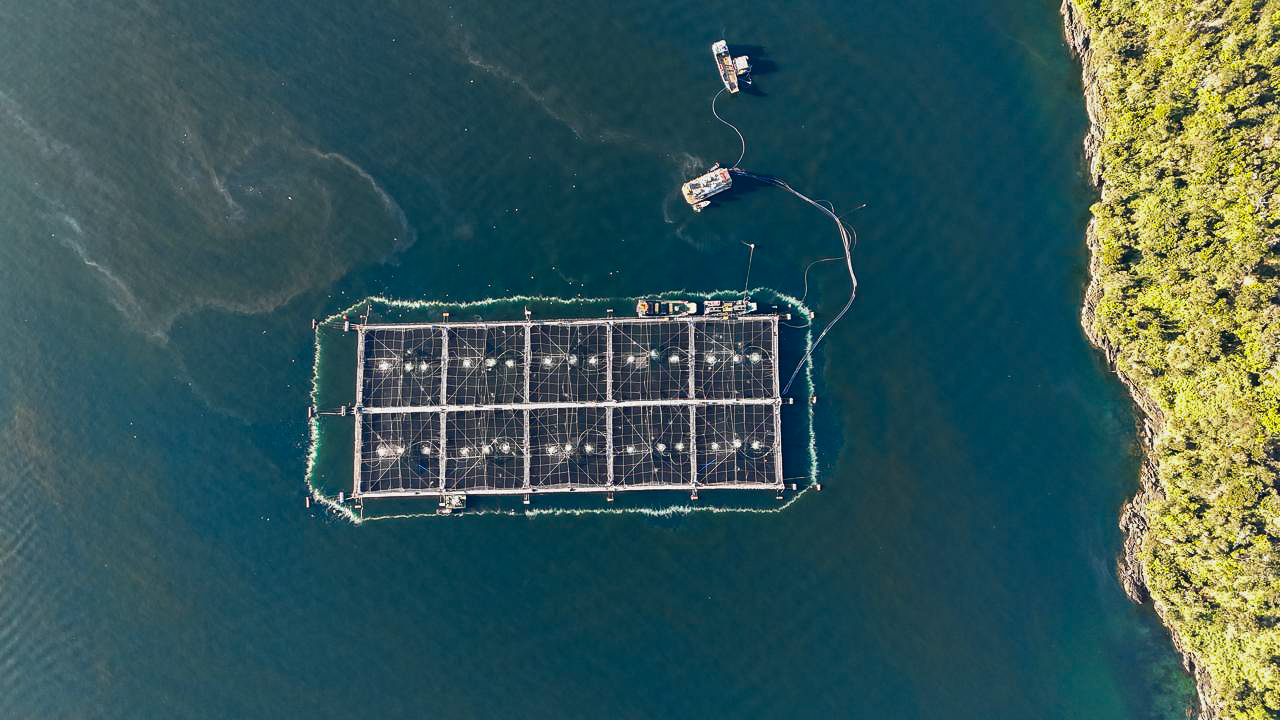
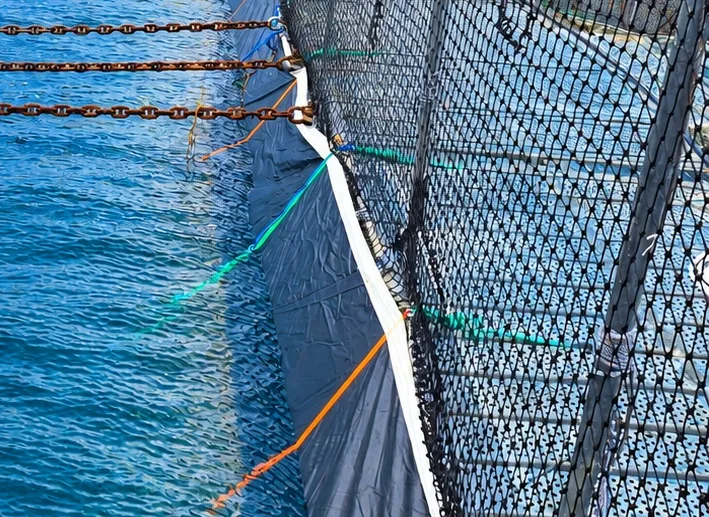
In the face of this potential scenario, Garware Technical Fibres highlights its Skirt X12 technology, which acts as a peripheral protective shield, within an integrated health strategy with technology adapted to the local reality; thanks to its three-dimensional fabric with micrometric openings.
Field validation and evolution to greater depth
Producers in the national industry, such as Mowi and Cermaq, are implementing this technology in production centers in the regions of Aysén and Chiloé. The data show that the correct use of the skirt allows reductions in parasitic load of up to 60%, reducing dependence on sanitary baths. "National producers start with some test cages and evaluate their performance against the rest of the module. Then comes a" second stage with a complete module at an average depth of 6 meters. After overcoming this phase, more experienced operators have recently lowered the skirt to 10 meters depth throughout the cycle," explains Marcos Jofré, Business Associate at Garware Technical Fibres Chile, who also emphasizes the economic convenience of the Skirt X12 "The cost of a skirt is comparable to that of a single treatment and offers a longer lifespan" approximately two production cycles"
Integrated operation and environment management.
From an international perspective, we note that the success of Skirt depends on the rigor in its management. "The experience in Canada and Norway confirms these results and shows that success depends both on the technology and its correct operation, including proper installation, cleaning and adaptation to the conditions of each farming center," says Gopakumar Menon, Vice President International Business of GTFL.
Thus, the effectiveness of the Skirt X12 is maximized when integrated with complementary environmental support systems within the center. Likewise, the mooring system must have sufficient clearance to support the demands generated by the skirt's traction.
Garware offers four versions of the skirt: "one designed for the porosity of Caligus larvae present in Chile; another adapted to the Norwegian parasite, a third focused on Bloom control and a fourth made with 100% recyclable materials. Overall, through the combination of textile engineering, innovation and good operational practices, Chilean salmon farming strengthens its resilience and sustainability to navigate" "front of the climatic challenges," concludes Francisco Serra, commercial manager of Garware Chile.