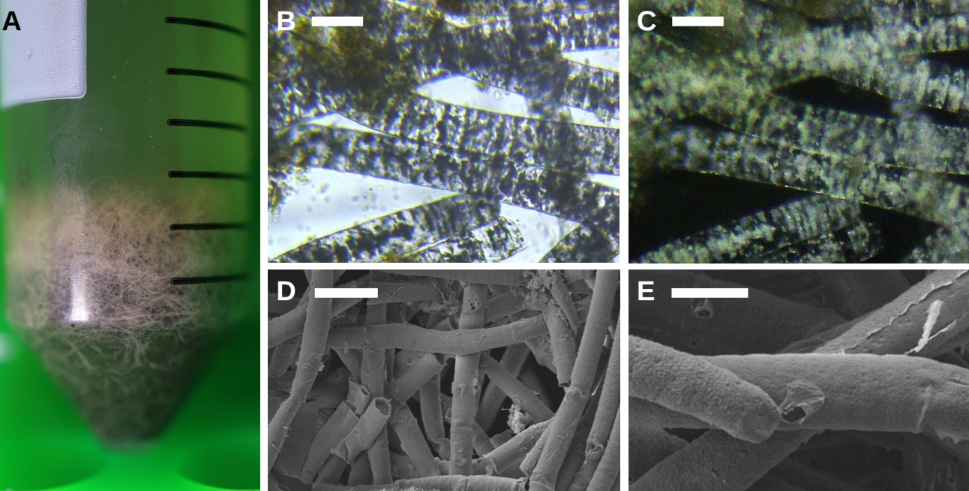
National scientists assess how marine bacteria present in the funds could be gradually classified for better environmental assessment in the culture centers.
What does the presence of bacteria on the seabed have to do with the sustainability of salmon farming? According to a recent Chilean study, absolutely everything. Up to now, the presence of whitish mantles (consisting of bacteria) on the seabed under salmon growing centres was automatically considered a sign of negative impact, forcing costly mitigation processes and even temporary closures. Operations. A new research developed by Chilean scientists reveals that this interpretation could be reconsidered, tilting the current regulatory process to a lineament based on science and with international standards.
The study shows that these white mantles, formed by bacteria or GSOB (gigantic sulfur oxidizing bacteria), are not necessarily indicators of environmental problems, but are a natural part of the marine ecosystem and may have different meanings depending on their context or gradual presence in the rocky bottoms. This revelation opens the door to a more accurate, less expensive and truly focused environmental assessment system effective protection of the environment.
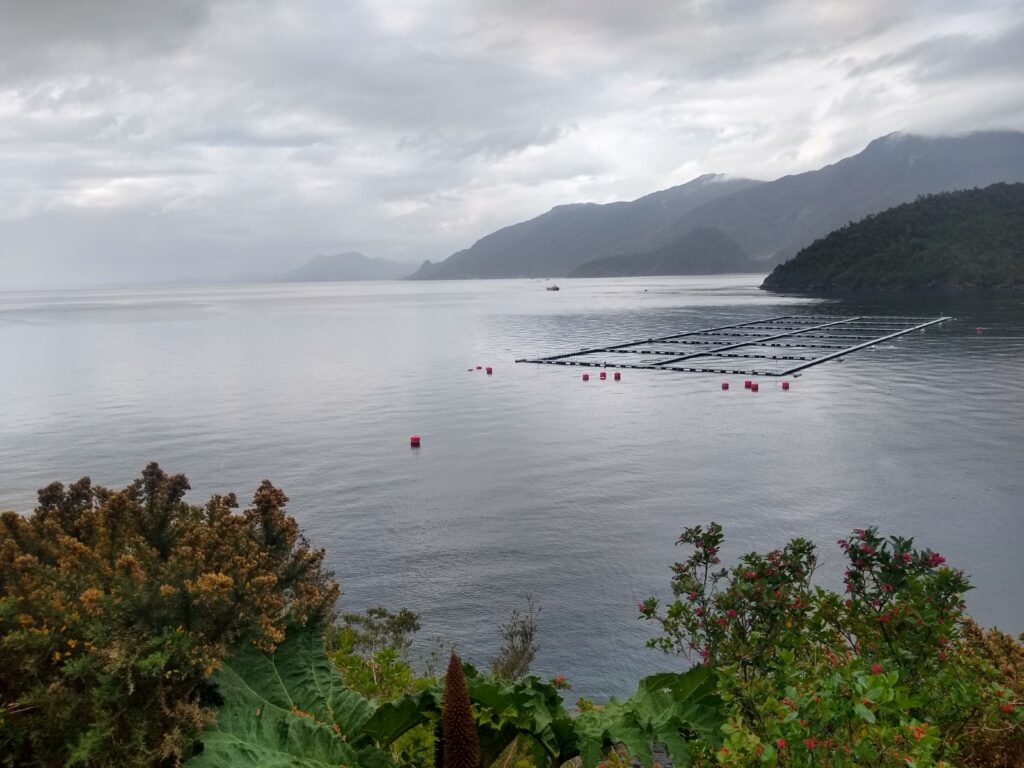
This investigation, led by Dr. Carlos Aranda of the University of Los Lagos and published in the prestigious magazine Marine Pollution Bulletin, evaluated bacterial changes in rocky backgrounds, with special attention to these bacterial coverages and their potential as visual indicators in the environmental assessment of the sector.
"So far, regulation simply considers that, if there are white bacteria, there are problems. What we have discovered is that reality is much more complex. These bacteria are sophisticatedly related to the entire marine ecosystem, and their simple presence does not necessarily indicate a negative impact," explains Dr. Carlos Aranda, researcher at the University of Los Lagos and principal author of the scientific article.
The paper suggests that the current binary criteria (presence/absence) used to classify environmental impact should evolve towards a more holistic approach, incorporating multiple factors such as: (i) the percentage coverage of these bacteria; (ii) the communities of other organisms present; and (iii) various physicochemical parameters of water and sediments.
Felipe Tucca, research coordinator at INTESAL, points out that "from INTESAL's Science Plan we seek to better understand the seabed. With new methodologies, and the use of bioindicators as visible sulfur oxidizing bacteria, we rethink the assessment of whitish mantles towards more ecological and science-based environmental management."
This progress represents a paradigm shift in how to assess the interaction between salmon farming and marine ecosystems. For salmon farming, it means the possibility of having more accurate and scientifically supported assessment methods, while for environmental authorities it offers more effective tools for decision-making based on scientific evidence.