The study carried out between the Catholic University of the Holy Conception and the Universidad Austral de Chile identified different species of parasites of the species introduced in continental waters in southern Chile.
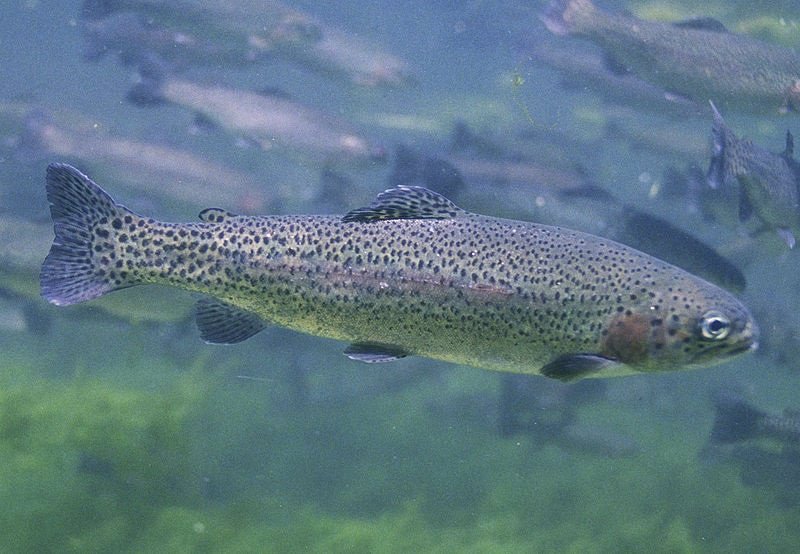
The arrival of invasive species causes changes in the environment, as is the case with Chinook salmon, which is already part of the ecosystem. Although its natural habitat is the northern hemisphere, it has been introduced and it is easy to find it both in Chile (from Rio Imperial, in the Araucania Region, to Patagonia), Argentina and even New Zealand.
Marcela Figueroa obtained her title as a marine biologist studying the “Spillback effect” of this species, under the direction of Dr. Sara M. Rodríguez as a guidance teacher, and Dr. James E. Byers from the University of Georgia, as a coguide. The student took samples that facilitated her from Caleta La Barra (Toltén) to conduct her study, which took place between the Universidad Católica de la Santísima Concepción (UCSC) and Universidad Austral de Chile.
The interaction that may exist between an invasive host and native parasites is referred to as the Spillback Effect or the Spill Effect. where the invasive species, in this case Chinook salmon, begins to be a suitable host for native parasites. Therefore, they manage to reproduce in the invader, which can negatively affect the native fauna, since the infectious burden of native parasites in the environment could be increased.
“We made a record of parasites in Chinook salmon. We wanted to investigate whether these parasites are described for Chinook salmon. This salmon was introduced as fry, so everything that can be found in it, regarding parasites have been acquired in Chile,” Figueroa explained.
Being an invasive species, it can feed on native species and thus disrupt the trophic chain. It is a predator that feeds on crustaceans and other fish, lives from 3 to 8 years in the ocean, despite being born in rivers. Chinook's fry migrate to the sea within two months of hatching into rivers, to feed and grow, and then migrate back to rivers and lakes to reproduce, where they eventually die.
Results
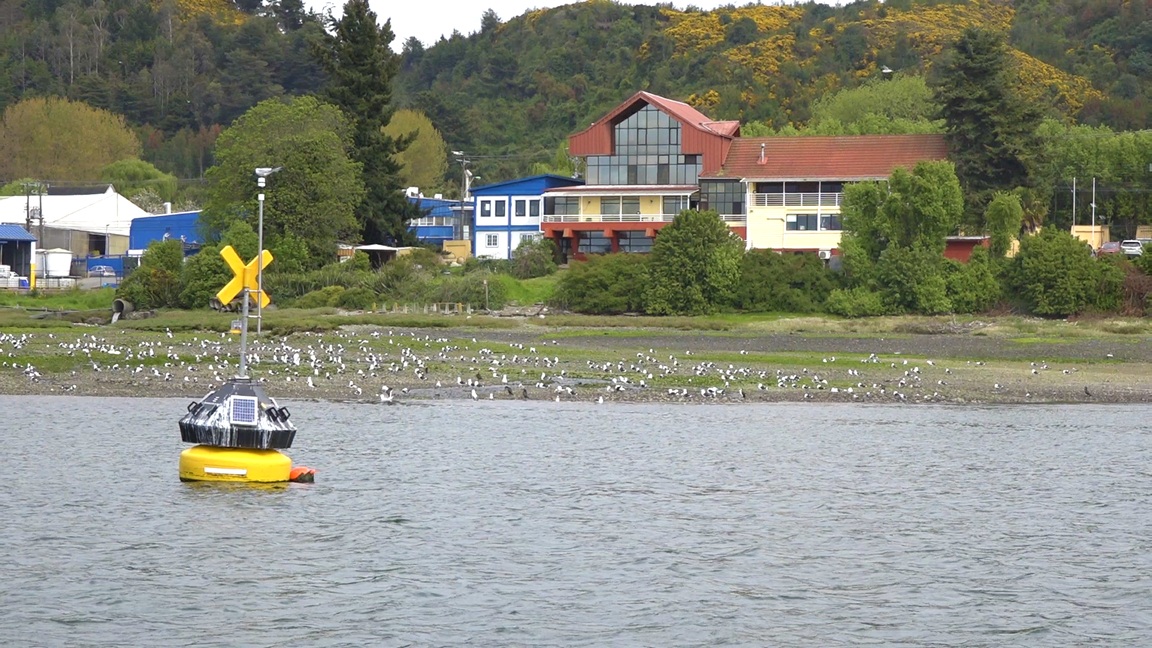
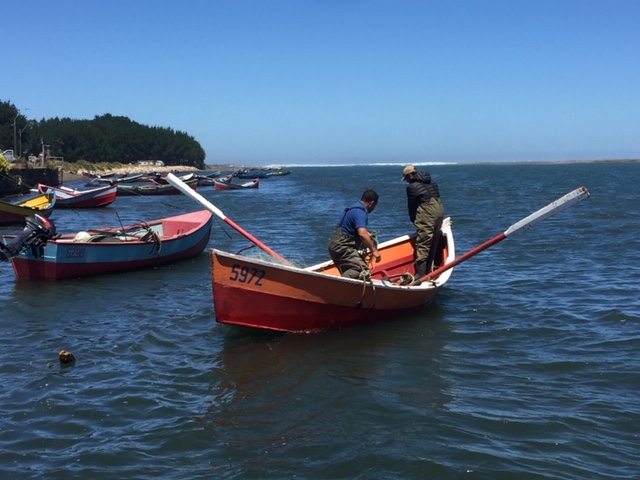
The student Figueroa took samples of Chinook salmon viscera in Caleta La Barra, thanks to the management of Braulio Silva, president of the Union of Fishermen of the area and Wladimir Muñoz.
At the opportunity, analyzed 124 samples and identified 12986 parasites, of which only 31 were adult parasites, corresponding to 24 nematodes of the genus Hysterothylacium, six digenes of the genus Lecithaster, and a specimen of the genus Lampirtrema. In salmon, all these genera have already been described in other countries, such as New Zealand, as well as being found as generalistic parasites in the fauna native to Chile.
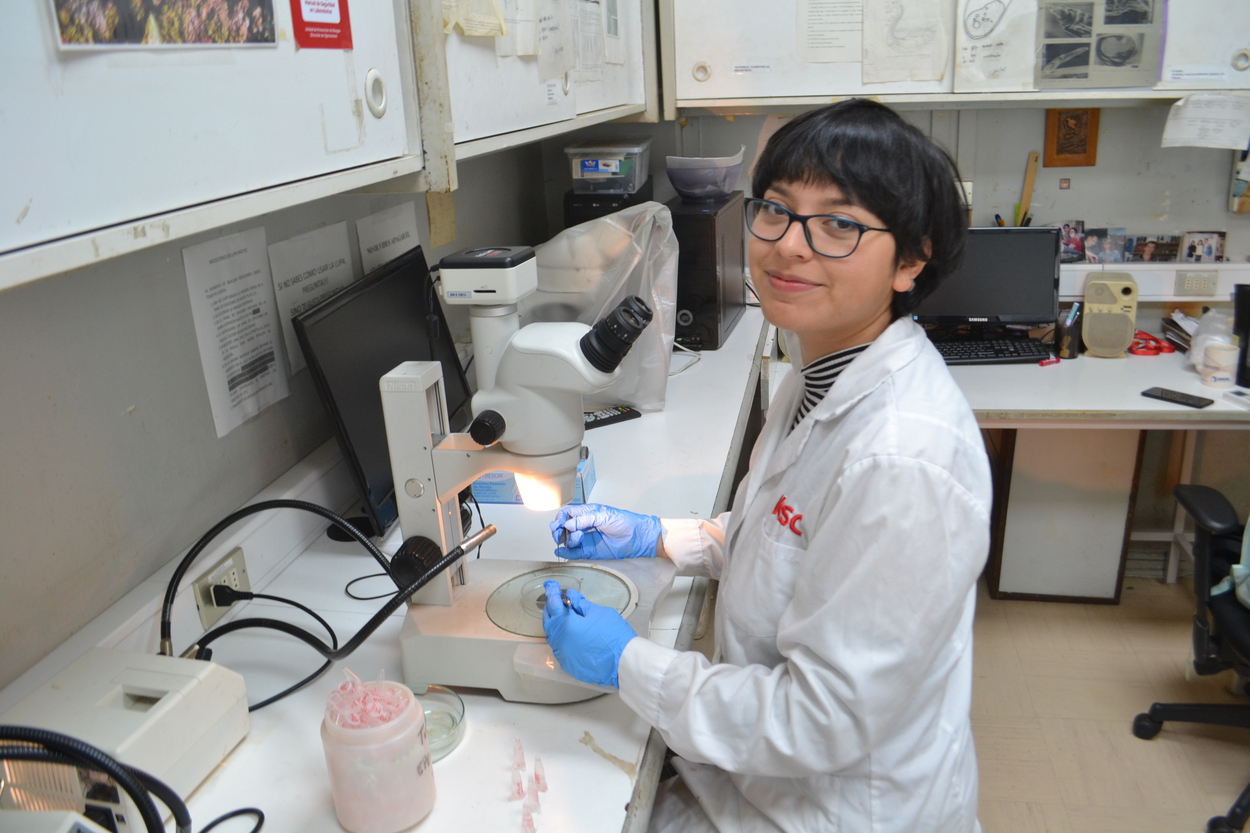
"We worked at the University with academics and we managed to identify five genera and two orders of parasites. Some characteristic features of parasites were observed as well as reproductive structures, which allowed classification between larva and adult,” said Figueroa.
For the Spillback Effect to occur, it must happen that parasites from a native habitat reproduce within the invader. This is not always the case, since, as an introduced species, parasites depend on the conditions presented by this new host potential.
Although, the presence of adult parasites indicates that salmon is a host where the genera Hysterothylacium, Lampirtrema and Lecithaster reproduce, more research is required to talk about some impact on native fauna. To do this, it is important to evaluate how suitable Chinook salmon is as host compared to native fauna.