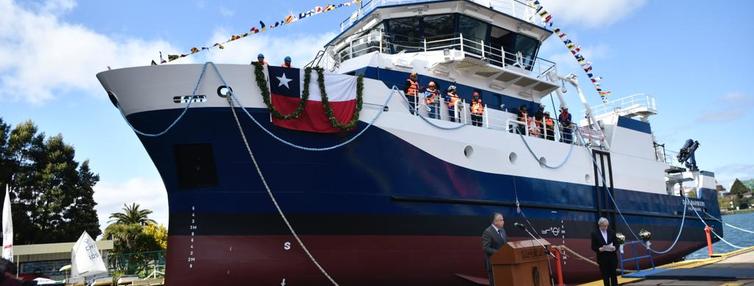
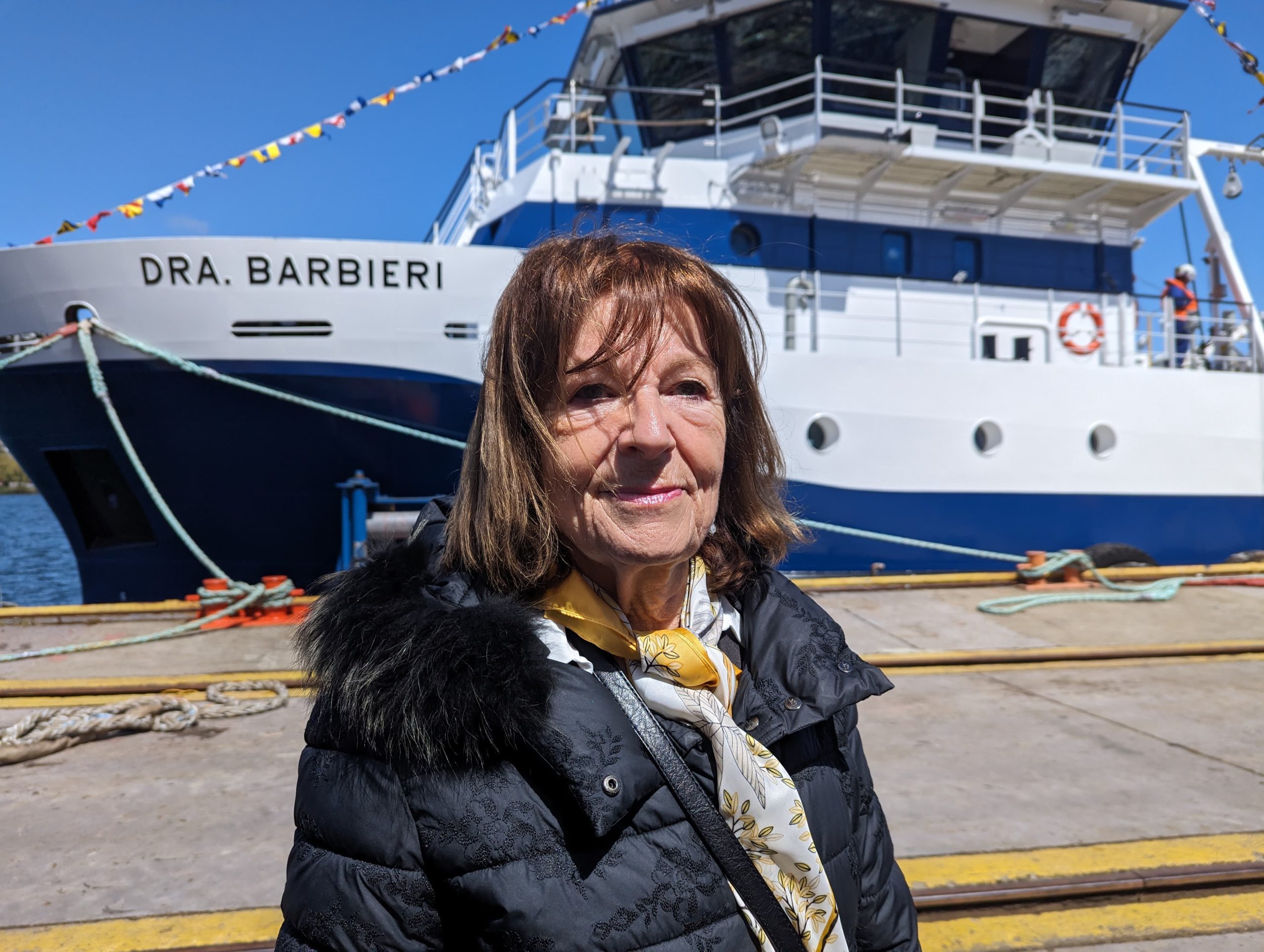
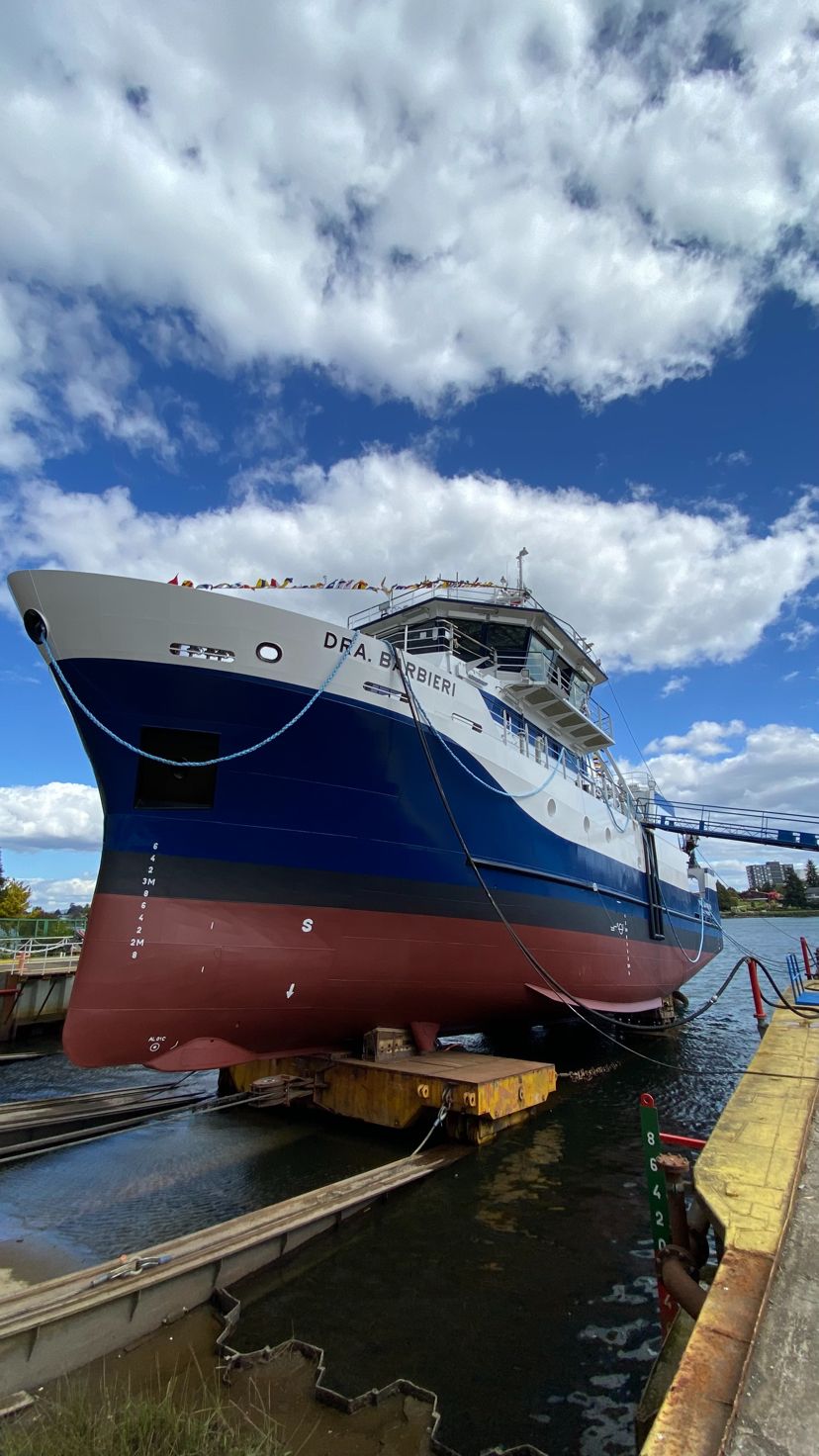
He was baptized as "Dr. Barbieri" in recognition of the research of the outstanding fishing engineer and doctor of Oceanography María Angela Barbieri Bellolio and all the women who, in very adverse circumstances, are engaged in the sciences of the sea.
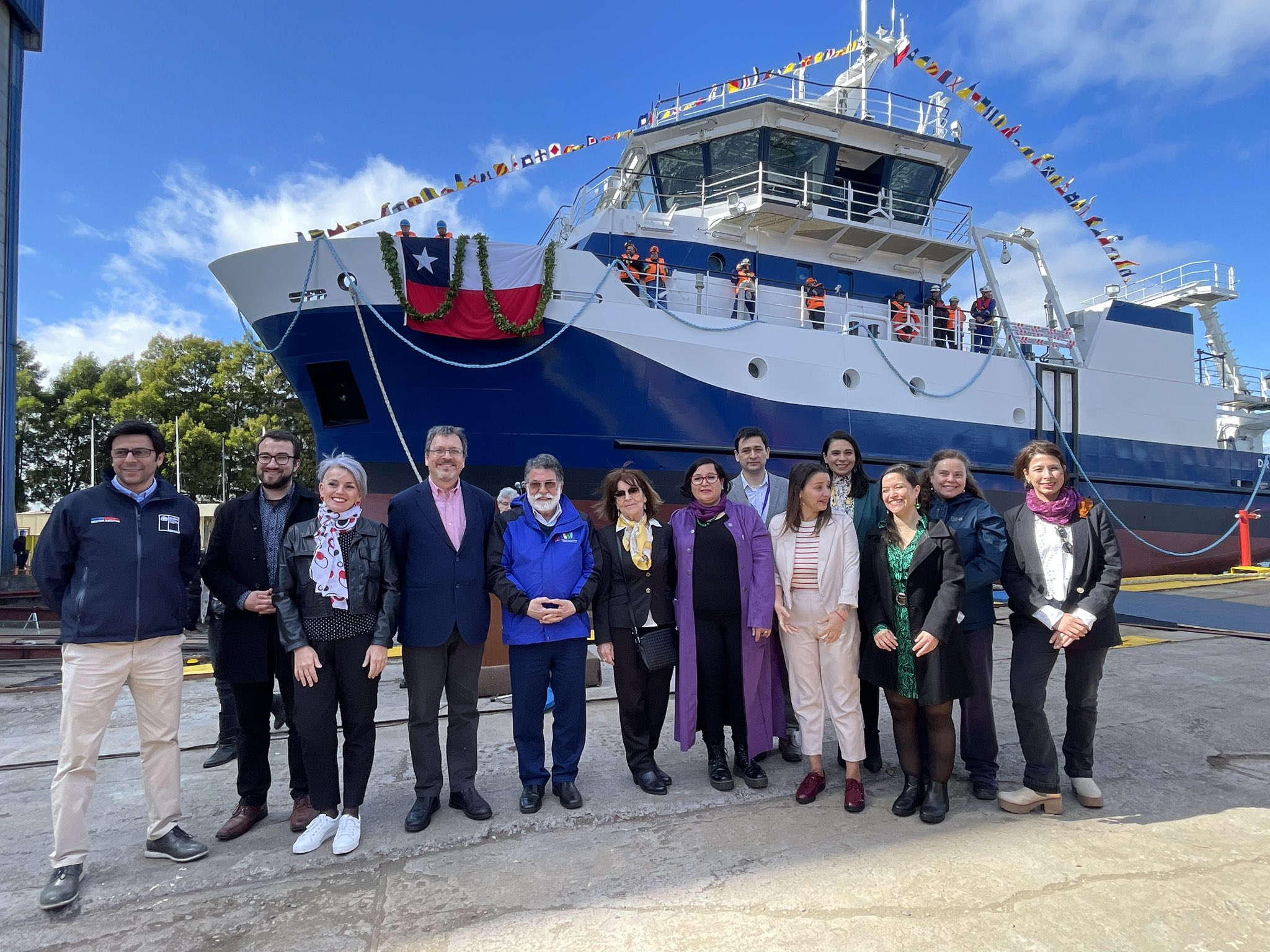
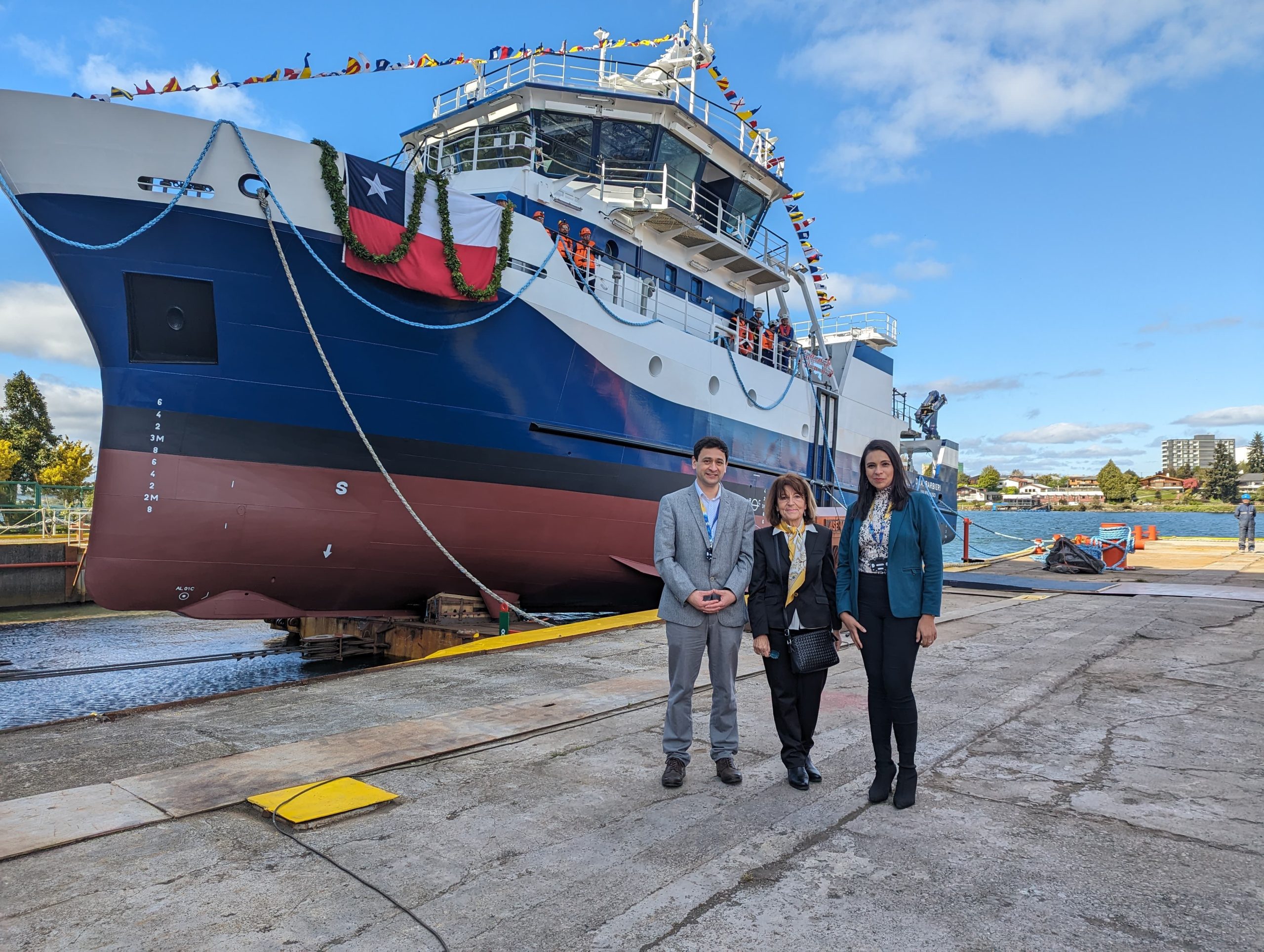
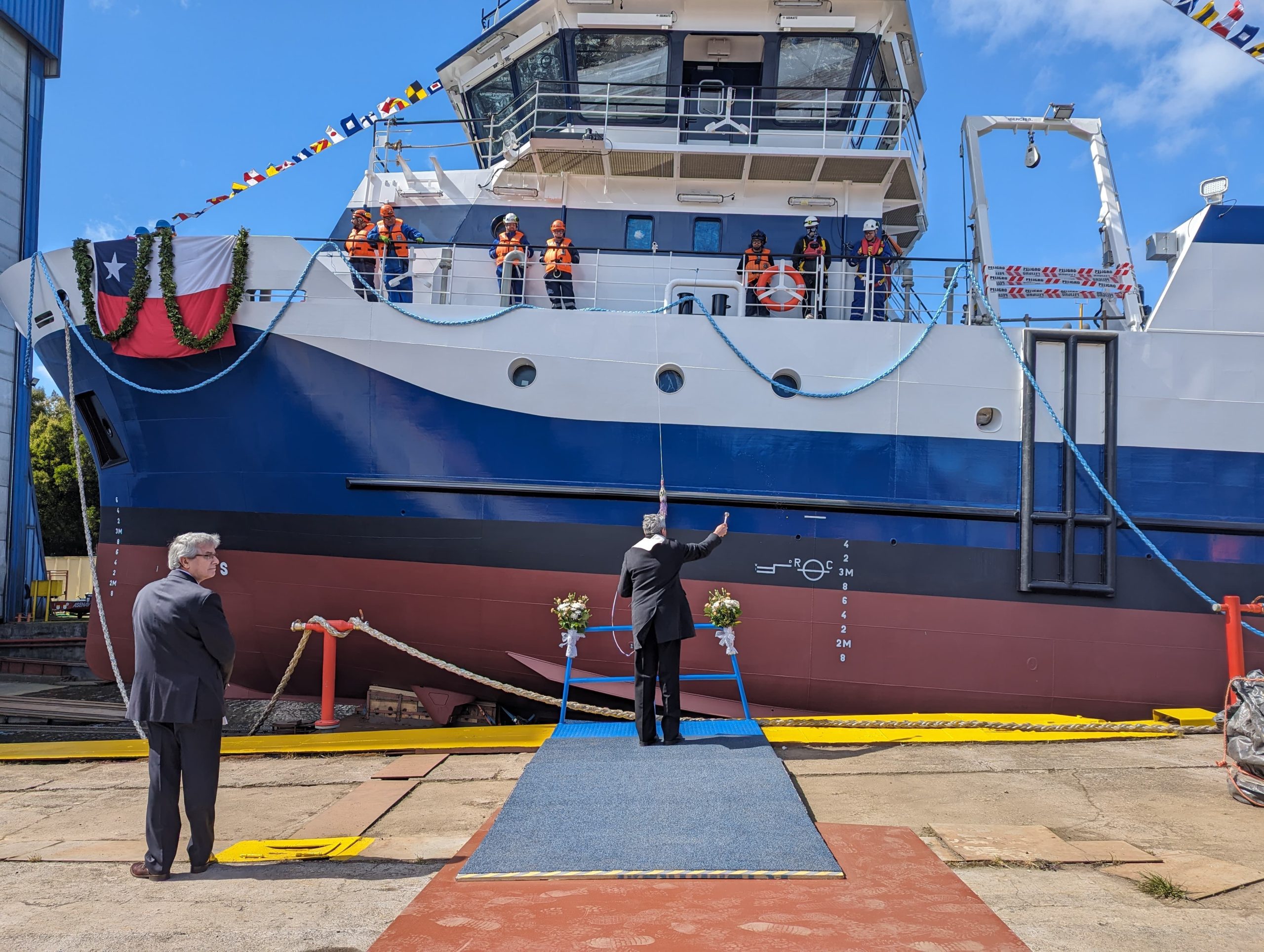
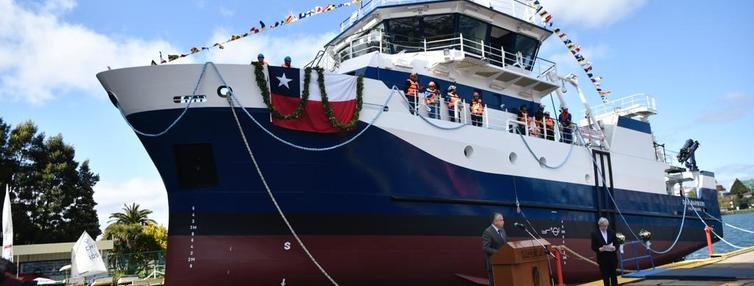
Breaking a bottle of foam. This was done in Valdivia, Los Ríos Region, the baptism and subsequent launch of the fishing and oceanographic research vessel "Dr. Barbieri", project funded by the Undersecretary for Fisheries and Aquaculture (Subfishing).
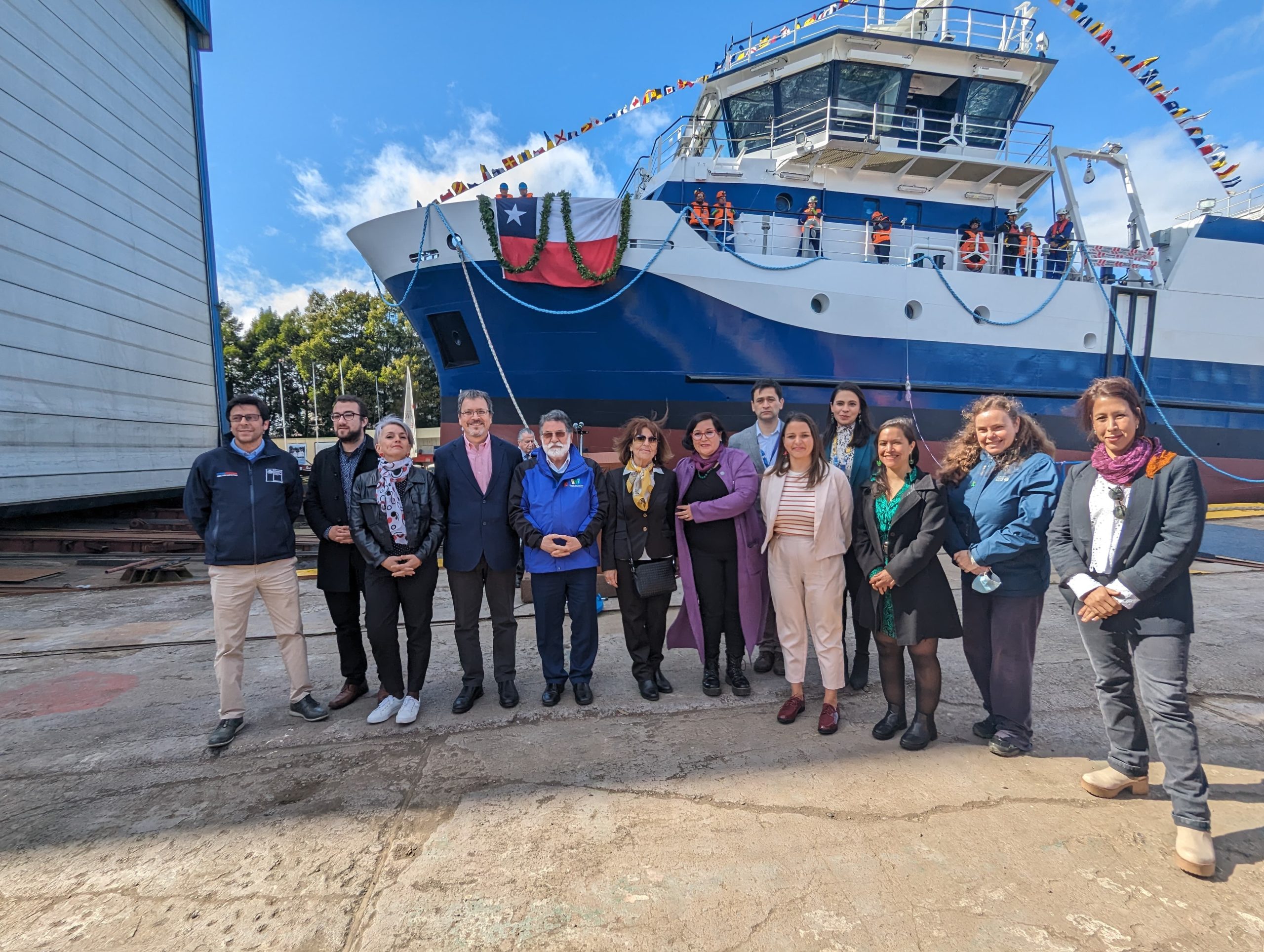
The ceremony took place at the Asenav shipyards, a company responsible for the construction of the ship, and was attended by the Undersecretary of Fisheries and Aquaculture, Julio Salas; the governor of Los Ríos, Luis Cuvertino; the regional presidential delegate, Carla Peña; the mayor of Valdivia, Carla Amtmann; congressmen, local authorities and the general manager of Asenav, Heinz Pearce, among others.
The ship, the first to carry out research in the coastal zone, rivers and canals of southern Chile, was baptized as "Dr. Barbieri" in recognition of the contribution to the research of the outstanding fishing engineer and doctor of Oceanography María Angela Barbieri Bellolio and all the women who, in very adverse circumstances, are engaged in the sciences of the sea.
Undersecretary Salas stressed that "with this ship we are giving a strong demonstration of the importance of research, sea science and fishing for this Government. We have allocated $14.5 million for the construction of this ship, which will allow many professionals to navigate the coasts of the country collecting and analyzing information for the benefit of different fisheries."
He added that, "while more research and better quality is carried out in Chile, better policies can be promoted for the development of fishing activity."
For his part, the general manager of Asenav, Heinz Pearce, highlighted the promotion to the work of design and local engineering that allows to continue positioning the country as one of the leaders in the field of shipbuilding.
"The 'Dr. Barbieri' is possible thanks to the work of an engineering team hundred percent Chilean that bears the seal of Asenav. From Valdivia we have been able to deliver first-level naval engineering solutions to boost oceanographic research across the Chilean coast, even in inland waters, from the Chacao Canal to the Gulf of Penas," commented the spokesman of the Valdivia shipyard.
"A great emotion and pride"
For Dr. Maria Angela Barbieri, that the coastal research vessel bears its name "is a great emotion and a pride, especially for my generation. It took us a long time to move forward, because the doors were locked. Little by little times have changed, locks have been opened and more and more women are joining the research. Somehow it compensates for quite large efforts that were made in a time."
He immediately added: "With this scientific and oceanographic research vessel we would like to compare ourselves with countries that are able to do high-level research and deliver results quickly and efficiently to society so that good decisions can be made and, as the Undersecretary of Fisheries and Aquaculture said, improve public policies. It's super important to have the resources to do research. The research is important because it allows us to make informed decisions."
Reduces noise and is sustainable
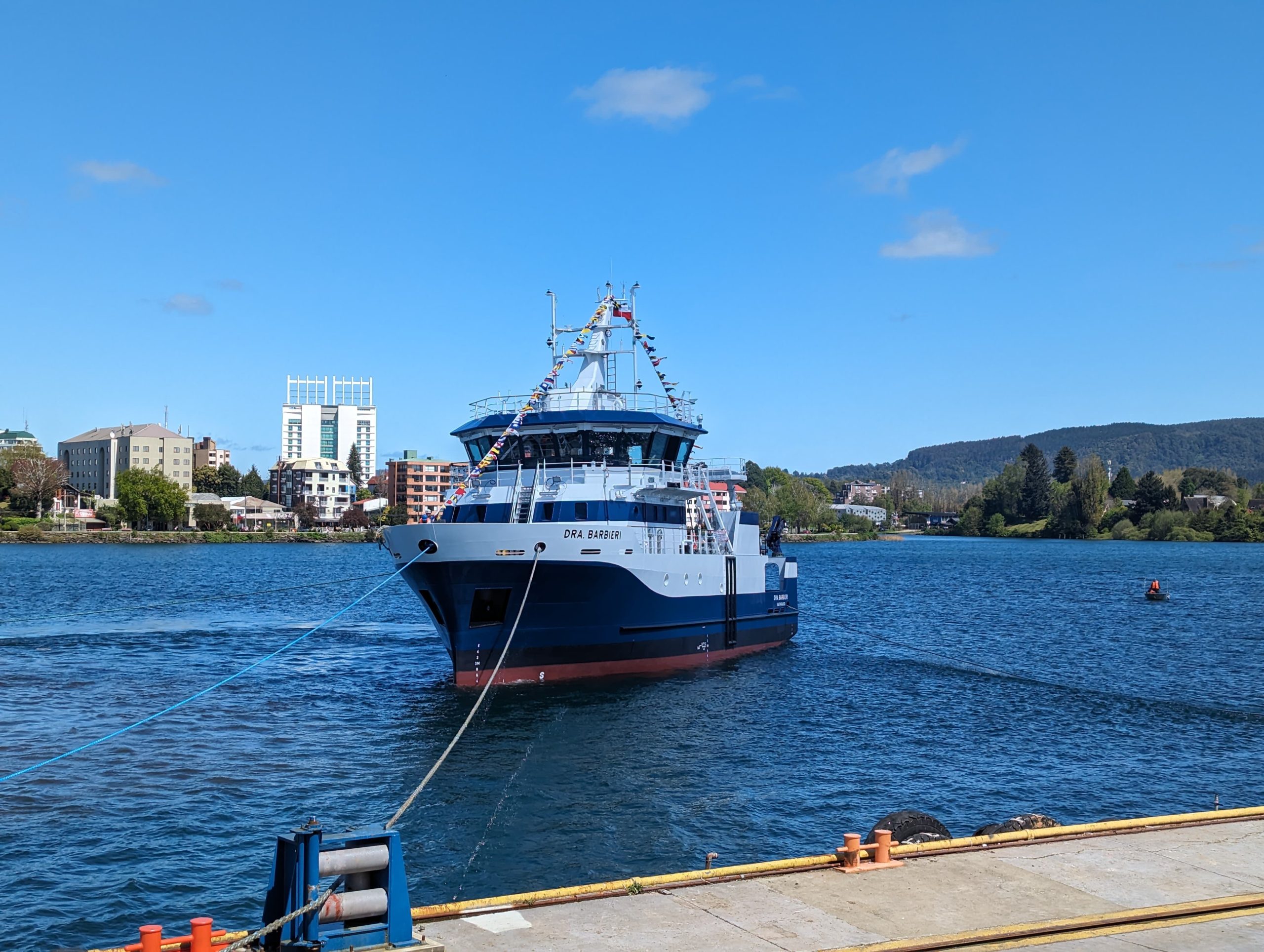
"Dr. Barbieri" reaches 30.8 meters long (slora), 9 meters wide (sleeve) and is up to 3.9 meters high (point). One of its main features is its 3 metre draught: this means that the part of the boat that is submerged has a very low level. Therefore, it becomes a boat with the ability to navigate in low-deep waters, along the entire national coast.
With a capacity to accommodate eight scientists and eleven crew members, Dr. Barbieri" has a system that reduces the noise irradiated into the water to avoid interfering with the marine habitat. In addition, since its propulsion system is diesel-electric, it generates fewer emissions, therefore, it is more environmentally friendly. On the other hand, its design makes it special to investigate fish, crustaceans, collect samples with Plankton networks, among others.
After the launch, the ship's interior terminations will be continued. Their delivery is scheduled for the first quarter of 2024, when they will be able to start their operation.
*Photos: courtesy of Subpesca.