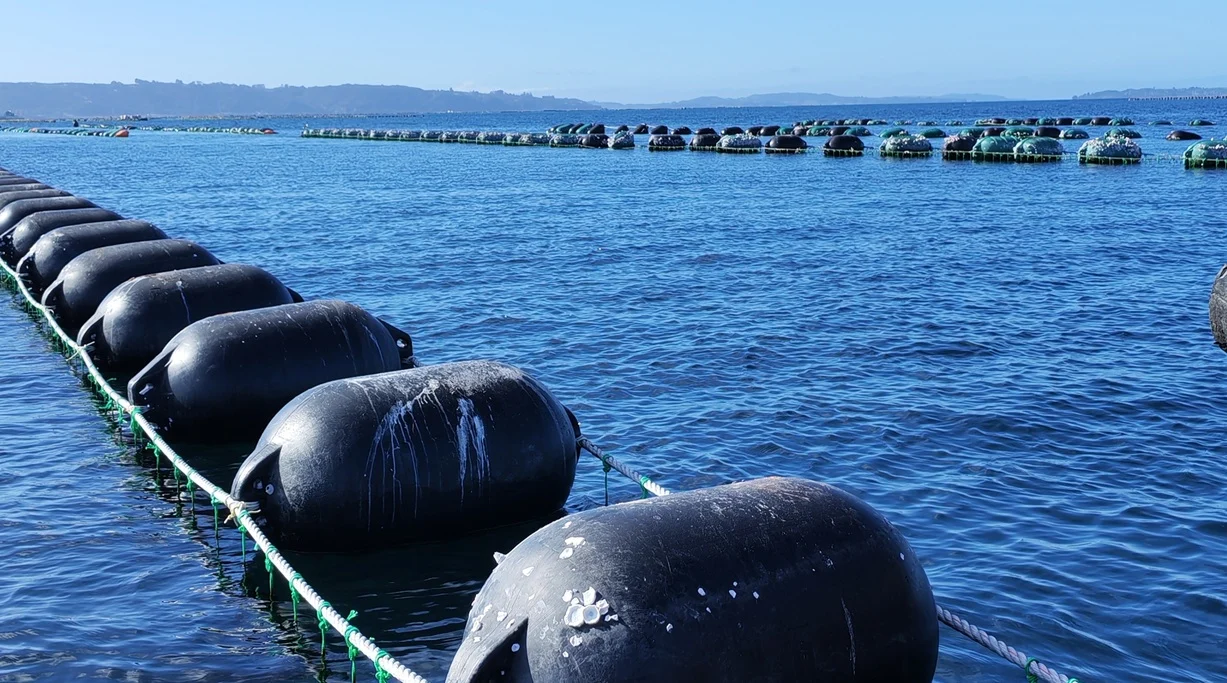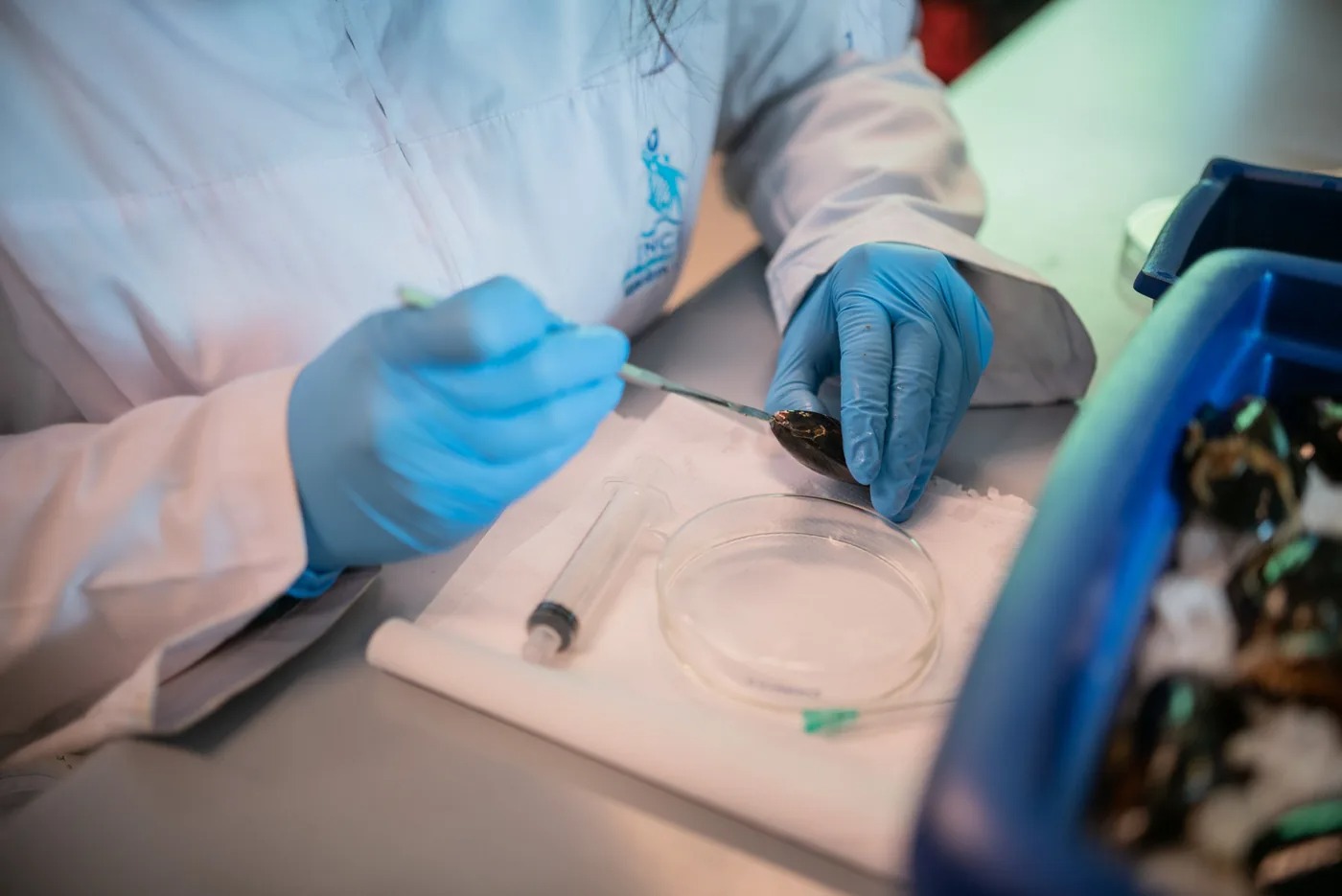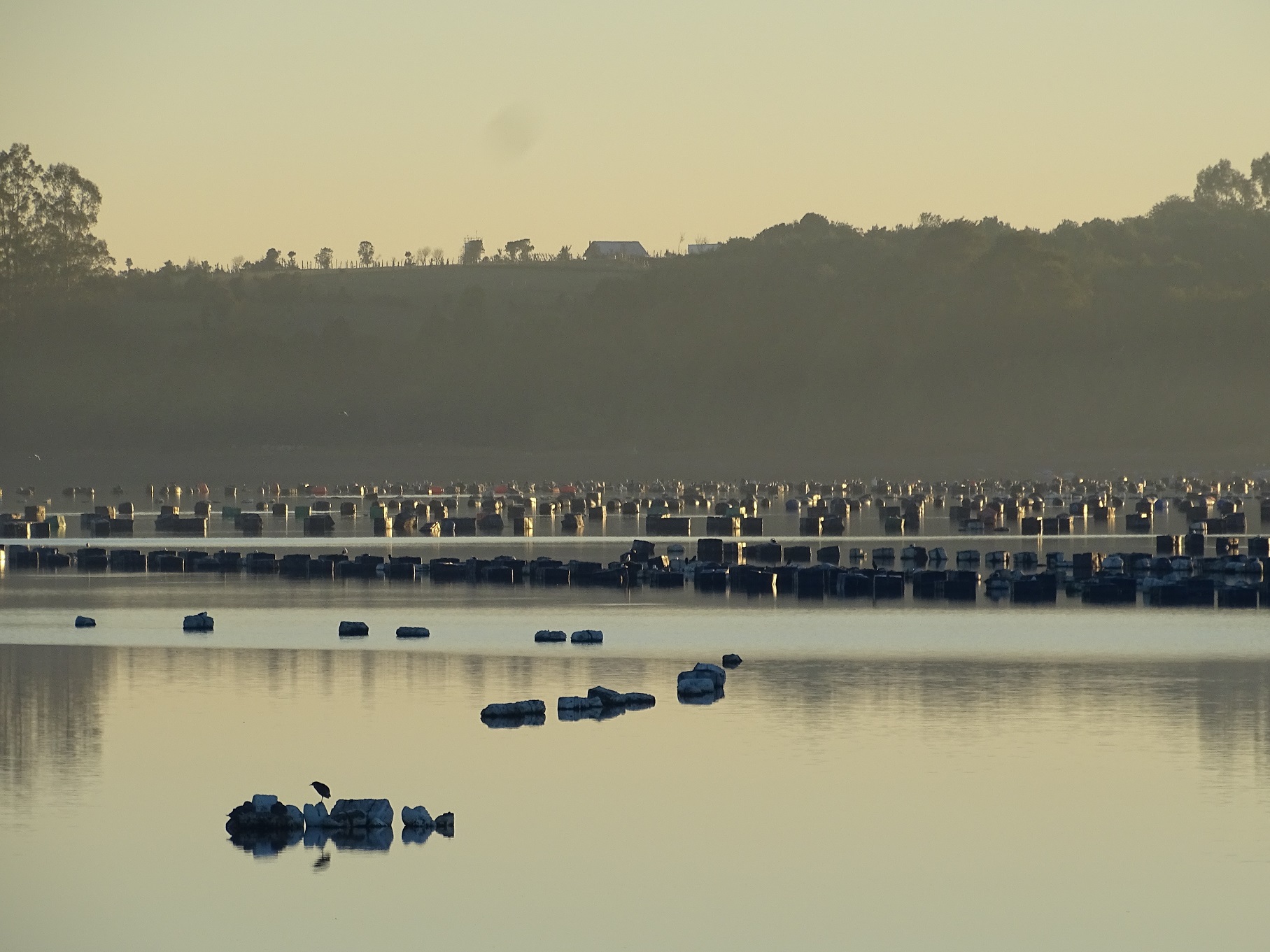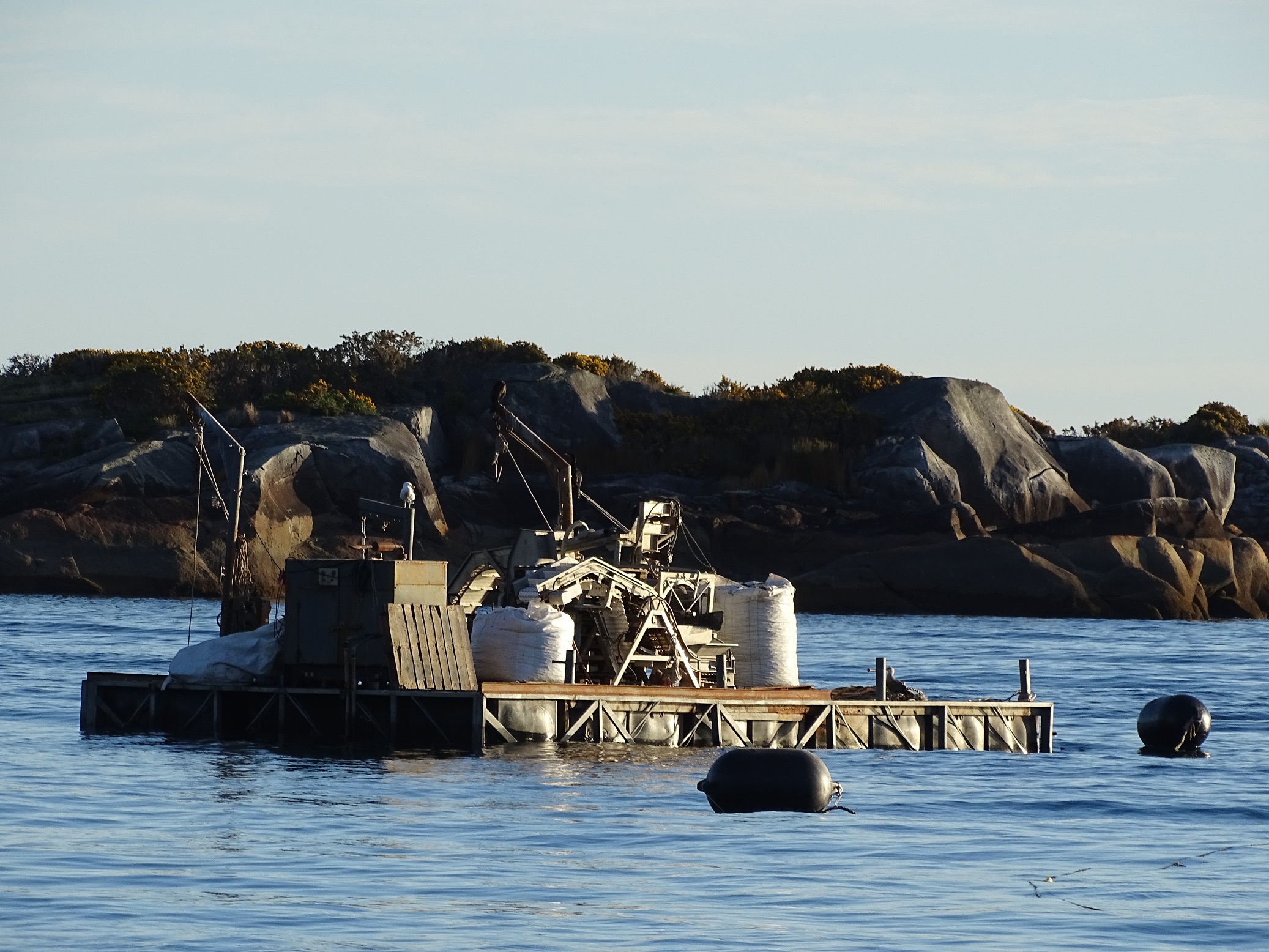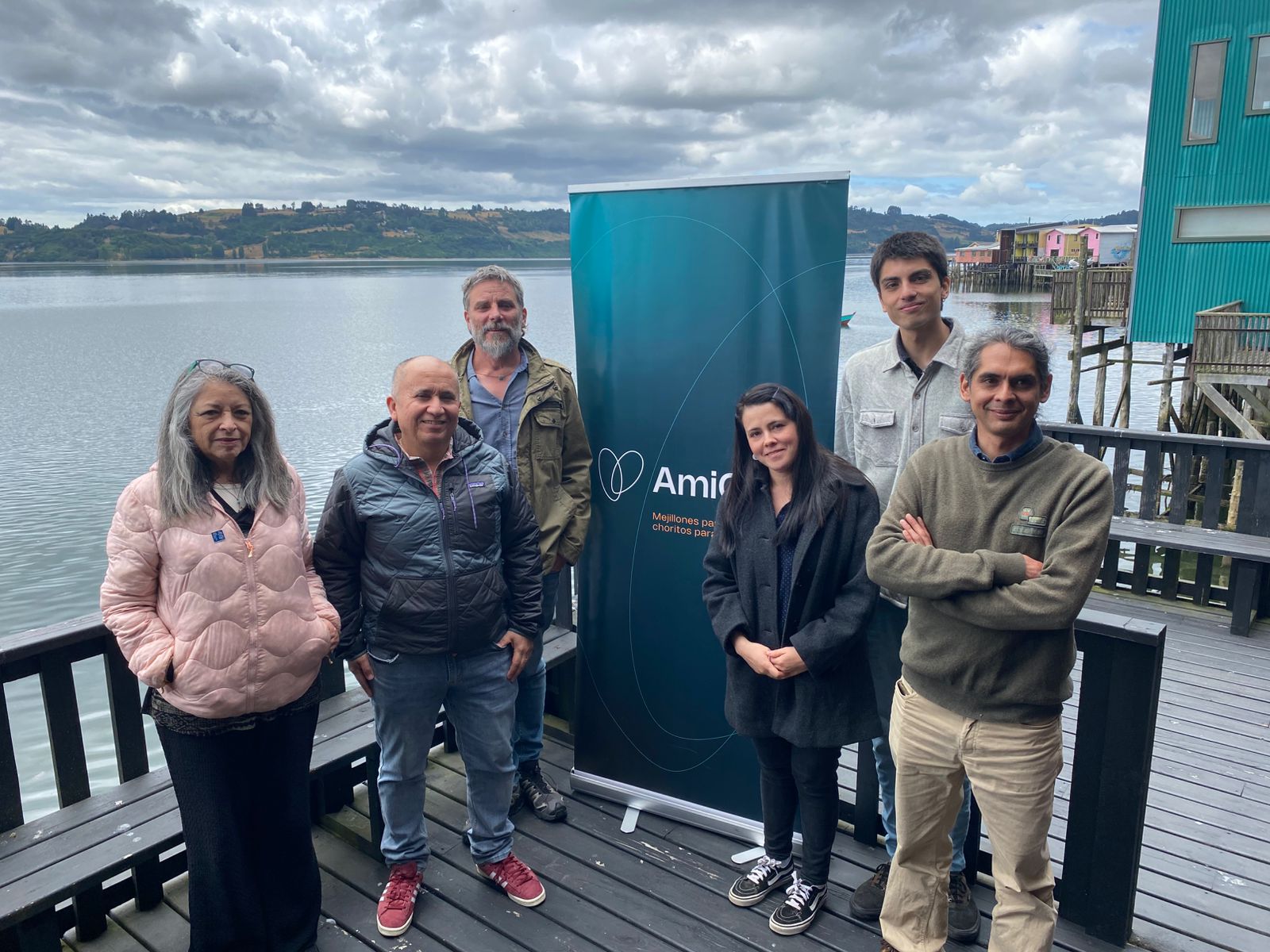
Preparing for environmental changes and moving towards sustainability in mussel cultivation are part of a scientific collaboration agreement that seeks to provide solutions on key issues for the country's second most important aquaculture activity.
In the offices of the Association of mussel producers of Chile (AmiChile) in Castro was held the meeting that renewed the collaborative efforts between the union, the Milenium Institute for Coastal Socio-Ecology (SECOS) and the IIntemit (Intemit).
The meeting brought together the new Executive Director of AmiChile Rodrigo Carrasco, the Research and Development Officer of Intemit, Camila Barría, the director of SECOS and academic UC Stefan Gelcich, and the researcher SECOS and academic U. de Concepción, Cristian Vargas.
“AmiChile, through the Technological Institute of mussel cultivation (Intemit), has an agenda discussed and agreed with researchers and also the SECOS to be able to project what is going to be the next quinquennium, in view of the need of the industry both in seeds, in the productive challenges of cultivation and also in climate variability, which is increasingly challenging. We've had different collaborations and projected in the future. continue to make progress in this direction,” said Rodrigo Carrasco after the meeting.
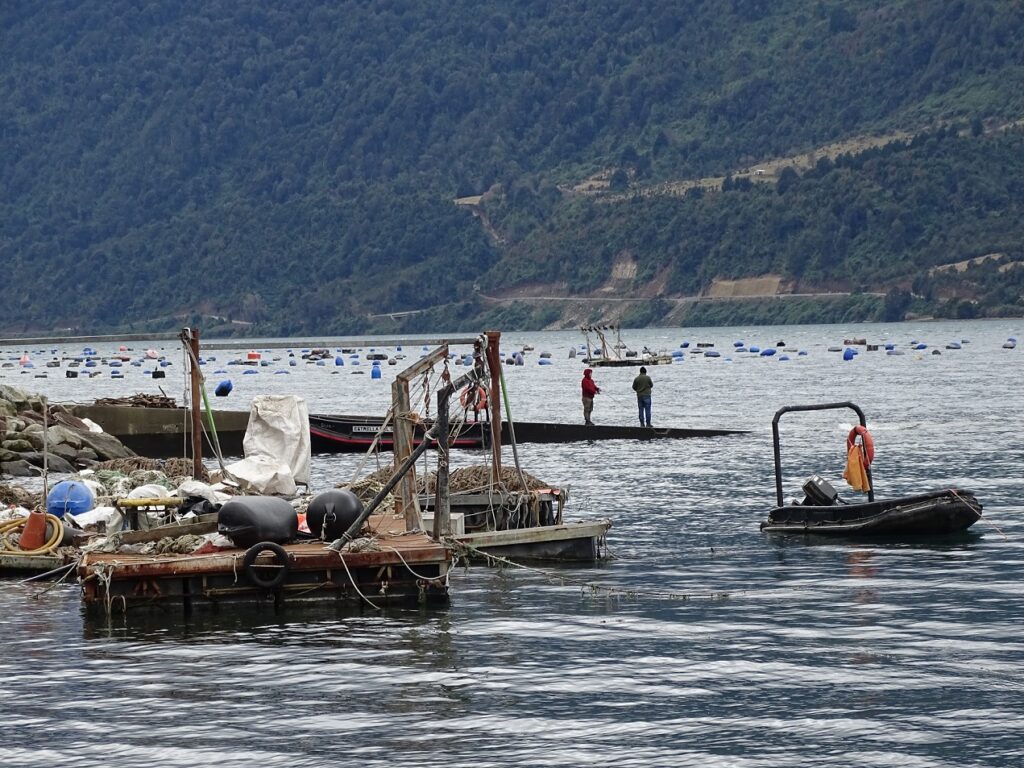
For Cristian Vargas, also director of the Coastal Ecosystems and Global Change EchoLab Laboratory of the UdeC Faculty of Environmental Sciences, “This meeting allowed us to reaffirm the collaborations between SECOS, AmiChile and Intemit, where we present our research centers in ocean acidification, plasticity and quality of chorito seeds, pollution, reuse of waste, environmental monitoring in Hualaihué, between others, in order to generate joint research efforts in these and other relevant areas.”
“To this we add a very relevant topic around the fall of seeds, environmental variability and tolerance to extreme events, which we are just studying from SECOS and where we can generate synergies with producers,” added Vargas.
For his part, Camila Barría mentioned the relevance of the link with researchers to continue to advance the scientific issues associated with the mining industry in Chile.
“This is why, to maintain the rapprochement and conversation with the SECOS institute, which has historically worked with our kind of importance (Chilean mussel), is essential for further progress in the study of the species, especially with regard to adaptation to climate change. Finally, as a result of this meeting, we agreed to renew the existing collaboration agreement between Intemit and SECOS,” Barría said.
Finally, the director of SECOS Stefan Gelcich mentioned that “the alliances between academia and industry are key, because only by integrating the knowledge of these different actors will we be able to move towards more sustainable aquaculture industries in Chile. The meeting was a success and today we have several joint working edges towards the future.”