The EPISex project, led by Dr. Cristian Gallardo Get out of UdeC with researchers from the USA and France to develop new biotechnology strategies that strengthen the control of ectoparasite and provide innovative solutions to salmon farming.
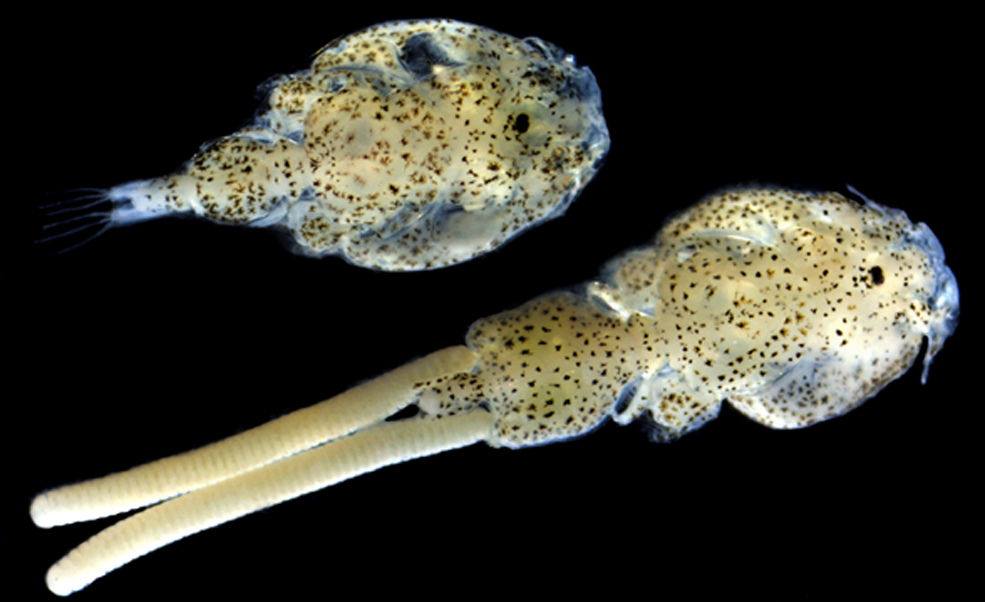
The academic of the Department of Oceanography of the University of Concepción and director of the Center for Applied Research funded by ANID, INCAR², Dr. Cristian Gallardo Check out, a Regular FONDECYT was awarded to investigate how sea lice determine their sex, a key finding for salmon cultivation.
“This project will enable us to understand fundamental processes of invertebrate biology and, at the same time, provide innovative solutions for a strategic industry such as salmon farming,” Dr. Gallardo, get out.
The project in which Dr. Steven Roberts of the University of Washington, United States, and Dr. Guillaume Rivière de la Université de Caen-Normandie, France, seeks to decipher the molecular mechanisms that determine whether the Caligus rogercresseyi will be male or female, allowing new control strategies to be designed for one of the main threats to the industry. In addition, the investigators, Dr. Valentina Valenzuela and Dr. Diego Valenzuela will participate from INCAR² in the development of molecular and bioinformatics tools needed for this challenging research project.
The EPISex project
The initiative, called “Epitranscribómica de la Determinación Sexual en el Piejo de Mar (EPISex)” (Epitranscribómica de la Determinación Sexual en el Piejo de Mar)” (Epitranscribómica de la Determinación Sexual en el Pijo de Mar (Epitranscribómica de la Determinación de Mar)) focuses on how certain chemical modifications in RNA — molecules that carry genetic information — influence the sexual differentiation of these organisms.
The team's first results show that males have higher levels of methylation in their RNA than females, which directly affects key genes in determining sex. These findings suggest that “epigenetic markings” could act as switches that silence or activate specific genes, thus defining male or female development.
Beyond its scientific relevance, this research opens the door to new biotechnological control tools, such as the manipulation of the gender ratio or the silencing of genes, which could reduce the reproduction of these parasites and directly benefit aquaculture.
“Through INCAR², we will experimentally explore gene editing. As an applied research center, we are interested in staying at the forefront and participating in the discussion that involves applying this type of technology in aquaculture,” added Dr. Gallardo-Escape.
The project (EPISex) has four major goals: to confirm the system of sexual chromosomes in sea lice, to map RNA modifications throughout their development, to evaluate what happens by chemically blocking these modifications and to analyze how non-coding RNAs collaborate in the regulation of sexual genes, which will develop over the next 3 years.