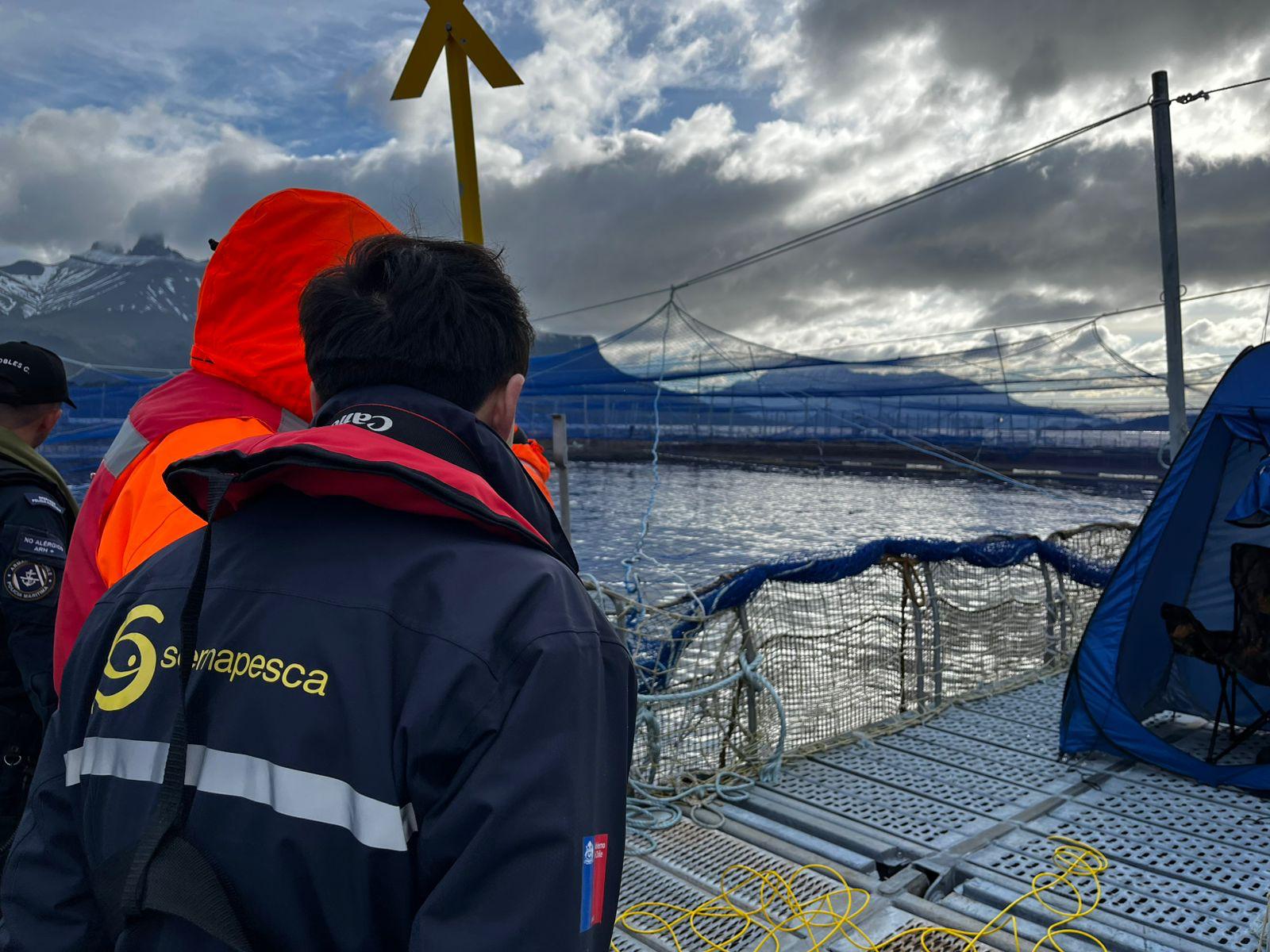
The Report on the Use of Antimicrobials and Antiparasitic in National salmon farmingpublished by the National Service of Fisheries and Aquaculture (Sernapesca)which contains the information for the year 2023. “This is the first report that contains the consumption of closed-cycle antiparasitic drugs, detailed both by company and by grouping of salmon concessions (ACS), which allows us to advance in the implementation of Law 21,532, being a milestone for active transparency in our country because it sets new standards in aquaculture, which is essential for a better society where we can foster the active involvement of citizens,” said the National Director of Sernapesca, Soledad Tapia Almonacid.
The report highlights a further reduction in the consumption of antimicrobials in relation to annual use in freshwater and sea, and in closed cycle during the year 2023, corresponding the latter analysis only to the phase of sea water, thus confirming the widespread trend towards its reduction in the last six years.
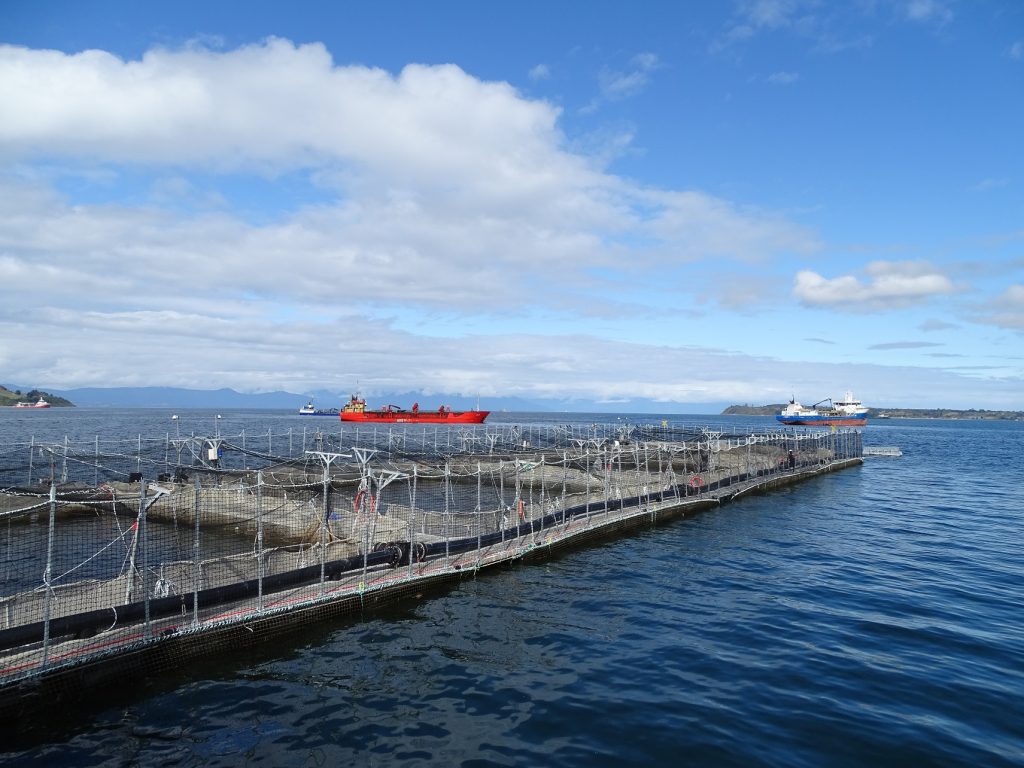
In the sea water phase, the main pathology affecting the cultivation of salmonids and which explains the increased use of antimicrobials, remains piscirickettsiosis (SRS) 93.21 per cent, followed by renibacteriosis (BKD) and tenacibaculosis with 4.62% and 1.46% respectively.
Additionally, the report mentions that 54.57% of the antimicrobials used were administered in the Aysén region, while 45% were administered in the Los Lagos region. Meanwhile, in the Magellan region, 0.44% have been administered, a significant decrease from 2022.
On the other hand, in the freshwater phase, the main diseases justifying the use correspond to renibacteriosis (BKD) with 42.13%, flavobacteriosis with 30.92% and atypical furunculosis with 26.59%. This use is mainly distributed in Los Lagos (44.62%) and Araucanía (38.9%), which correspond to the regions where the highest production is concentrated at this stage.
As regards the consumption of closed-cycle antimicrobials, which corresponds to cycles of fattening of salmonids that ended their operation during 2023, the report indicates that during the last year the Antimicrobial Consumption Index (ACI) was 228.37 g/t, which means 44.01% less than the previous year.
For closed-cycle antiparasitic agents, they are divided into two categories corresponding to hydrogen peroxide and other antiparasitic substances used (azamethiphos, emamectin benzoate, cypermethrin, deltamethrin and hexaflumuron), those marking values of 5,150 g/t and 4,85 g/t respectively.
Finally, it is important to note that by 2023 only antimicrobials have been used for exclusive use in veterinary medicine and no use of antimicrobials of critical importance for human health is recorded.
PROA-Salmon certification
The Program for the Optimization of the Use of Antimicrobials (PROA-Salmon) Sernapesca is a certification that Sernapesca delivers to the breeding centers of fat in the sea by production cycle of those companies that request it and manage to reduce the use of antimicrobials within limits established in the program or that do not use them throughout the production cycle.
In this sense, the National Director of Sernapesca, Soledad Tapia, said, “Under our PROA-Salmón programme, we have also seen a steady increase in annual harvests certified under PROA across all three farmed species, from 12 thousand tonnes in 2020 to 213 thousand tonnes in 2023. It is very gratifying to have a tool that encourages good practice in administering treatments and promotes optimization in the use of antimicrobials.”