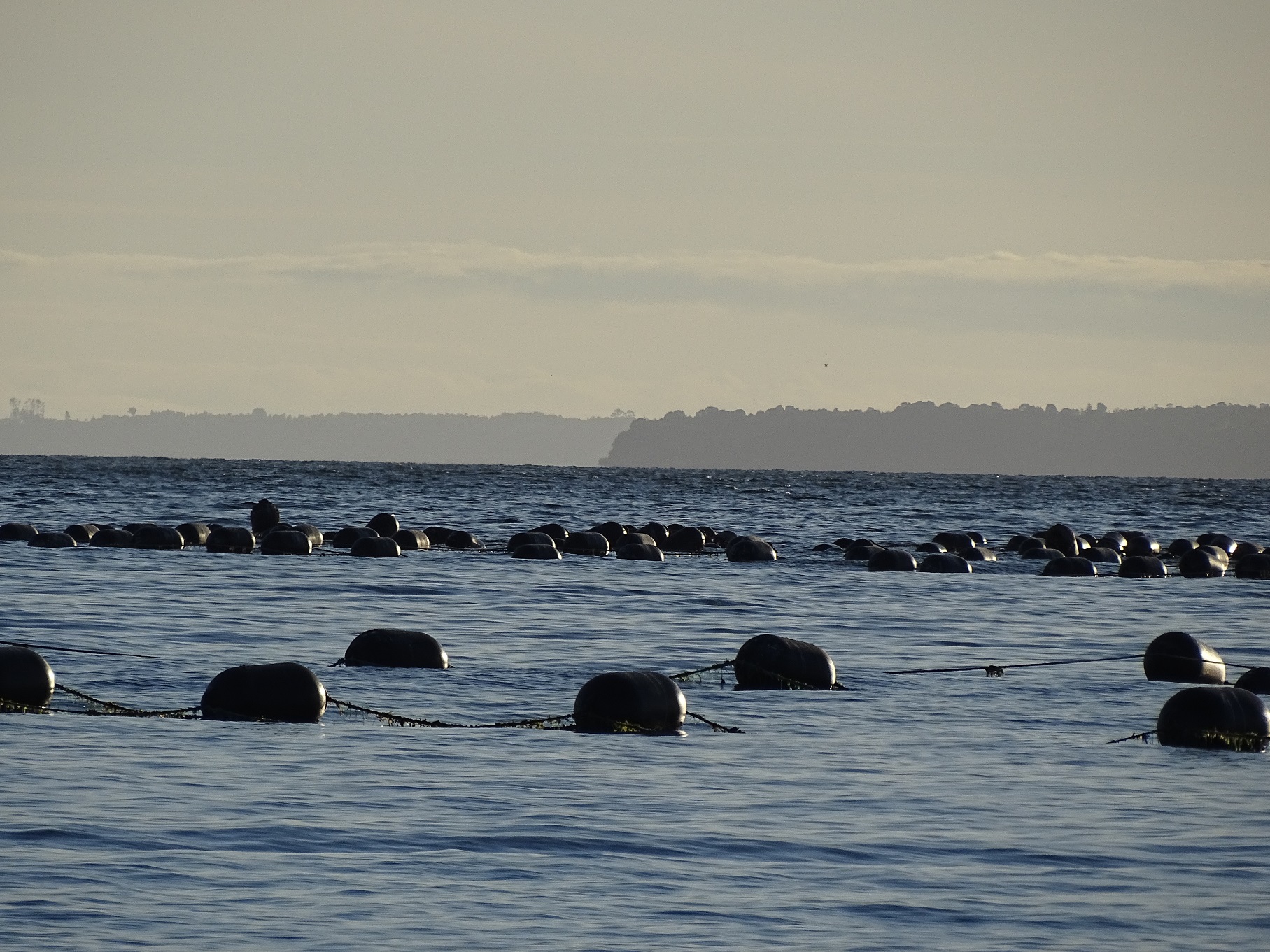
Workshop allowed to share the advances of various applied research projects that seek to promote a cultivation of mussels more regenerative and resilient to climate change, integrating science, industry and territory.
Representatives of the academy, guilds, companies and producers of mussel cultivation met in a collaborative workshop “Blue Economy and Natural Capital: Towards a Regenerative Mussel Culture through Nature-Based Solutions”, to analyze solutions based on nature, natural capital and sustainability, with a focus on the productive, environmental and economic challenges of the sector.
The activity allowed to share the advances of various applied research projects that seek to promote a cultivation of mussels more regenerative and resilient to climate change, integrating science, industry and territory.
Nelson Lagos, director of the Center for Research and Innovation for Climate Change at Universidad Santo Tomás, highlighted the importance of collaboration with the productive sector. “The importance of these instances is that we have realized that the cultivation of mussels, together with AmiChile, has a robust and long-standing governance scheme, which has facilitated the development of collaborative research projects, such as the of solutions based on nature and the Fondef Recife project,” he said.
In the area of corporate sustainability, Roberto Ponce, director of the Business Sustainability Center at the University of Development, stressed that today there is a framework that regulates how companies should communicate their relationship with nature. “Non-financial information, such as natural capital, is as relevant as financial information, since in some sectors it determines even the credit rates to which the companies,” he explained.
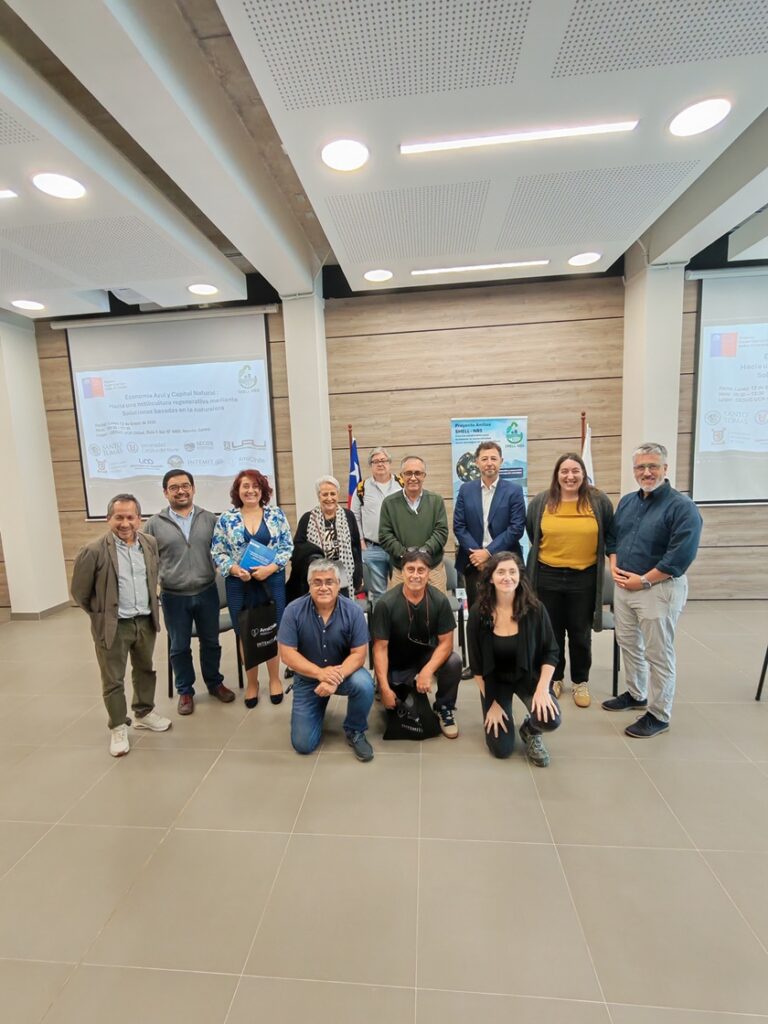
Rodrigo Carrasco, executive director of AmiChile, highlighted the importance of the link between the union and the scientific community. “The relationship with researchers and scientific projects is fundamental, as well as expanding this conversation with partners and producers of different sizes. It was very illustrative to know the regenerative approach, such as the return of shells to the sea, and also to analyze the economic valorization of the assets natural resources that we must protect and project,” he said.
Camila Barría, in charge of Intemit's R & D & I Area, said that, "For the mill industry it is still relevant to promote alternatives to waste management, so nature-based solutions, such as the return of shells to the sea, have more than one objective for the sector. Among them is the possibility of locally reversing ocean acidification and at the same time, generating by-products from what It was previously considered a waste, like chorito shells. It is also important that the research groups, which have the support of AmiChile to develop and promote these initiatives, should make known their progress in the province, for which thanks are expressed for this type of conversation,” the professional said.
The day was also valued by representatives of the productive world. Rodrigo Alvarado, general manager of Cal Agro of the Resiter Group, highlighted the space for open dialogue: “It is very interesting that the whole value chain is openly talking about challenges and how to work together.”
Along the same lines, Patricio Saldivia, manager of the cooperative Semillero Cascajal de Cochamó, said that the instance was “very interesting and productive”, adding that this type of encounters “are very important and should continue to take place”.
During the day, the need to move towards a development model that combines environmental sustainability, economic viability and multisectoral collaboration was reaffirmed, positioning the cultivation of Chilean mussels as a key actor in the transition to a more regenerative economy aligned with the challenges of climate change.
The activity contemplated the exhibitions of the doctors Nelson Lagos, of the Universidad Santo Tomás, and Begoña Peceño, of the Universidad Católica del Norte, who reported the advances of the FONDEF and Ring projects. Meanwhile, Dr. Roberto Ponce, from the University of Development, presented on Blue Economy and Natural Capital in mussel cultivation.
Dr. María José Martínez, from Universidad Santo Tomás, presented the work “Ecsystemic services in mussel cultivation: mussel reefs as nature-based solutions”, and then a discussion panel was held entitled “Cadena of value of mussel cultivation and its potentialities”, which had the participation of Patricio Saldivia, seed catcher of the Cascajal Seed Cooperative (Reloncaví); Paola Sotomayor, Cultivation Administrator APE- Dian crops; Rodrigo Rosales, plant manager of Sudmaris Chile S.A.; and Rodrigo Alvarado Segovia, General Manager of Cal Agro.