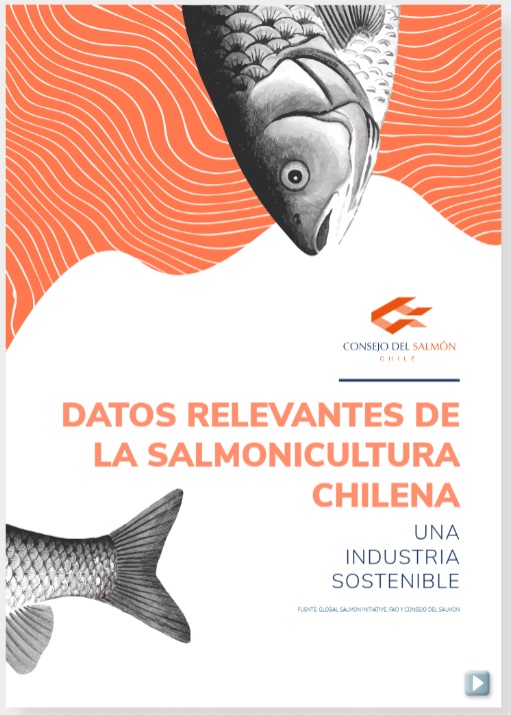
A digital book will be distributed in the 54 commercial offices that Prochile has abroad, as well as in the agricultural attachés and representatives of the embassies.
An important step in strengthening the Chilean salmon farming industry was taken by the Salmon Council as part of the seal that the sector has in promoting public-private partnerships. In this case, the launch of the e-book was carried out. Key data from Chilean salmon farming: a sustainable industry, a digital document that will be available to all commercial offices of ProChile and the representations of the Ministry of Foreign Affairs and Agriculture, with the aim of using and disseminating up-to-date information on Chilean salmon, the second most exported product of the country.
The launch of the e-book, published in both Spanish and English, took place on Wednesday 29 January virtually and featured the participation of representatives from ProChile commercial and regional offices, as well as the attendance of agricultural and diplomatic attaches from the embassies. During the presentation, this digital book was highlighted as a key tool to promote Chilean salmon farming among authorities and stakeholders around the world.
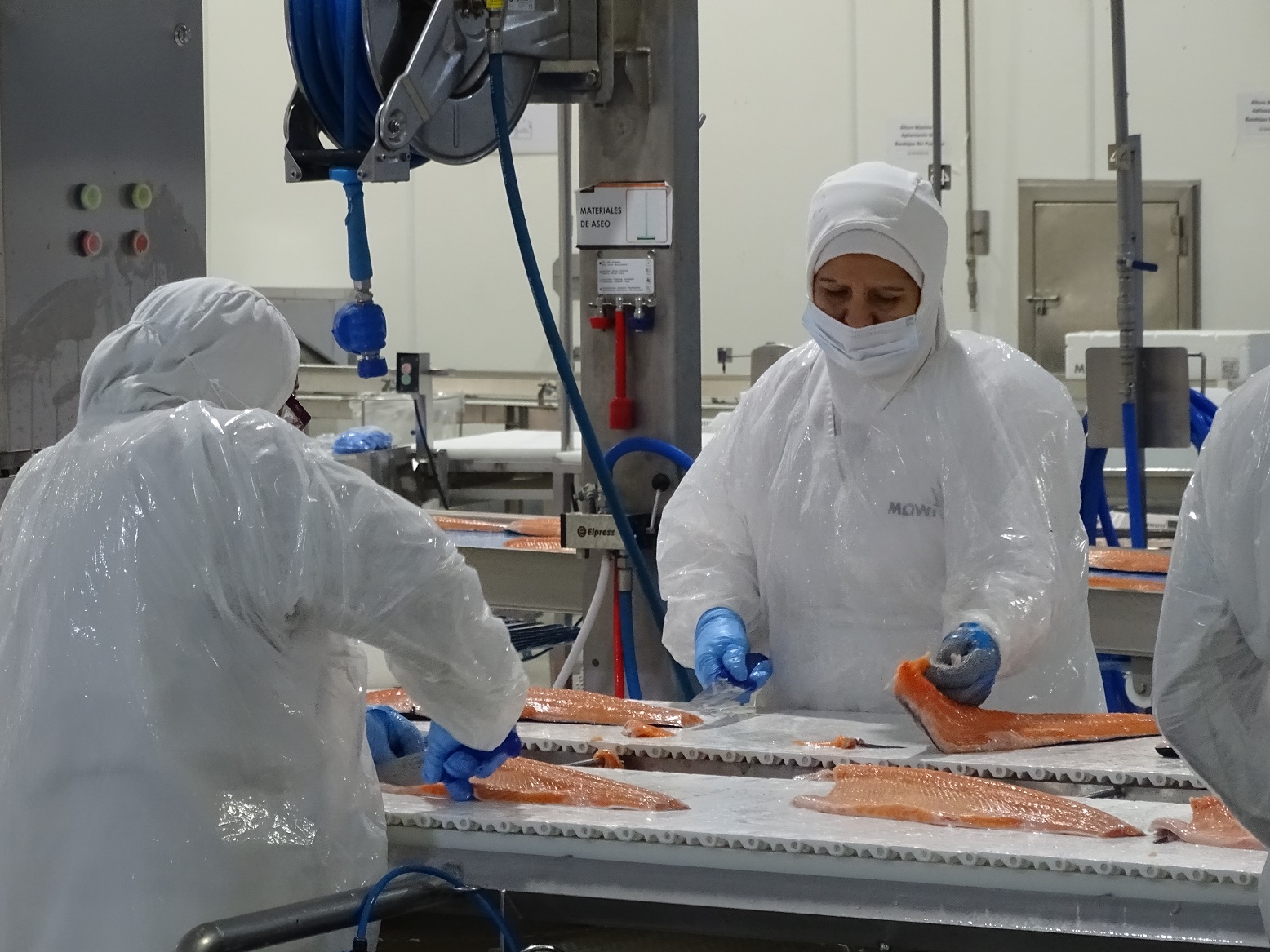
The document contains a comprehensive overview of the development of salmon farming in Chile over the last 40 years, managing to position the country as the second largest global producer of salmon, with a 27% share in the global market.
Loreto Seguel, Executive Director of the Salmon Council, a union that brings together the five main production companies operating locally (AquaChile, Australis Seafoods, Cermaq, Mowi and Salmones Aysén), highlighted the public-private partnership and its commercial implications for the country. “This initiative arose collaboratively between ProChile and the Salmon Council, recognizing the need for a tool that to make the impact and relevance of Chilean salmon farming visible at a global level. We hope that this e-book will be a very useful guide for all those who proudly represent our salmon in the world, the second most exported product in Chile and that we have a duty to project and further develop it among all,” said Seguel.
For his part, the Director General of Prochile, Ignacio Fernández, said that "within the framework of our strategy of international promotion, the public-private collaborative work with the different unions and companies is key. That is why we appreciate the efforts to strengthen the information of the attributes and productive processes from the sectors, because it contributes to the dissemination work of our network of commercial offices both to the importers and end consumers in more than 50 strategic markets worldwide. Chile’s food exports exceeded US$21 billion in 2024. Salmon is now the country’s second-largest export product, worth around US$6,400 million. This makes a substantial contribution to the international standing of the entire sector and the country.”
It should be mentioned that, in accordance with the Food and Agriculture Organization of the United Nations (FAO) guidelines, through the Blue Transformation initiative, aquaculture is now recognized as a key activity for increasing world food production and healthy nutrition of a growing population. In this context, salmon farming is presented as part of the solution of global food challenges due to lower carbon footprint, low freshwater consumption and greater efficiency in food conversion compared to other animal proteins.