Organizers committed to order and analyze the information generated with the aim of conducting more specific Aquaculture Interaction workshops for each topic where different criteria exist.
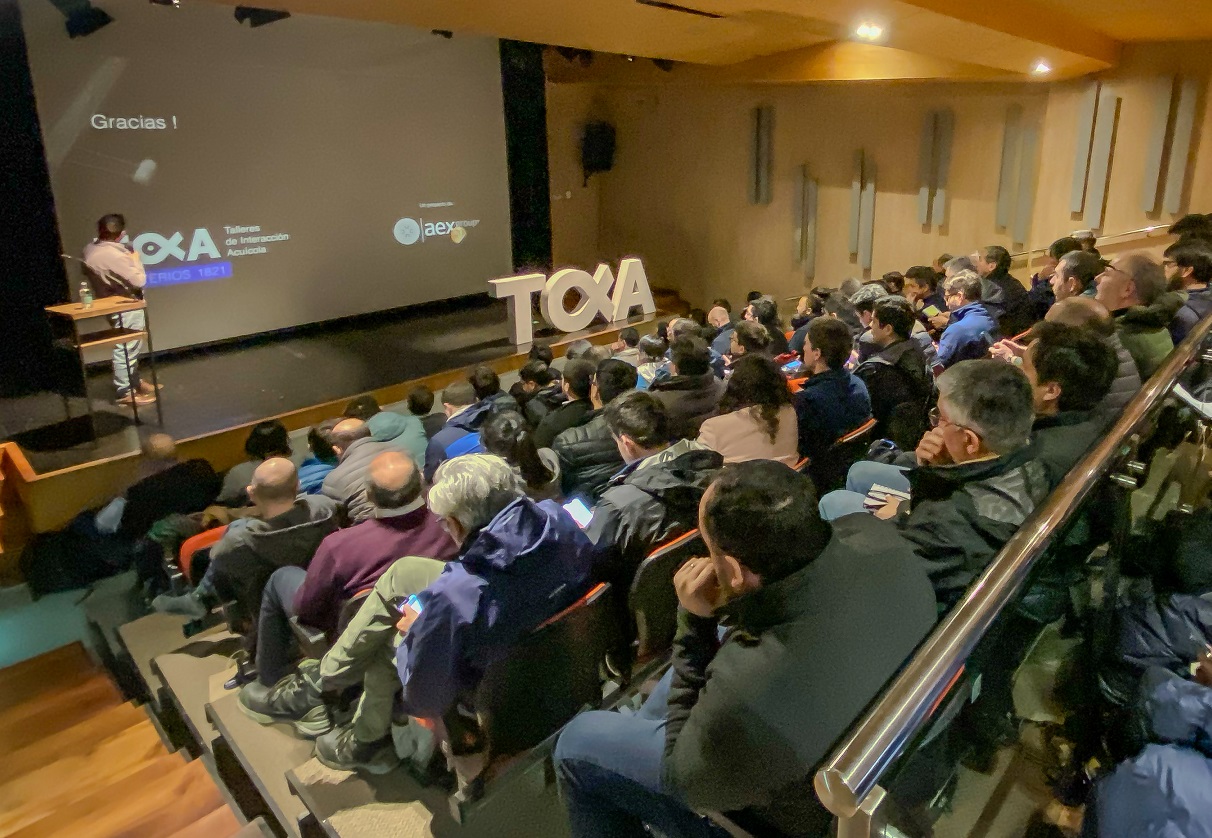
On Wednesday 31 July, in the city of Puerto Varas, Los Lagos region, representatives of the salmon industry met to seek consensus on the Resolution Exempts 1821, because -to date- different visions and interpretations are noticed in technical topics, such as oceanography, engineering and certification and that could have important impacts on the sustainability of the country's main cultivation activity.
The quote, called Aquaculture Interaction Workshop (T&A) and that was organized by AEX Groupbegan precisely with the words of its director, Alonso Echeverría, who motivated the about 80 representatives of salmonicultora companies and service providers to deliver their opinions with the aim of, later, tabulating them and channeling them to the authority.
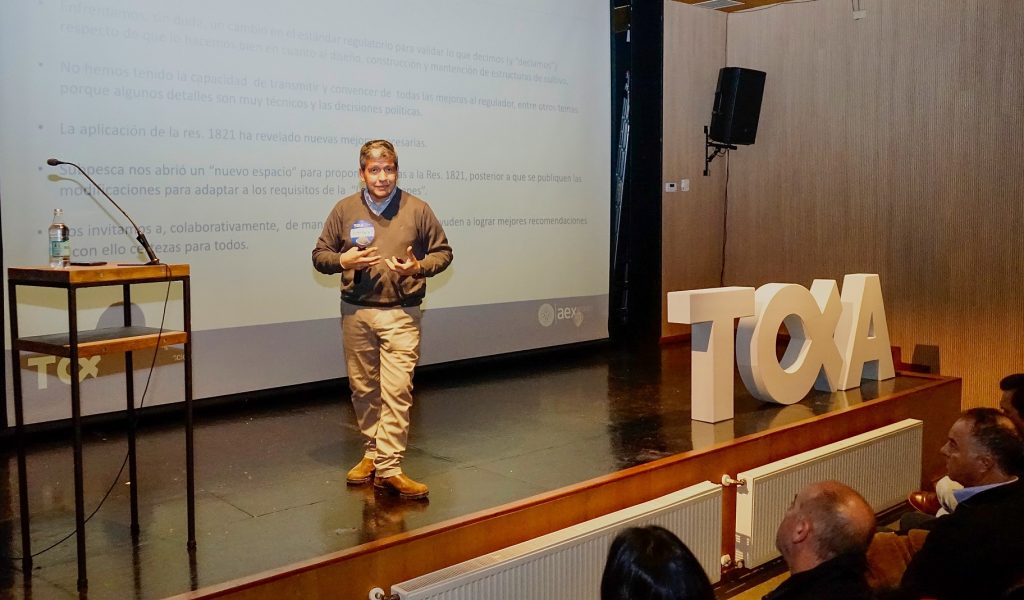
Later it was the turn of the manager of Intesal, Esteban Ramírez, who reviewed the facts that led the authority to raise this regulation and concluded, among other aspects, that this initiative will make it possible to validate what is done “in terms of the design, construction and maintenance of cultivation structures”, and invited everyone to “colaboratively and in a pre-competitive manner, help us to achieve better recommendations and thus certainties for all”.
By the same token, the managing partner of Certes, lawyer David Zaviezo, explained the scope of the regulation to, then, refer to the different legal crosses presented by the proposal in relation to the measurements of winds and waves, the underwater inspections of the anchoring systems, the inability of the certifier and the crossings of lines of the anchoring systems, among others.
In the case general manager of Nazca, Jorge Álvarezhis talk focused on Resolution 1821 and the importance of data collection and analysis as, for example, this information determines “engineering, production or operation decisions”. As part of its recommendations, it proposed to generate a register of companies for oceanographic services, similar to that of certifiers; the improvement of measurement standards and equipment for the collection of information (winds, waves, currents, bathymetry and background quality) and the formal delivery to the customer of information, explaining the results and highlighting critical values, among others.
By the partner of Salmoboats and partner-founder of Green Aqua, Esteban Patroni, his presentation focused on the impacts and challenges of Resolution 1821 in anchoring calculations for salmon cultivation structures and, to this end, he gave practical examples, made comparisons of results and their impact on materials and anchors, and commented on different interpretations of the application of the new regulation, delivering strategies for the calculation of anchorings applying the RES. 1821. Within the latter he pointed to They should review the angles of the line and the seabed, as they may have a significant impact on the dimensioning of the anchorages; and that the performance obtained from the traction tests significantly moderates the size of the anchorages. “It should be noted that the performance of anchors, dead anchors and other types of anchors are not covered in the resolution,” he said.
For over 30 years, Juan Carlos Maldonado has worked in the field of the nets of cultivation for fish and, for the same reason, the topic addressed by the consultant was “Concepts and definitions of networks of cultivation applied to Res. 1821”. This is how, during his talk, he addressed -among many technical aspects- the potential impacts of the thickness or opening of a mesh for fish in hydrodynamics within the centers of cultivation and, therefore, in need
Finally, the crop structure certifier, Gianni Kossack, gave his vision regarding the regulations and gaps that exist regarding the role and work of the certifier in aspects such as visits to the centers of cultivation, the memories of calculation or the deadlines between, for example, the raising of observations and the potential delivery of the certificate.
At the end of the day, the organizers committed themselves to order and analyze the information generated with the aim of conducting more specific Aquaculture Interaction workshops for each topic where different criteria exist.
More information at interactionacuicola.cl