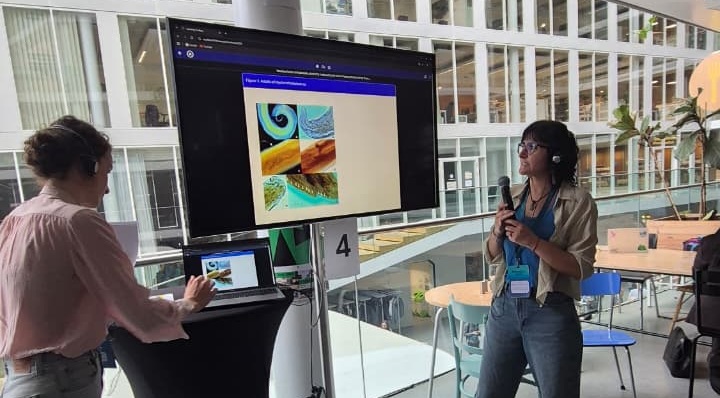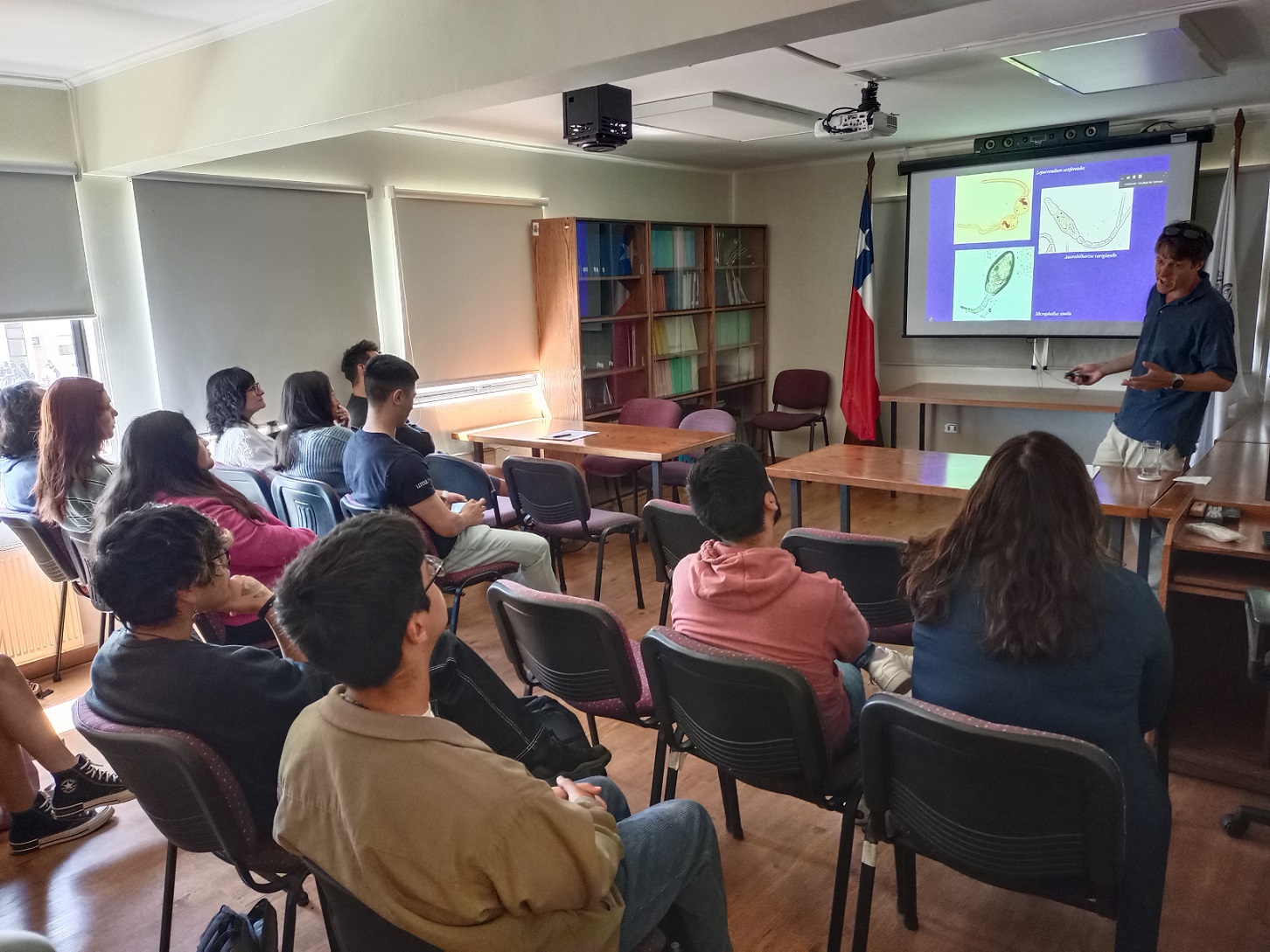
The collaboration included participation in a congress, classes and an exhibition of their research line.
The Dr James E Byers, academic from the University of Georgia, United States visited the Faculty of Sciences of the Catholic University of the Most Holy Concepción (UCSC).
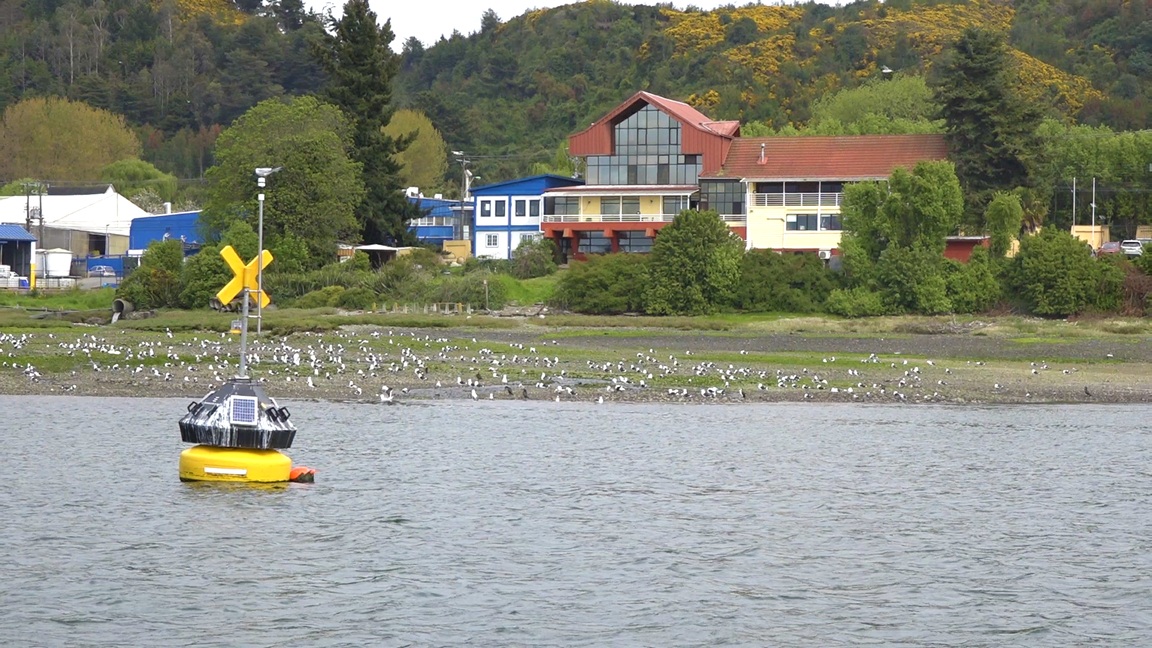
The reason for this visit is within the framework of the collaboration it maintains with academic Dr. Sara M. Rodríguez. The idea was to visit the facilities, laboratories and schedule a next visit to be carried out during November 2025, which will include 4 months of work. It is a Fondecyt proposal and a Fulbright Scholarship.
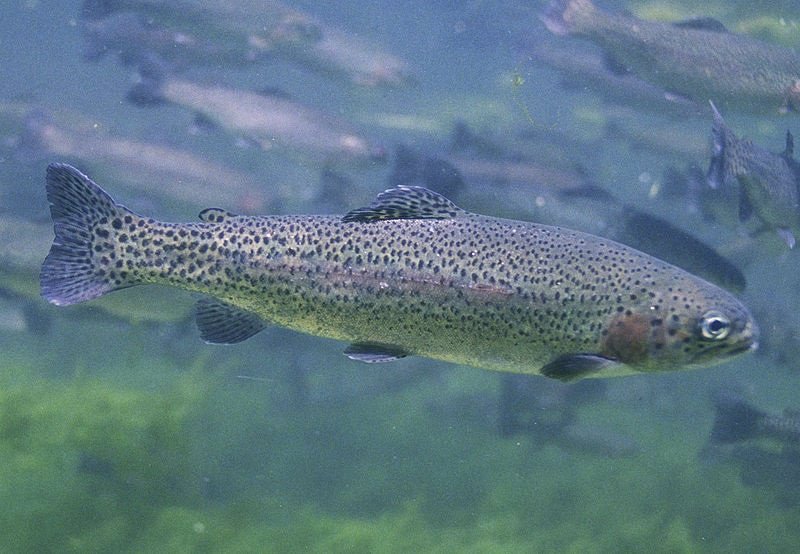
The research line of Dr. James E. Byers is linked to marine parasites, how they affect the ecology of their ecosystems and the change in host behavior. "Sara has started some projects with salmon and some nematodes that affect them. It is an invasive species that, after they could not cultivate them, they released into the sea and today affect native fish. They have their own parasites at levels different ones and share them with native species, which could generate some effects that we want to explore a bit more," added the academic.
Parasites influence commercial fishing resources, such as shrimps or fishEven, there are diseases that are transmitted to humans. Additionally, they ecologically affect their systems, related to issues such as abundance or behavior. That is where the importance of the topic lies.
Collaborative work
Another of the joint projects between the two researchers is a study related to the sea louse, which have parasites that change their behavior. In addition, they are currently analyzing the parasites present in the Chinook salmon, where after taking the samples, there is a lot of work to be done in the laboratory.
Additionally, we have just finished a work in which we studied the behavior of the crab Hemigrapsus crenulatusWe did some experiments with Sara's students and have noticed that they change the behavior of their hosts when infected. In this case, they can change their predation rates, even of the gulls that are their predators," he added.
Multiple activities
The academic together with Dr. Sara Rodríguez, Dr. Mario George-Nascimento and marine biologist Valentina Martínez organized a symposium at the XXX Meeting of the Society of Ecology of Chile during the week of November 5 to 8 in La Serena. Additionally, they visited some beaches in the northern area, to find specimens of sea lice. "We had to dig under the sand, where they hide, where we managed to capture some. We preserved them and they are currently in the laboratory to be able to observe if they are parasitized. The idea is to compare parasites from the south and the north and see the differences," he said.
He also participated in the Marine Parasitology subject, giving a class for students of Marine Biology UCSC.
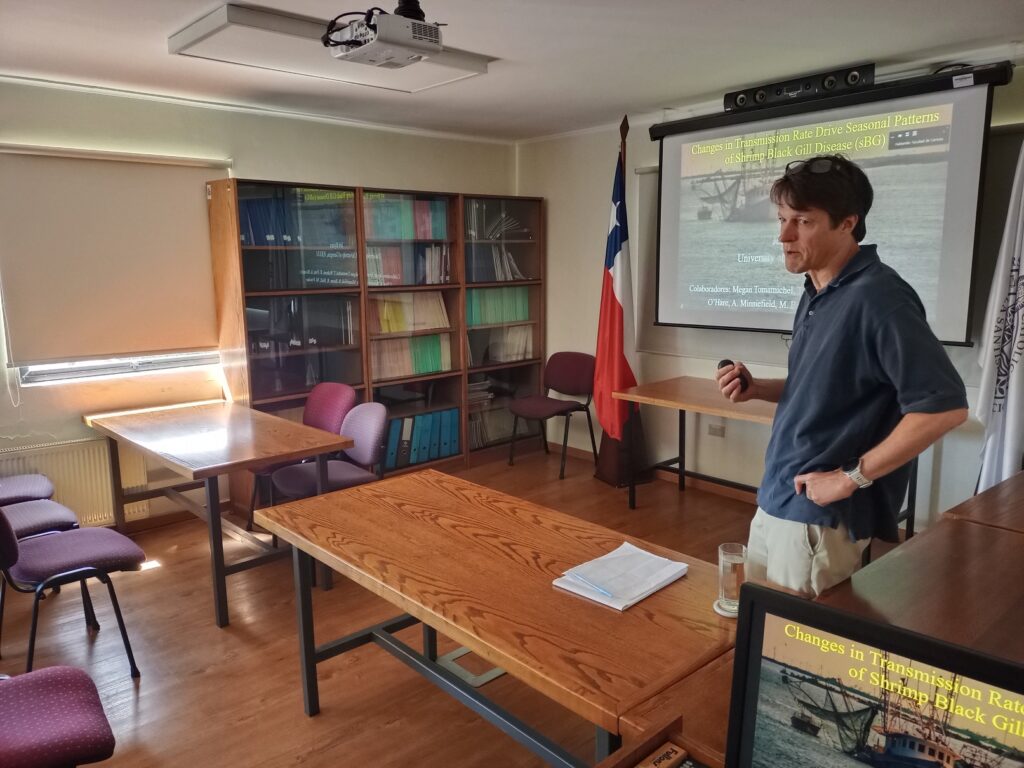
The visit culminated in an open presentation that took place within the framework of the talks of the Internationalization Committee of the Faculty of Sciences UCSC.
“The talk focused on shrimp that have a parasite that infects them. This is the most important commercial fisheries resource in the United States. There is a lot of interest in the disease that these shrimps can get, as it could affect the harvest. We want to see the effects on the guests,” he concluded.
Black Branquia is the disease associated with these shrimps, but there is no risk to human beings. “It is not dangerous for people, but it may affect shrimp. We are currently investigating this issue. It is different from many parasites, as they can be easily seen at the naked eye,” he closed.
It should be noted that Dr. James E. Byers is currently a visiting professor at the PhD in Science with mention in Biodiversity and Bioresources UCSC.