The company's participation in the international meeting held in Puerto Varas aligns with its purpose of generating independent and valuable information to support decision-making, strengthen health management and advance towards more sustainable salmon farming systems.
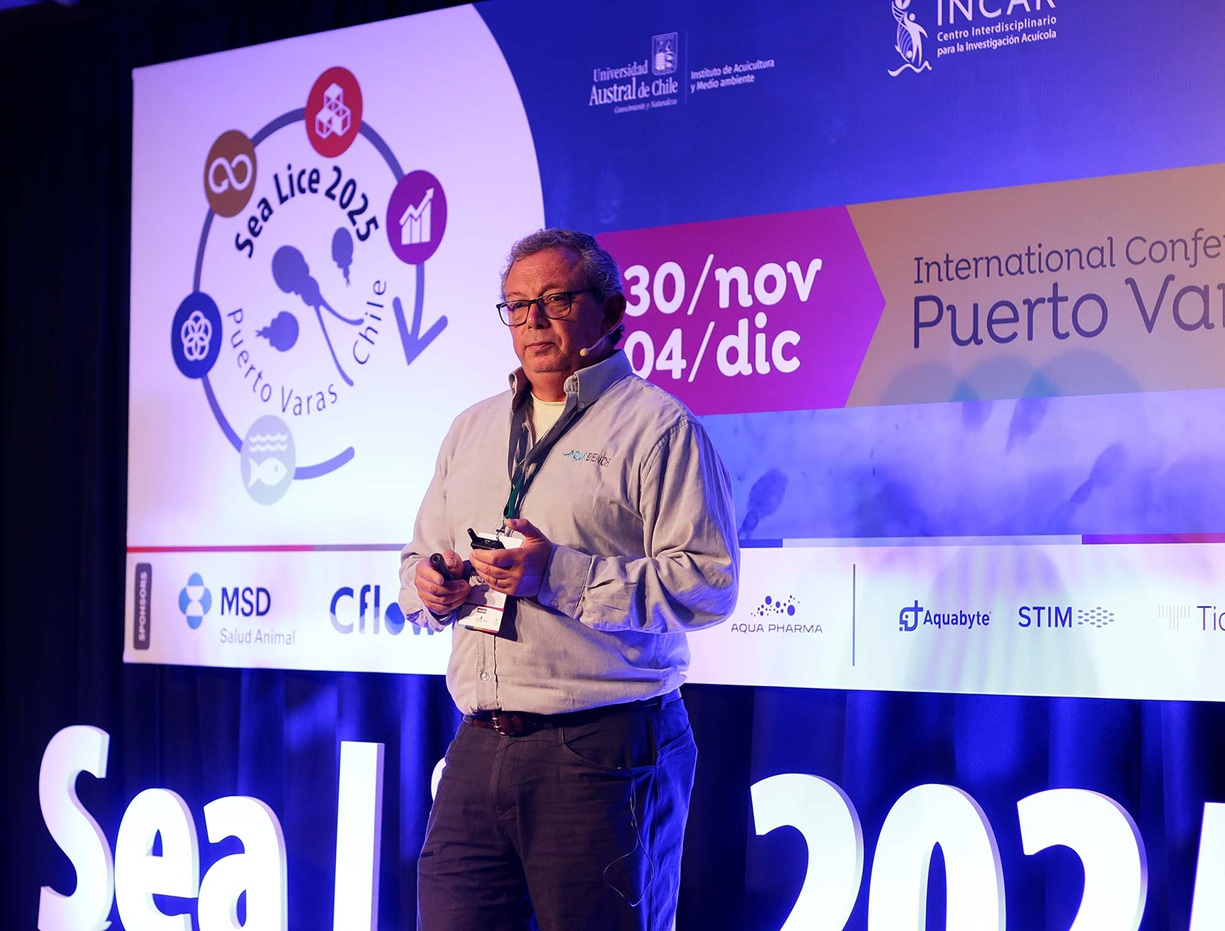
A notable and active participation was had by Aquabench at the International Sea Lice Conference 2025, a relevant scientific meeting dedicated to the study of sea lice that took place in Puerto Varas between the 1st and 4th of December, with the attendance of researchers, regulators and representatives from the salmon farming industry of various countries.
The presence of Aquabench reinforced the company's role as a technical reference in monitoring, data analysis and evaluation of prevention and control strategies for the ectoparasite Caligus rogercresseyi in Chilean salmon farming. In the scientific program of the event, the consultancy presented four papers that addressed, as a whole, the integrated management of caligus, from the risk analysis of mechanical and thermal treatments, to the evaluation of new technological solutions and the optimization of pharmacological treatments.
Alex Moyano, veterinary doctor and leader of the Caligus Project which coordinates Aquabench, addressed the Assessment of mechanical/thermal treatments and bacterial outbreak risks in Chilean salmon farming He explained that although in the northern hemisphere mechanical and thermal treatments have gained ground over chemotherapeutics for the control of sea lice, in Chile their use remains very limited despite the increase in resistance to traditional drugs. Between 2015-2024 a total of 188 treatments of this type have been carried out (62% mechanical and 38% thermal) in 21 centers of six producing companies.
Referring to the effectiveness of these procedures, he indicated that they show high efficacy in the removal of adult caligus, especially thermal treatments, but they also involve disadvantages, such as greater stress for the fish in handling, impact on animal welfare, slower operations and higher costs, as well as an increase in the risk of outbreaks of Piscirickettsiosis (SRS) and associated mortality after treatment.
By comparing them with current pharmacological and non-pharmacological baths, it is observed that most of these immersion therapies can achieve similar efficacys, without the adverse productive effects associated with thermal treatments, where there are lower growths, yields and weights to harvest. Therefore, it concludes that, while mechanical and thermal strategies are effective tools for reducing adult lice, its implementation in Chile requires a careful assessment of health and productive risks, given the possible link observed with SRS, which would explain the reluctance of the industry to massify its use.
Development of strategies
Meanwhile, Daniel Woywood, Aquabench technical manager, introduced the “Evolution of management strategies for Caligus rogercresseyi in Chilean aquaculture”, where he synthesized more than two decades of operational and regulatory information to describe how prevention and control techniques, the use of drugs and therapeutic combinations have changed in the face of the advance of resistance and the greater demands in animal welfare.
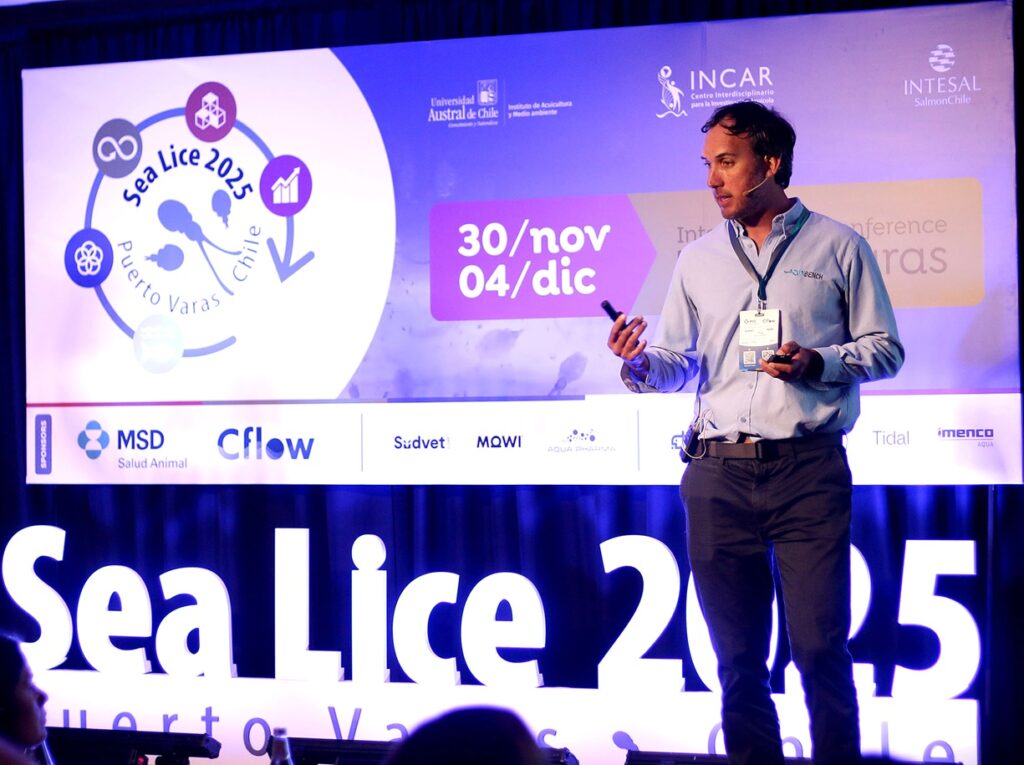
In his presentation, he described how, in parallel with the increase in Atlantic salmon biomass in Chile, Caligidosis has been consolidated as one of the main health challenges, forcing industry to diversify and sophistication its prevention and control strategies. In more than two decades, a succession of pharmacological and non-pharmacological tools is observed – emamectin benzoate, deltamethrin, cypermethrin, azamethiphos, peroxide hydrogen and lufenuron and hexaflumuron, as well as freshwater use, skirts, mechanical systems and, more recently, functional additives– which have been incorporated, tested and, in some cases, ruled out according to their effectiveness on female ovigogers, their productive impact and regulatory restrictions.
The professional explains that today the caligus remains a challenging health problem, but that Chile has been able to adapt quickly to the conditions of adaptability of the parasite, expanding the toolbox of solutions and alternating the active principles constantly, which translates in the care of these so that they do not lose effectiveness. He stressed that further work is needed on optimising fresh water treatments and natural extracts, reinforce preventive strategies and care for available products such as azamethios and emamectin.
Bathroom situation
In his second intervention, Alex Moyano referred to the “Effects of bath treatments against caligus on mortality, growth and food conversion rate in Chilean salmon farming”, where he showed that in recent years the main therapy to control the parasite in Chile is non-pharmacological baths, in the regions of Los Lagos and Aysén.
Analyzing Atlantic salmon data between 2020 and 2025, the expert showed that, as the number of baths increases, total and infectious mortality rises and, in parallel, there is a deterioration in productive indicators such as the economic conversion rate (FCRe), growth (TGC) and yield per harvested fish. The results show that the increase in “bath pressure” against caligus is associated with a negative impact on the health, growth and productive efficiency of salmon, raising the need to reformulate control strategies towards more preventive approaches.
Robust alternative
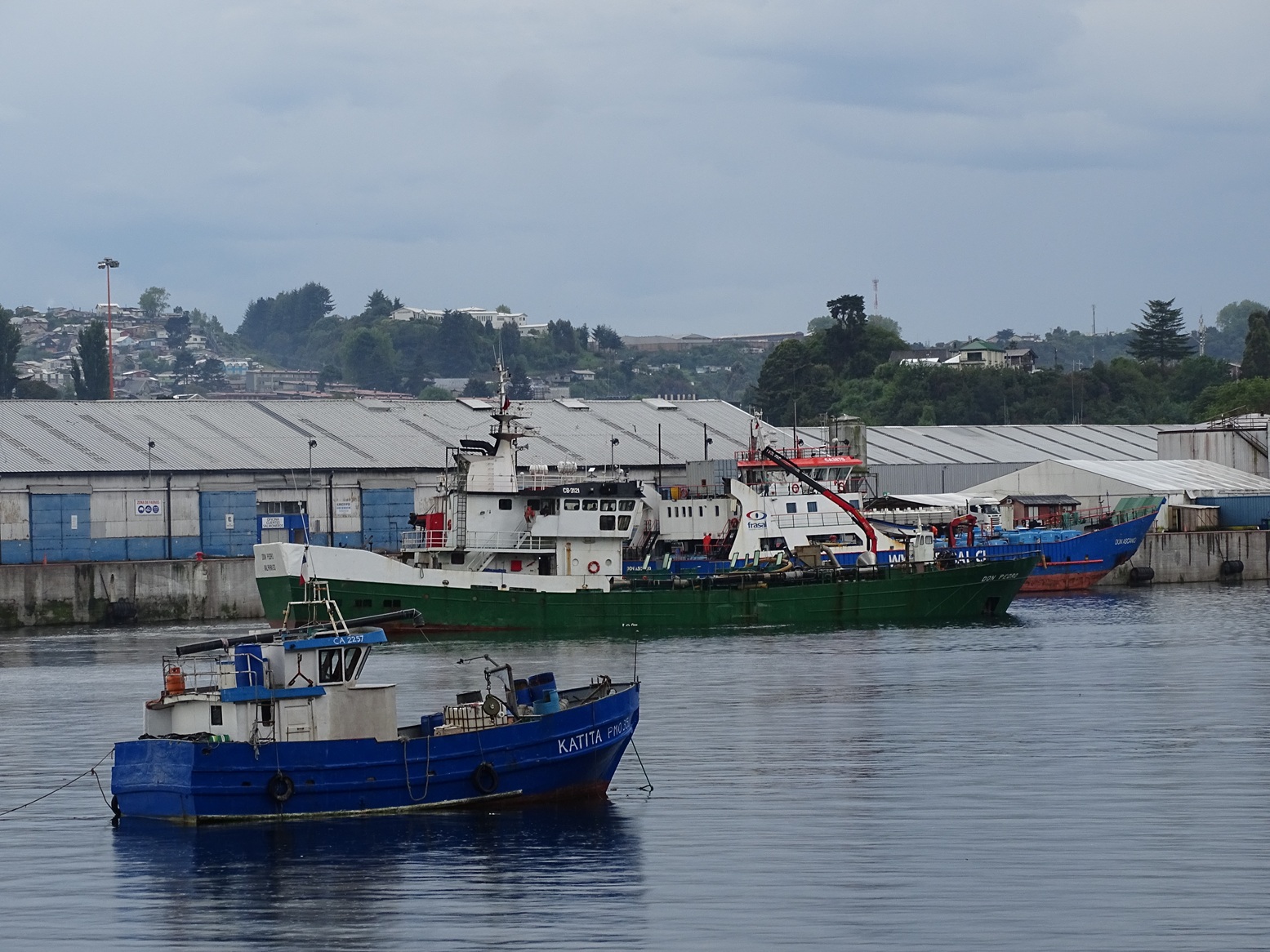
Aquabench's last exhibitor at the International Sea Lice Conference 2025 was the company's veterinary physician and analyst, Daniel Jiménez, who introduced the talk “Technological transition in aquaculture: assessing the performance of wellboats versus traditional tarpaulin methods for control of Caligus rogercresseyi”. On the occasion he released a comparative study that analyzed the baths carried out between 2019 and May 2025, showing that the tarpaulins are still the most used tool to deparasitize, both with chemotherapeutics and with non-pharmacological alternatives, such as fresh water and natural oils.
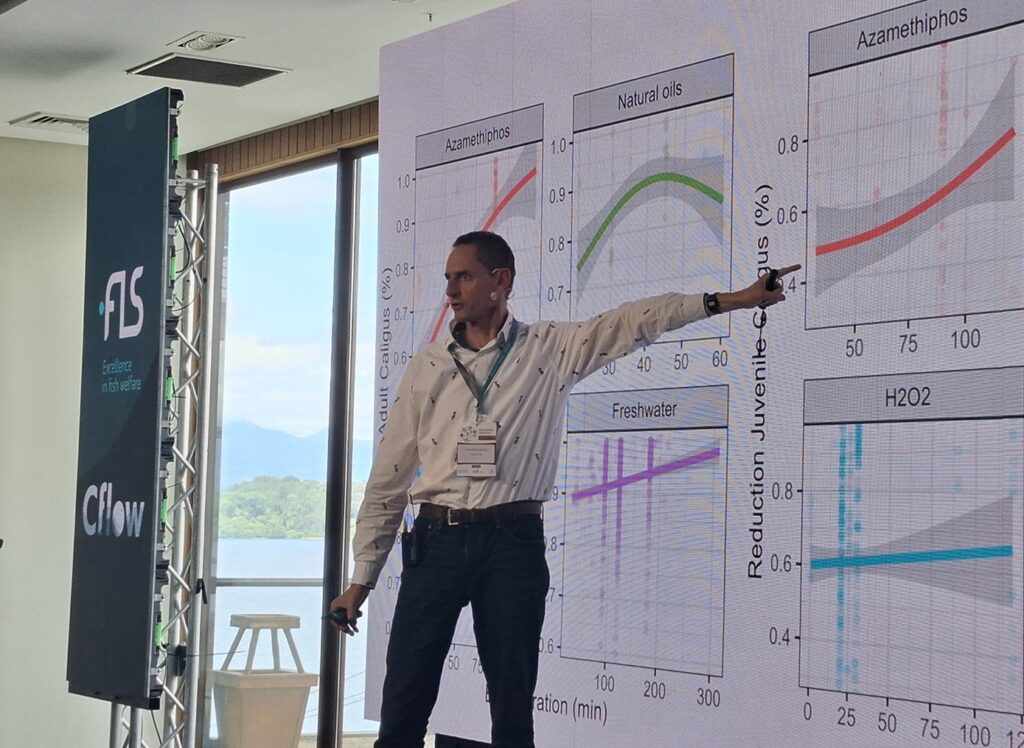
He explained that while wellboats are mainly used for treatments with hydrogen peroxide and fresh water, tarpaulins predominate in the use of essential oils and compounds such as azamethos. The results show that the wellboats provide more consistent and less variable responses, especially in peroxide and fresh water treatments, and allow them to operate under controlled conditions of salinity, temperature and duration of the bath, with better retention of parasites, although with longer operational times and high costs. The trend points to a growing adoption of this technology, driven by its technical performance, safety and operational control, but limited by the available capacity of ships, high costs and competition for cheaper alternatives.
According to Daniel Jiménez, the choice of the treatment system depends on variables such as: type of product, center logistics, sanitary and productive restrictions, plus costs. He argues that the key to improving sea lice control is to dominate the bathroom environment by strategic use of water. Wellboats, as highly controlled platforms that allow more effective and fast treatments.
With these presentations Aquabench made available to the scientific community and industry a robust set of analysis based on field data, which contribute to designing more effective and sustainable prevention and control strategies in the face of sea lice, one of the main health and economic challenges of Chilean salmon farming.