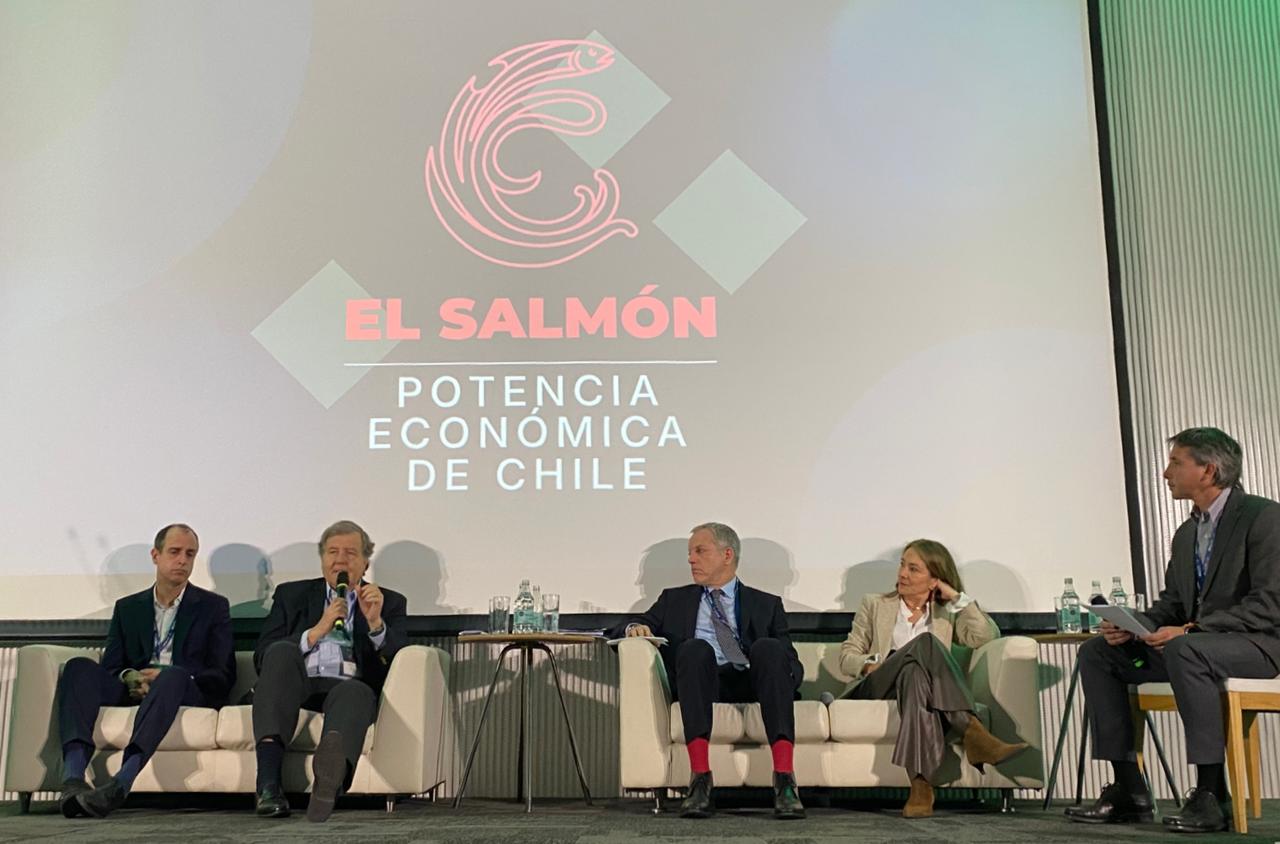
At the meeting organized by InfoSalmon, leaders from the industry, mining, commerce and academia agreed that the future of the sector requires enabling conditions for investment, competitiveness and international projection.
With the aim of highlighting the productive and territorial relevance of aquaculture in the capital, SalmonChile actively participated in the meeting "The Salmon: Economic Powerhouse of Chile", organized by InfoSalmon and held at the Deloitte offices in Las Condes.
The event brought together authorities, representatives of the salmon farming sector, the Confederation of Production and Commerce (CPC), the Mining Council, ProChile, Deloitte and the academia, bringing a strategic discussion that has traditionally been focused in the Los Lagos, Aysén and Magallanes regions to Santiago.
During the session, the speakers delved into how the future of salmon farming has evolved, as it no longer depends exclusively on increasing volumes or reducing operational costs, but on creating strong country conditions that allow attracting new investments, compete at a global level, manage emerging risks and connect the national productive capacity with the requirements of the international market.
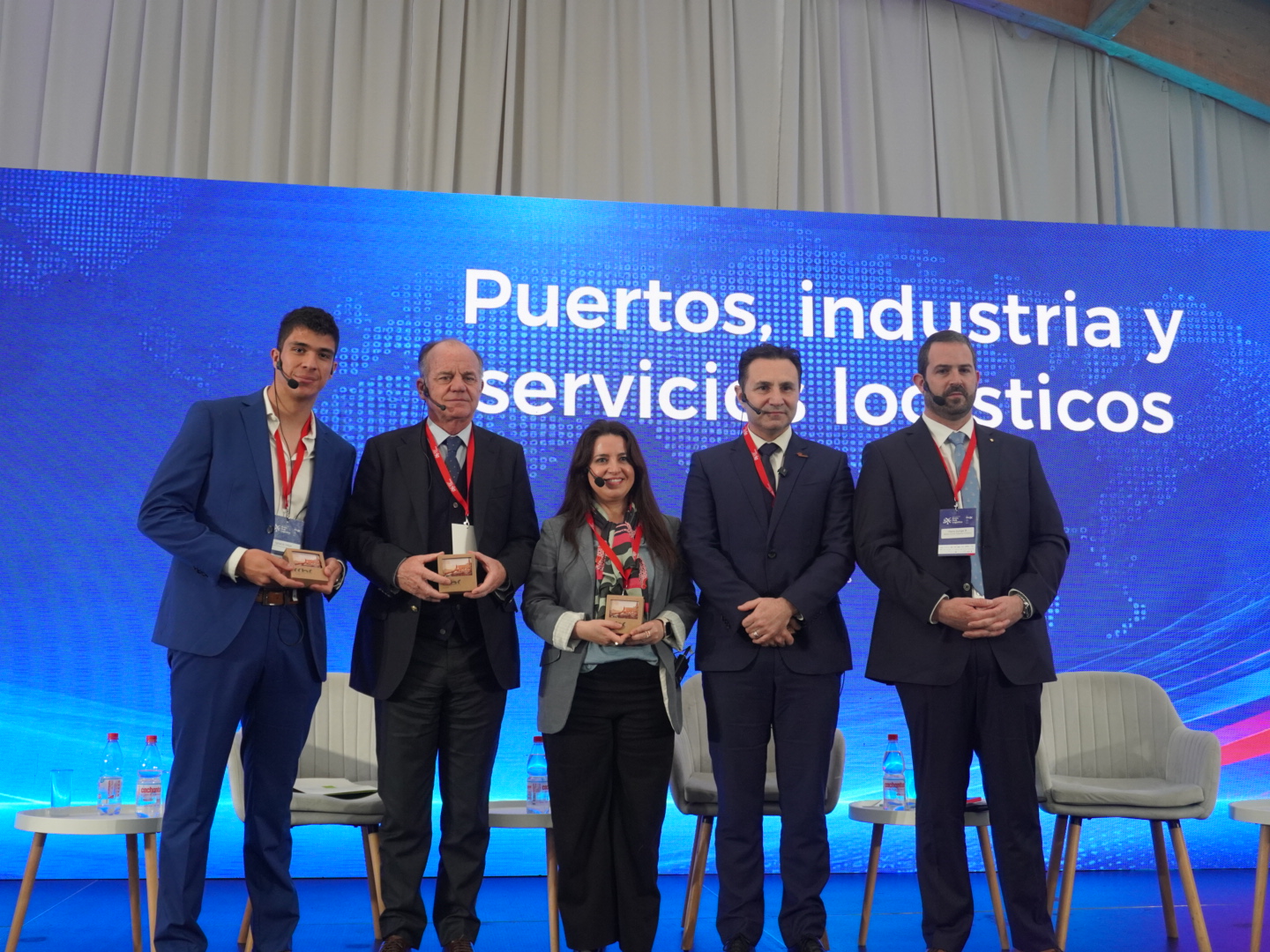
In this context, the president of SalmonChile, Patricio Melero, joined the multi-sectoral panel "Chile Productive: Vision, experience and trust for the country's development", a session moderated by Tomás Vigneaux. The panel also included interventions from the president of the CPC, Susana Jiménez; the general manager of the Mining Council, Carlos Urenda; and the general manager of Multi X, Cristián Swet.
Regulatory challenges and international projection
The multi-sectoral panel addressed cross-cutting issues between mining and aquaculture, emphasizing the need to build trust, promote a modern and predictable regulation, and deepen local productive linkages with thousands of suppliers and regional SMEs.
The president of SalmonChile, Patricio Melero, highlighted that the new international trade scenario, marked by greater protectionism and an increasingly transactional logic, forces Chile and salmon farming to adapt, diversify markets and innovate. In this context, he noted the potential of niche markets and the need to create greater regulatory certainty to boost investment and employment.
"It seems that we have to be increasingly innovative, moving from large exports and large blocks to having to look more and more for niche markets. We have to look for places where our products are increasingly required and more desirable," explained the union leader.
Strategic vision and global competitiveness
The general manager of Multi X, Cristian Swett, called to build a vision of country. “The difference between Norway and Chile is that in Norway there is a common vision, a coordinated vision between communities, between the academic sector, between the government and between the business world, to take the sector forward. That is what we in Chile need to be able to take advantage of this natural resource that does not exist anywhere else in the world.” pointed out.
At the close of the panel, Melero highlighted efficiency, innovation and competitiveness as key factors for the future of industry, along with the importance of keeping an open look at changes and signals coming from workers, the environment and the market.
Promoting regional development and the communication of the sector
The president of the CPC, Susana Jimenez, highlighted the relevance of regional development to the country's economic growth. “Chile’s production and exports are in regions. Nearly 60 per cent of GDP is produced in regions outside the metropolitan region and 80 per cent in exports. And that's not going to change, because if you look at world trends you can see how it's going to generate even more traction. (...) I think it's obvious that the look is a look from the regions and that everything that is done to unlock these exports at the regional level is important,” he said.
In addition, the General Manager of the Mining Council, Carlos Urenda, called on the business sector to assume a more active role in disseminating its contribution to the country. “The duty to communicate and make ourselves known is not that of the people, we are the ones who have to tell what we do and we have to do it with less shame, with more pride, despite the problems,” he said.
The event concluded with a cross-cutting consensus on the urgency of coordinating public-private efforts to enhance Chile's export competitiveness, safeguarding the environmental balance, the generation of quality employment and the positioning of the country as a leader in the production of sustainable protein and high nutritional value globally.