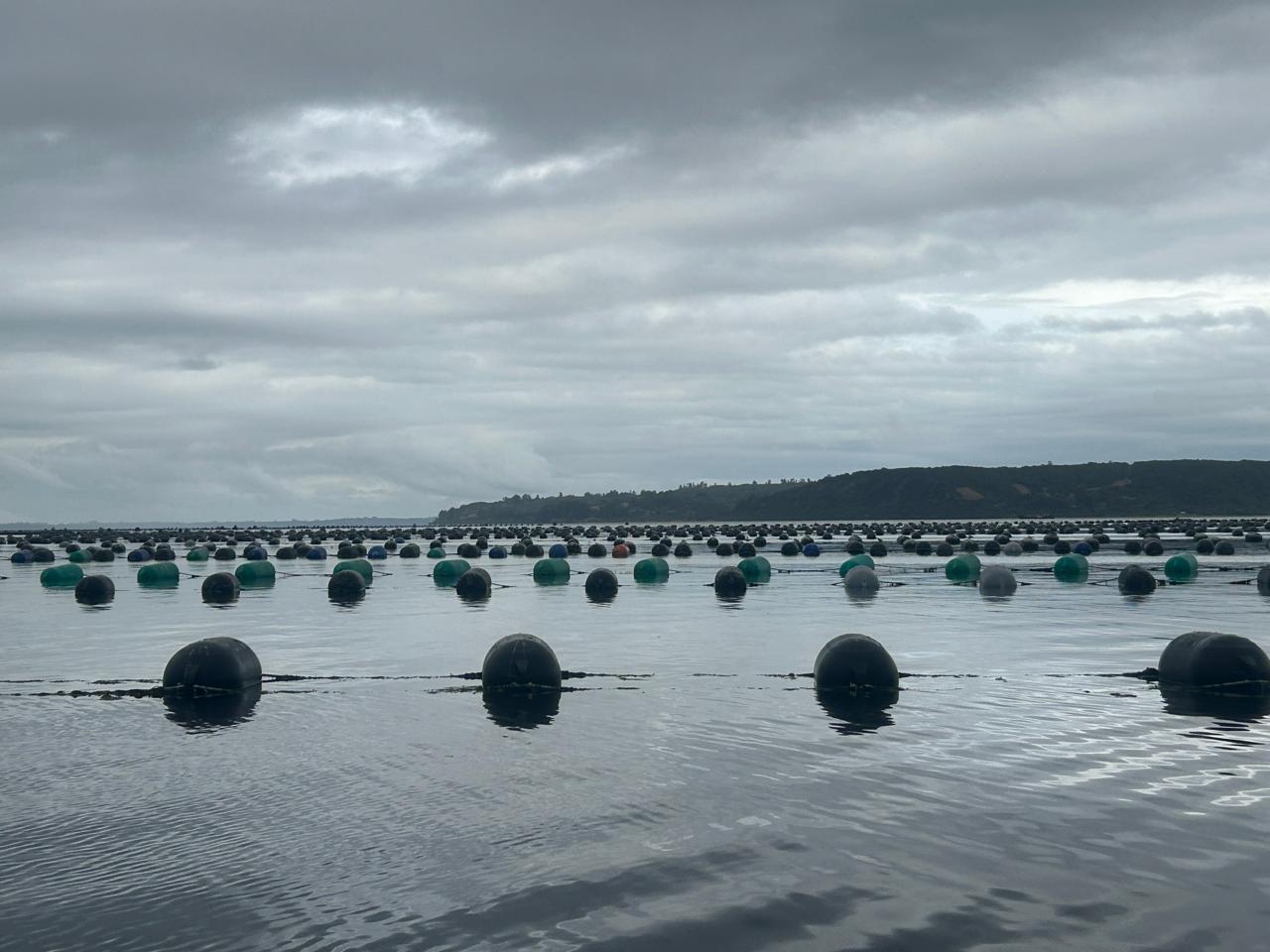
Project aims to develop an online platform that optimizes the management of salmon farming and mussel farming crops Chilean mussel and raises the competitiveness of the aquaculture sector, through the intelligent integration of systematic collection of key data.
At the beginning of January, the project named "Digital platform for the monitoring of productive variables and optimization of cultivation of" Chilean mussel through systematic data collection, modeling and advanced predictive analysis", from the 2025 Technology Research Competition of the National Agency for Research and Development (ANID).
It is an initiative driven by INTEMIT and AmiChile and which counts with the Universidad Santo Tomás (UST) as the beneficiary. The project aims to develop an online platform that optimizes the management of cultivation of Chilean mussel and raises the competitiveness of the aquaculture sector, through the intelligent integration of systematic collection of key data, such as size, biomass, density and geographical location, productive modeling and advanced and interactive analysis, transforming the collected information into strategic decisions based on data for producers and researchers.
The above, in the face of the reality faced by mussel farming, where the exact size and biomass of the mussels are unknown when they are removed from the ropes, combined with unpredictable factors, hinders sales planning and generates logistical inefficiency.
The initiative will allow the standardization of a monitoring protocol and analysis of historical data on predictive inflow and outflow flows in the farming centers, ensuring the quality and uniformity of the records to facilitate their analysis, as well as developing and validating a predictive model, capable of estimating critical production variables (size, biomass and density), considering specific conditions of each farming center.
Florencia Navarrete, director of the project, mentioned that, "For the Capia center of the UST, this project is relevant, as we can continue in the line of research of Chilean musseland we can contribute to the Industry with management tools; through mathematical modelling and AI tools, developed for the needs of producers.”
Chile is the world's largest producer/exporter of mussels, an industry concentrated in its entirety in the Los Lagos Region. However, the sector faces increasing challenges from climate change, such as ocean acidification and harmful algal blooms, which make crop planning difficult.
Víctor Vidal, principal researcher of the project said, "We propose to transform crop management by converting data into strategic decisions. Our platform uses bioinformatics models that dynamically adapt to each culture center, delivering personalized predictive curves with an accuracy of more than 85%," Vidal explained.
At a competitive level this innovation stands out at national and international level, as there are no solutions of equal accessibility in the mussel production sector.
In this regard, Camila Barría, technical manager of AmiChile-INTEMIT and co-director of the project, commented that, “For AmiChile and INTEMIT it is very important to be able to promote initiatives that facilitate the organization and productive issues of our partners and industry in general. Many years ago INTEMIT developed a service that allowed predicting the variables of size, biomass and density, and today this tool will become more digital through a platform that can run the same companies producing chorito, which also allows us to advance in the digital literacy of our industry,” she said.
This initiative is implemented by the Universidad Santo Tomás (Sede Puerto Montt) and seeks to transfer knowledge from academia to the entire value chain of mussel cultivation, strengthening Chile's position as a sustainable food power.