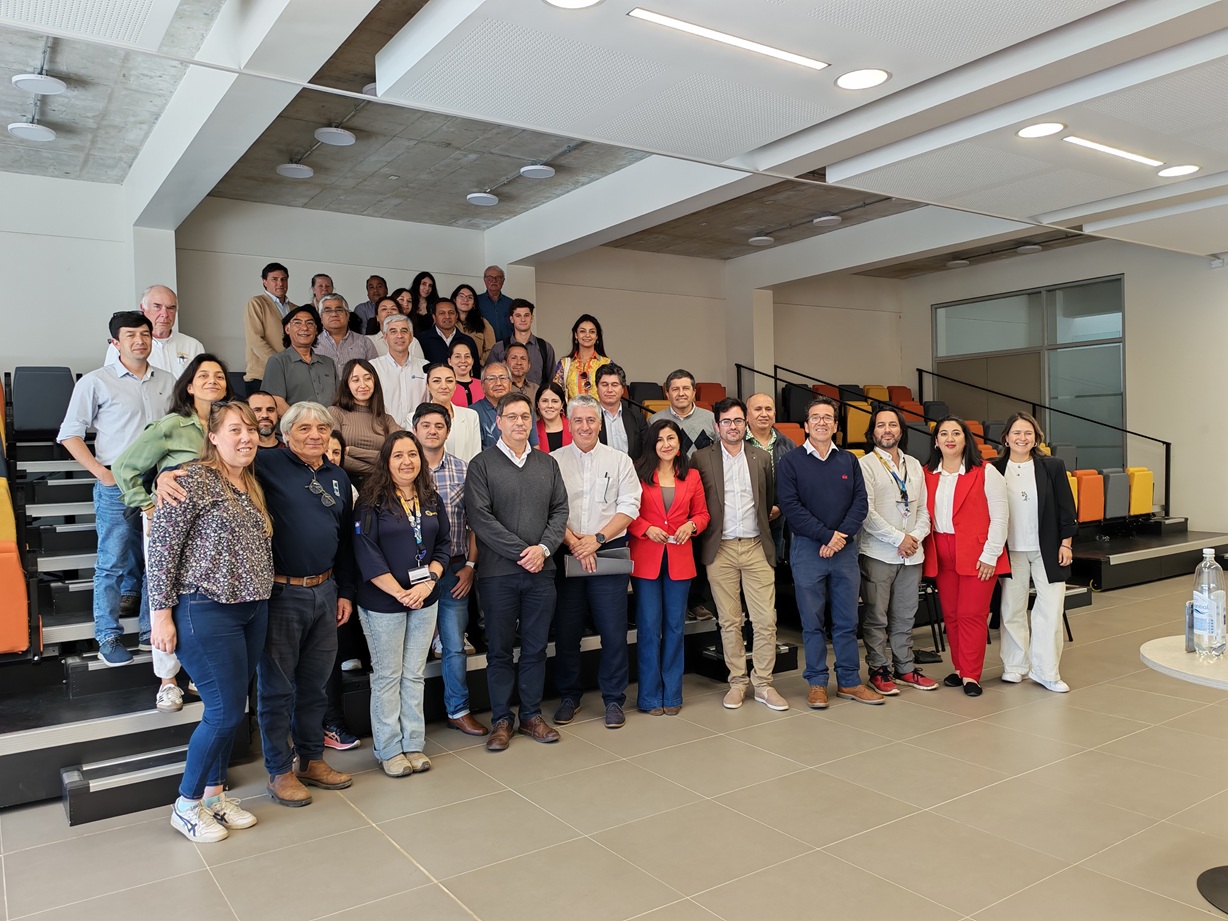
Research, science and innovation marked the X edition of the SIIAM Seminar 2025 held in Castro.
With a large turnout, the X edition of the Seminar on Research and Applied Innovation for Mussel Farming (SIIAM 2025) was held in Castro, organized by the Chilean Mussel Farmers' Association (AmiChile) and the Mussel Farming Technology Institute (INTEMIT).
The activity took place at the CEDUC UCN premises, Chiloé campus and was the setting to learn about various studies that researchers are conducting around Chilean mussel farming.
Rodrigo Carrasco, executive director of AmiChile, stated that "the first thing I would like to highlight is the historical importance of AmiChile as a trade association - it has been holding this seminar for more than 10 years - aiming to link research, science, knowledge with the productive and trade activities. For all trade purposes, in order to have discussions and proposals, it is very important to have a solid, scientific, knowledge-based foundation that" support these actions. Awards from Amichile have also been given to recognize the contribution of research to Chilean mussel farming, it would be impossible - if there had not been different scientists, researchers and academics - who have contributed with their knowledge and their work in these years," explained Carrasco.
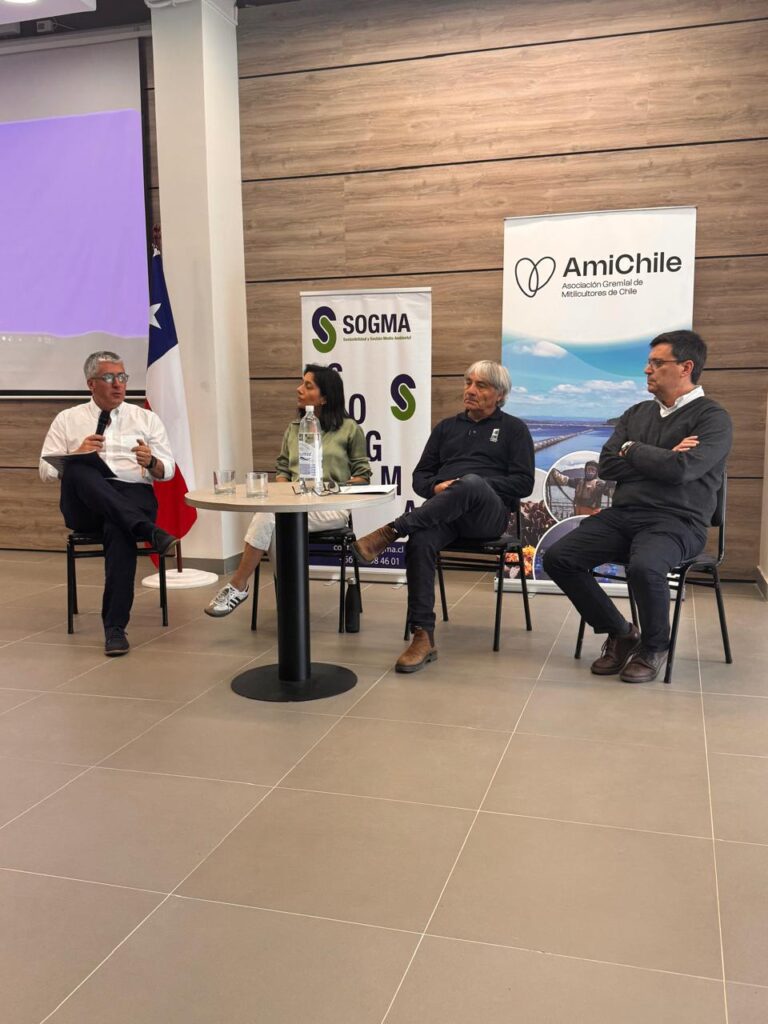
Camila Barría, in charge of the R&D+i Area at Intemit, valued the opportunity for participation and the new relevant knowledge for the industry. "During this X edition of SIIAM, we wanted to recognize the career and contributions of various researchers at a national level, who, thanks to their research interest, have been able to generate the scientific bases and new highly relevant knowledge for the mussel farming industry." This year we also wanted to create the opportunity to present young researchers who are conducting science through postgraduate theses or innovation projects, such as the revaluation of organic waste from the industry, therefore I consider it necessary to continue promoting these initiatives and to encourage basic and applied research around the issues of mussel farming," he emphasized.
Scientific presentations
The event included a wide variety of studies that included work from all parts of the production chain:
1. Seeds and climate change
The candidate for doctor at the Universidad Austral de Chile, Joseline Büchner, submitted “Seeds as supporters of mussel cultivation in Chile: physiological vulnerability and consequences for the sustainability of Mytilus chilensis crops due to climate change”.
His research addresses the susceptibility of Chilean mussel to critical environmental scenarios.
2. Conduct of seed harvesting and removal
Dr. Cristian Segura exposed “Driving of mussel seed in environmentally contrasting areas”. The researcher has dedicated more than 13 years to the study of the productive behavior of the mining industry and its relationship with environmental variables of the inland sea of Chiloé.
3. Effects of toxic dinoflagelates
The candidate for a doctor Camila Barría presented “Effect of the toxic dinoflagelates Alexandrium catenella and Protoceratium reticulatum in the Chilean mussel: implications for the histological and immune transcriptional response”, a key study to understand biological risks associated with crops.
4. International health requirements
Dr. Maria Angelica Larraín exposed “Study of the technical basis of the Euro-Asian Economic Union (EEU) requirement for maximum temperature in the mollusc transport chain”, linked to the area of processes and quality.
5. Microplastic in bivalves
Dr. Marco LardiesSECOS Institute researcher, introduced “Exploring microplastics in commercial bivalve species and in waters inhabited by mussel aquaculture: perspectives from the South Pacific”.
6. Waste recovery
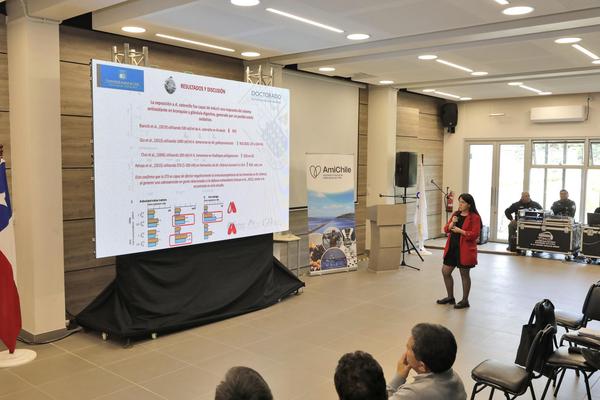
Finally, Dominga Larroulet, of the project Circular mussel, presented “Valorization of organic mussel waste: development of an organic biostimulant for agriculture”, focused on innovation and circular economy.
Acknowledgements
One of the objectives of this Seminar was to recognize the researchers , who have been an immense contribution to the cultivation of national mussels, so they received a recognition in this Seminar.
The investigator Nelson Lagos is a leading Chilean researcher, specialist in marine ecology and global change at Universidad Santo Tomas; Dr. Doris Soto belonging to the Interdisciplinary Centre for Aquaculture Research-INCAR of the University of Concepción; ; Maria Angelica Larraín of the University of Chile; Cristian Vargas is an academic at the University of Concepción (UdeC), and a researcher linked to the Millennium Socio-Ecology Coastal Institute (SECOS); Marco Yevenes University of Los Lagos; Cristian Segura of IFOP, he was also a promoter of the present research seminar, which was born with the aim of strengthening the link between the scientific community and the mining industry, promoting the generation and transfer of applied knowledge to address productive, environmental and technological challenges of the sector; Karin Lohrmann of the Catholic University of the North; Jonnhy Blanc and Carlos Molinet of the Universidad Austral de Chile ; Cristian Gallardo University of Concepción and Marcela Ávila Director of the Aquaculture and Fisheries Centre for Applied Research - CAPIA.
Innovation
One of the novelties of this seminar was the incorporation of innovation topics applied to mussel cultivation and a panel discussion was held, where María José Urrutia was a prominent voice in innovation and sustainability within the ecosystem of southern Chile. As founder and CEO of Këtrawa, she leads initiatives that drive climate solutions and the growth of the blue economy and promote Patagonia Ocean Hub; Alejandro Clément Díaz is a marine biologist from the University of Concepción and a master of science from Oregon State University (USA). His work focuses on the study and monitoring of harmful algae blooms (NAF) and red tides, applying technologies such as remote sensors and satellite images for the analysis of ocean color and coastal ecosystems and professional lawyer Arturo Navarrete and is currently part of of SOGMA, company with projects related to the valorization of the conchilla de choritos and its use as stabilizer of roads.