Derived salmon products account for 83% of the region's exports and 88% of food shipments.
This Friday 24 June, the Los Lagos Regional Office of the National Institute of Statistics (INE) reported that during March 2022 a total aquaculture-fishing landing of 93,714 tonnes was recorded, which represented an annual increase of 7.2%, mainly due to greater activity in cultivation centres.
"Harvests from cultivation centers were equal to 80,881 tonnes, recording an increase of 11.9% over twelve months equivalent to 8,577 tonnes," said the INE, adding that the total artisanal catch was 12,829 tonnes, and noted a year-on-year decrease of 15.2%, equivalent to 2,291 tonnes.
In the context of the species harvested from farming centers, the fish category was the only one affected by an increase of 55.8% shown over twelve months.
With regard to the species cultivated in the region, the rainbow trout (Rainbow trout) reported an increase of 1,000.4%, being the one with the highest incidence in the increase of harvests. The Atlantic salmon (Atlantic salmon) also had a positive impact by recording an increase of 13.5% in a year.
On the other hand, the production of aquaculture-fisheries plants reached 93,562 tonnes and recorded an annual decrease of 13.3%, which was mainly caused by the decline in fish categories (-15.2%) and molluscs (-3.4%).
For all details, download below the Fishing and Aquaculture Bulletin:
Exports
Recently, the INE detailed the exports of the region of Los Lagos corresponding to April 2022, which reached 563.4 million dollars (MMUS$), registering an increase of 31.0% in twelve months, mainly affected by a greater dynamism of the industry sector, which showed an increase of 31.0%.
Within the industry sector, the economic branch with the highest positive impact was food, with an increase of 31.2% year-on-year.
According to economic bloc, APEC led with MMUS$440.9, registering an increase of 31.7%, equivalent to an additional MMUS$106.2 compared to April 2021, with a greater impact on the value of shipments to the United States and Japan. After APEC, NAFTA (MMUS$261.9), which scored 39.1% growth, was affected by the increase in shipments to the United States, mainly.
“As regards the value of the various lines of salmon products, 83.1% of the region’s exports and 88.0% of food exports participated in this period, totaling MMUS$468,1. This exported value meant an increase of 38.2% in twelve months, equivalent to MMUS$129.5,” highlighted the INE Los Lagos.
Salmon exports were mainly to North America (52.8 per cent), Asia (29.4 per cent) and South America, which registered 12.7 per cent share.
At the country level, the United States accounted for 47.8% (MMUS$223.8) of the total exported salmon, noting an increase of 41.0% in the value of their shipments in twelve months, with the greatest impact on the increase in salmon exports. Japan, second with 14.3% (MMUS$67.0), increased its export value by 20.0% year-on-year. Brazil, meanwhile, participated in 9.9% of these exports, registering MMUS$46.1 and an increase of 62.2%.
For more information, download the Export Bulletin below:
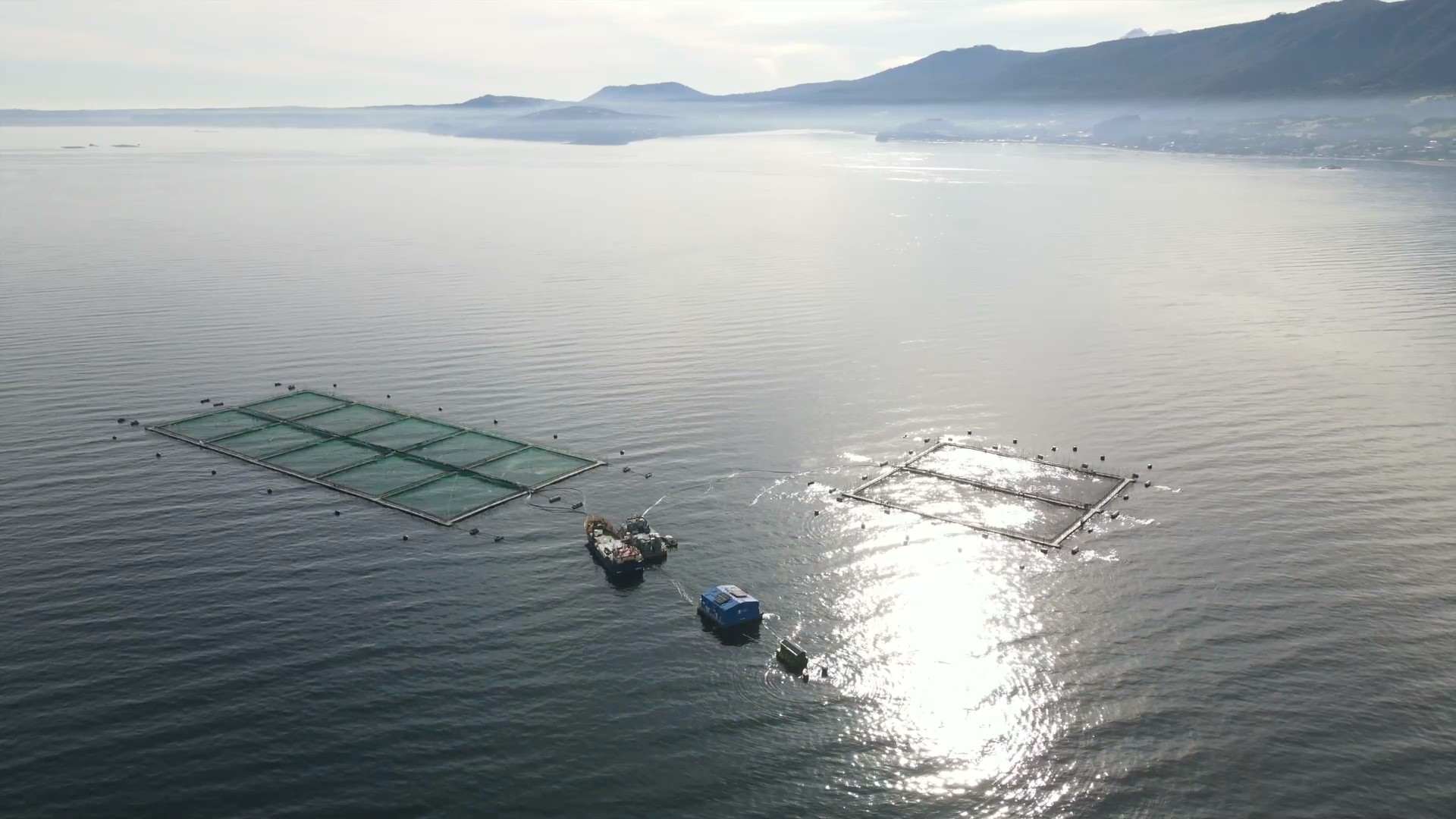
* The prominent photo corresponds to the “Quillaipe” cultivation center of the salmoniccultora Granja Marina Tornagaleones (GMT – Marine Farm). Credits: Dron capture from Studio Rein.