The sixth Sustainable Impact Report brings together more than 140 indicators and continues an exercise of active transparency aimed at recognizing advances, identifying gaps and contributing to better decisions for the future of the activity.
Under the label "Six years measuring our impact. When we measure, we progress," the Salmon Council presented its sixth Sustainable Impact Report, a publication that gathers and systematizes the social, economic and environmental contribution of its member companies: AquaChile, Australis Seafoods, Cermaq Chile, Mowi Chile, Salmones Aysén and Ventisqueros.
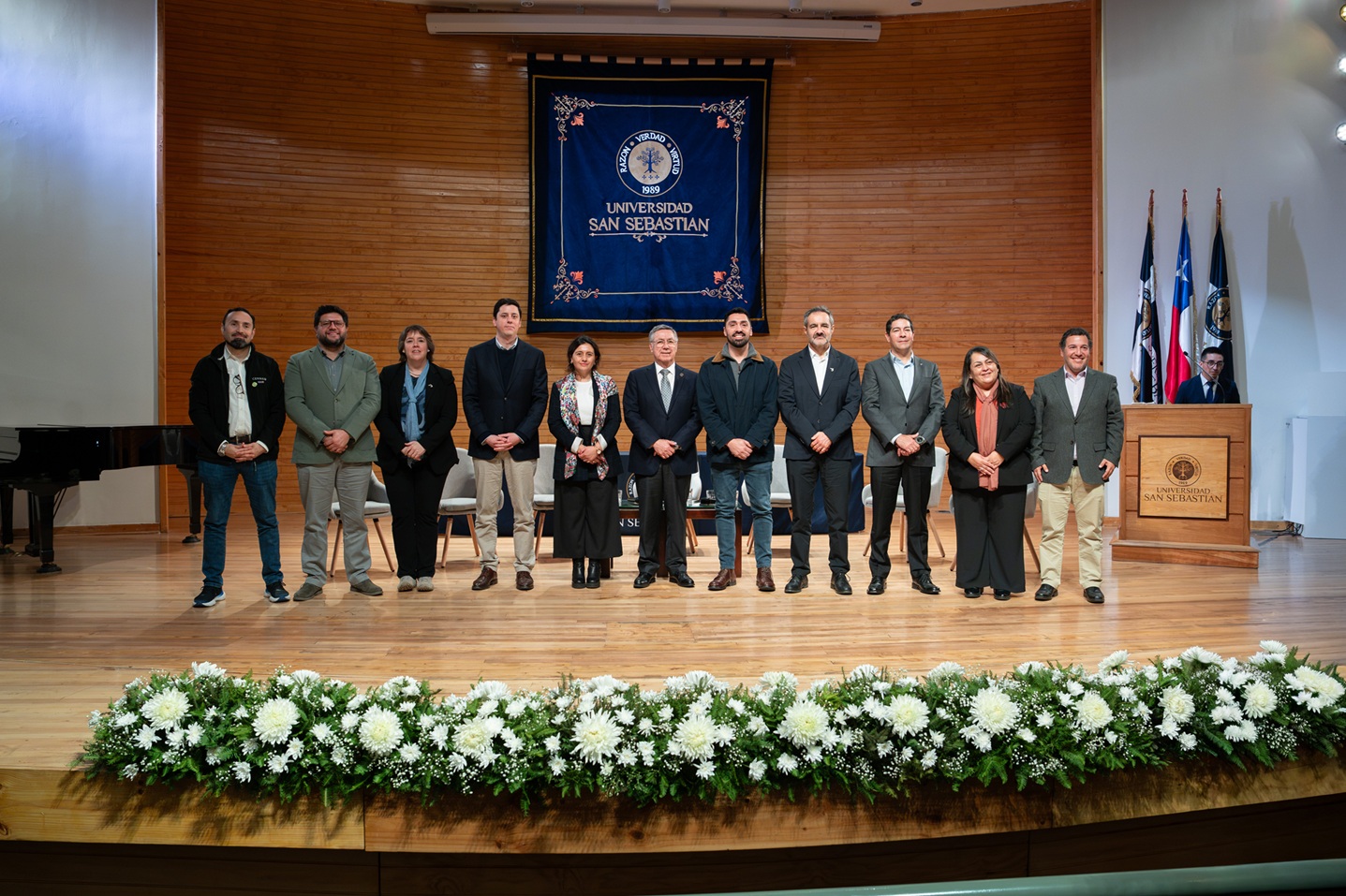
The presentation was held in the Aula Magna of the Universidad San Sebastián, the Patagonia campus, in Puerto Montt, and featured the participation of regional authorities, representatives from the academy, executives from the partner companies and actors involved in the productive and territorial development of southern Chile.
The Report considers more than 140 indicators and consolidates six years of continuous measurement. This work allows observing the evolution of the activity, recognizing advances, identifying areas where improvement is still needed and generating a common basis for more informed discussions.
The executive president of the Salmon Council, Loreto Seguel, highlighted that this trajectory reflects the commitment, rigor and sustained work of the six partner companies to advance towards a more sustainable salmon farming.
"Six years measuring our impact represent a path and a conviction that we have maintained over time. As the Salmon Council, we believe that a strategic activity for Chile must be able to be observed with rigor, share information and turn it into better decisions. Because when we measure ourselves, we progress; our territories progress, the southern regions progress and Chile progresses," said Seguel.
On their part, the vice-rector of the Patagonia campus of the Universidad San Sebastián, Sergio Hermosilla, highlighted that "this is a space to look at our productive reality, care for our natural heritage, strengthen our communities and open opportunities for new generations, considering that the industry has generated employment, investment, entrepreneurship, knowledge and innovation for thousands of people, projecting our "región towards relevant international markets," he pointed out.
Social initiatives benefited more than 130 thousand people, and payments to domestic companies totalled $3.2 trillion
The results of the sixth Sustainable Impact Report allow us to measure the social, economic and environmental contribution of the six member companies of the Salmon Council.
During 2025, the companies developed 1,587 social initiatives, which benefited more than 133 thousand people in areas such as education, access to salmon, culture, links with indigenous peoples and coastal border actors. In economic terms, payments made to domestic supplier companies reached $3.2 billion during 2025, accounting for the capacity of salmon farming to mobilize a wide network of activities production and services in the country.
The Report also shows advances in the sustainability strategies of partner companies. One of them is that 93% of the waste generated was recovered, reused and recovered, mainly through the use of biomass, as well as composting and energy recovery.
In addition, 57% of the energy matrix used by partner companies came from renewable sources. In addition, through the activations of its beach cleaning programme, during 2025 the partner companies collected more than 692 thousand kilos of waste from different sources in 24 communes in the regions of Los Ríos, Los Lagos, Aysén and Magallanes.
“Behind each indicator there is a rigorous and coordinated work of teams that collect information, review criteria and build a common base. Companies with their own identities and trajectories have been able to work together on a higher purpose: to contribute to an increasingly sustainable salmon farming, connected to their territories and aware of the responsibility they have for the development of southern Chile and the country.” Loreto Seguel said.
Projecting the salmon culture of the future
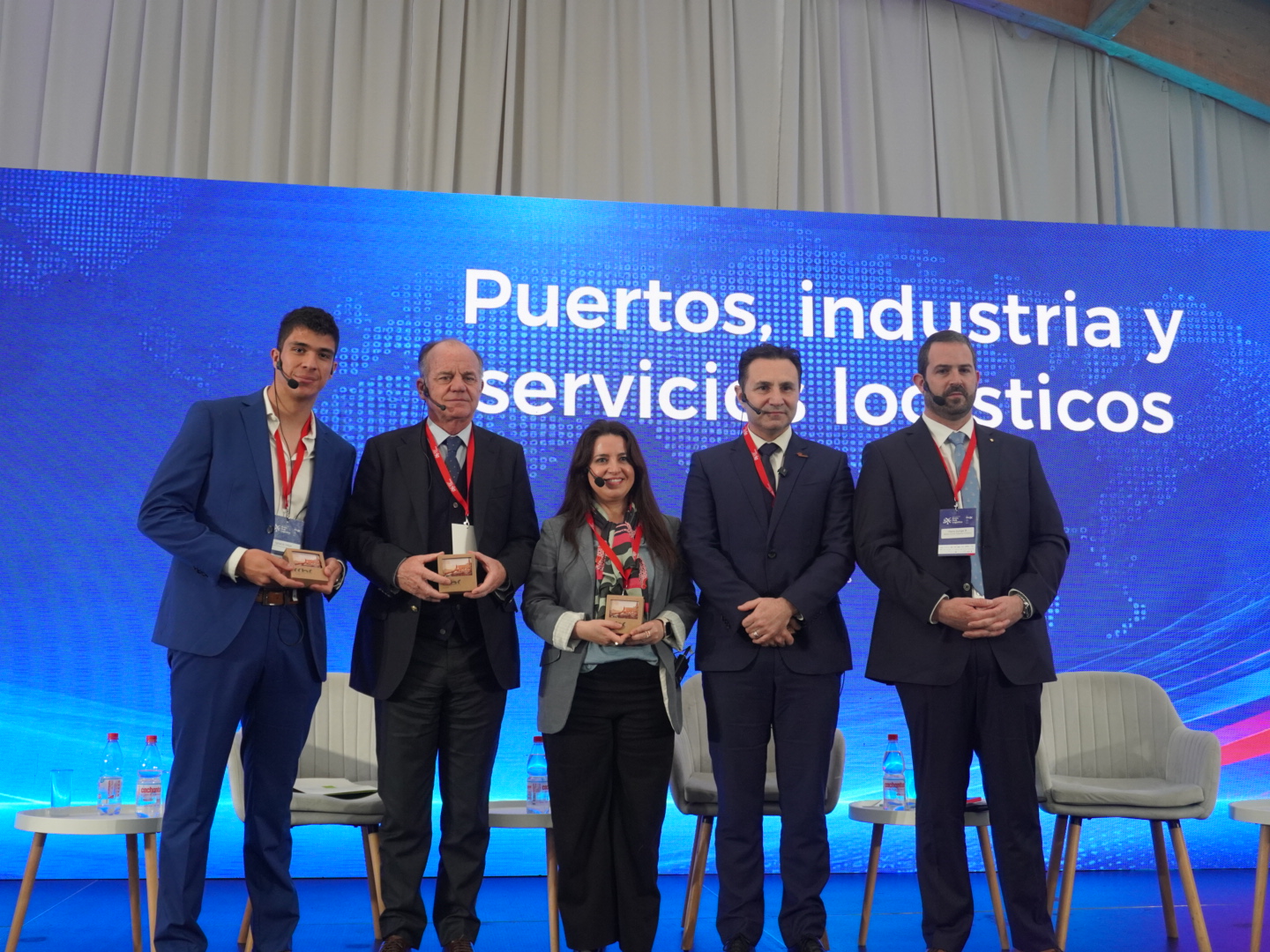
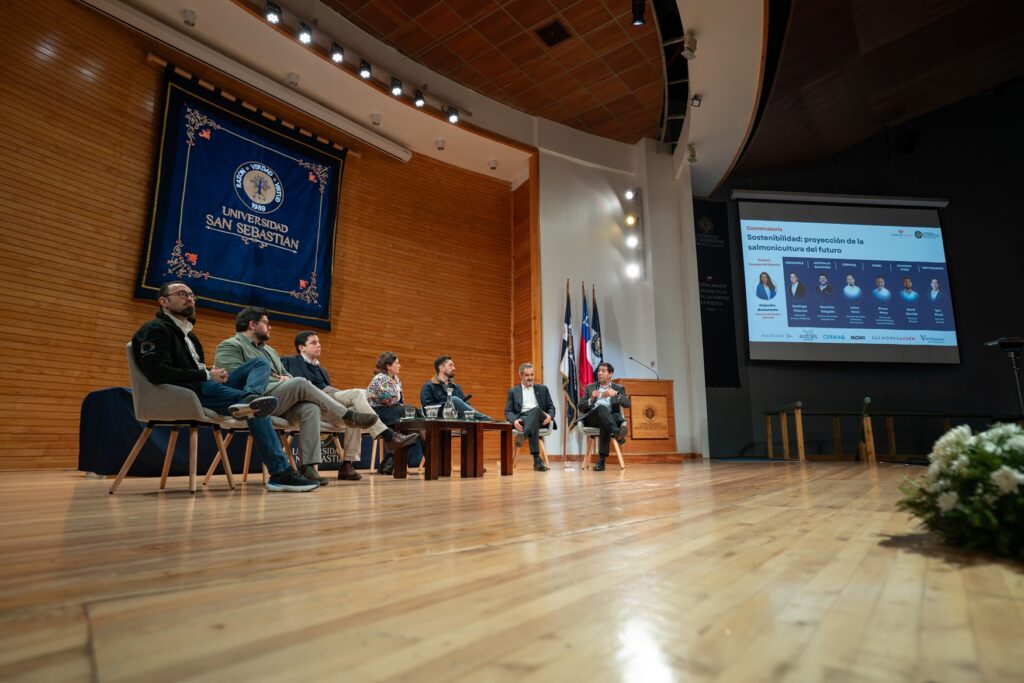
During the conference, there was also a discussion entitled “Sustainability: the projection of salmon farming for the future”, which brought together executives of the six member companies of the Salmon Council. The panel included Santiago Villarino, Public Affairs Officer of AquaChile; Mauricio Delgado, Manager of Regulatory Affairs of Australis Seafoods; Jaime Varas, Manager of Environment and Concessions of Cermaq Chile; Álvaro Pérez, Manager of Sustainability and Public Affairs of Mowi Chile; David Garrido, technical manager of Salmones Aysén; and Igor Stack, technical manager of Ventisqueros.
Panellists addressed sustainability as an enabling axis for the future of Chilean salmon farming and shared their perspectives on the decisions, capacities and forms of collaboration needed to further project the leadership of the industry.
With this sixth edition, the Salmon Council continues a sustained exercise of active transparency and continuous improvement. It is a work that articulates companies with their own identities and trajectories around a common base of information, with the aim of contributing to an increasingly sustainable salmon farming and projecting their contribution to the development of the regions of the south and Chile.