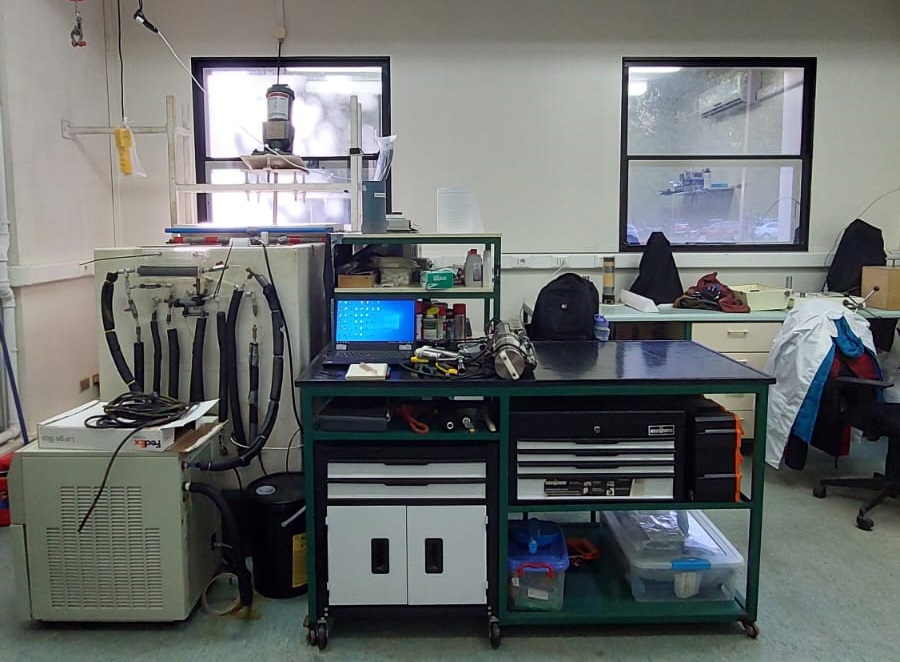
The initiative aims to maintain a high metrological standard for the analysis of the available oceanographic variables, adding dissolved oxygen, turbidity and fluorescence.
With the aim of raising and expanding technical capabilities in sensor calibration, the Oceanographic Instrumentation Center (CIO) is carrying out the project "Metrological Platform for the Calibration of Oceanographic Instruments" (PMCIO).
For this initiative, CIO won for the first time, by submitting independently, a Medium Scientific and Technological Equipment Fund (FONDEQUIP Mediano) from the National Agency for Research and Development (ANID). The variables that operate this laboratory are conductivity, temperature and pressure, which are the basic variables for measuring in the ocean. It is now planned to include dissolved oxygen, turbidity and fluorescence.
Regarding the motivations for starting this project, industrial engineer (UBB) and analytical chemist (UDEC) Gerardo García, director of Laboratories and Calibration at CIO, commented that it has to do with updating and strengthening the current CIO calibration laboratory. "We have a calibration laboratory that has been operating for more than 10 years, but we need a second space in order to update our procedures" and include new variables that have become necessary for new research," explained.
Project status and importance
Currently, the PMCIO project is in the first 12 months of implementation, completing the acquisition of the equipment. The FONDEQUIP program established a total of 18 months for the start-up phase of this initiative.
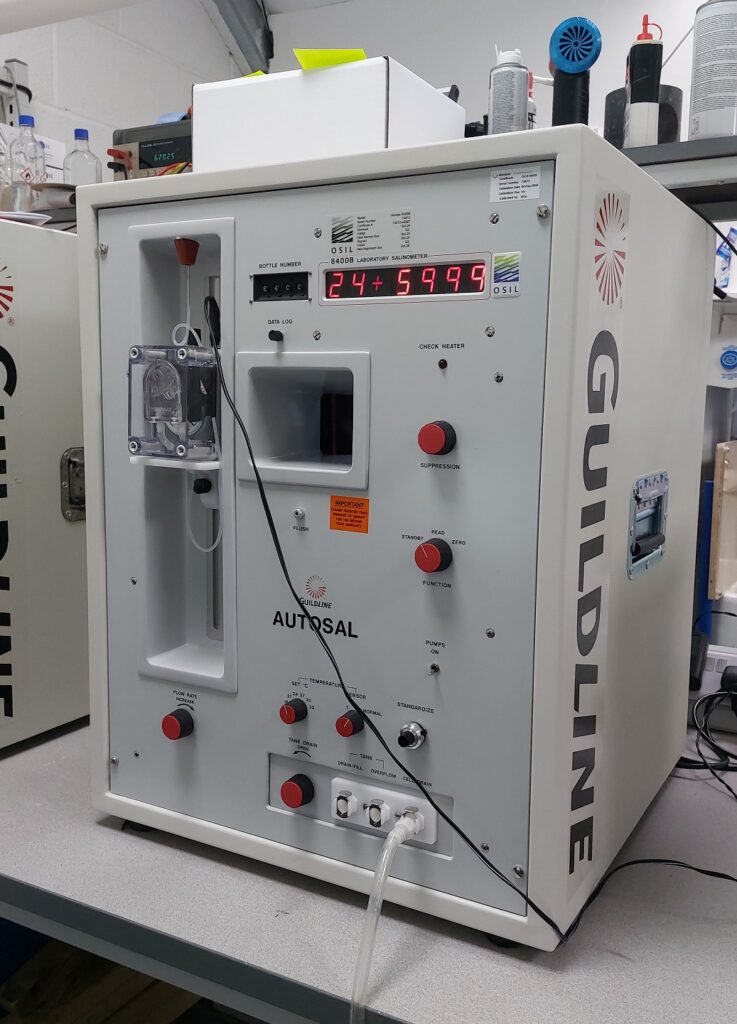
Regarding the importance of the project, it lies in that it meets a national and regional strategic and economic need, since it is vital that measurements carried out in the ocean are accurate and precise, therefore reliable and efficient, whether for controlling production processes, inspection, or to validate scientific evidence of oceanic phenomena. "Previously, the options for sensor calibration were almost" exclusive to instrument brands, so each user had to send their equipment to the factory for calibration, with response times between 4 to 8 months, due among other reasons, to the geographical location of the centers, with high shipping and opportunity costs," he added. Regarding the scope of the initiative, CIO plans to offer services to the scientific community across Latin America and thus contribute to the Regional scale probe calibration.
Thus arises the opportunity for CIO to offer this service with a second laboratory. The idea is to support that measurements in the ocean are of high quality, ensuring that the sensors carry out measurements based on metrological standards that validate the correct measurement and have the support of an accredited institution in the field of oceanography.
"We want to help both the scientific community and the industrial community linked to the ocean to carry out measurements and collect high quality and efficient data. The most appropriate way to achieve this is to have a high standard metrological laboratory to calibrate these equipment," he added.
The CIO, based at the University of Concepción (UdeC), has as associated institutions the Millennium Institute of Oceanography, the Catholic University of the North, the University of Valparaíso and the Center for Advanced Studies in Arid Zones (CEAZA).
It is a unique initiative in Chile and Latin America, with the aim of expanding this service to the entire scientific community and with international projections.
"Latin America is quite geographically far from the companies that have traditionally been able to provide calibration services, and it is difficult to get equipment maintenance. We are betting on offering this service to users in Chile and Latin America," he concluded.