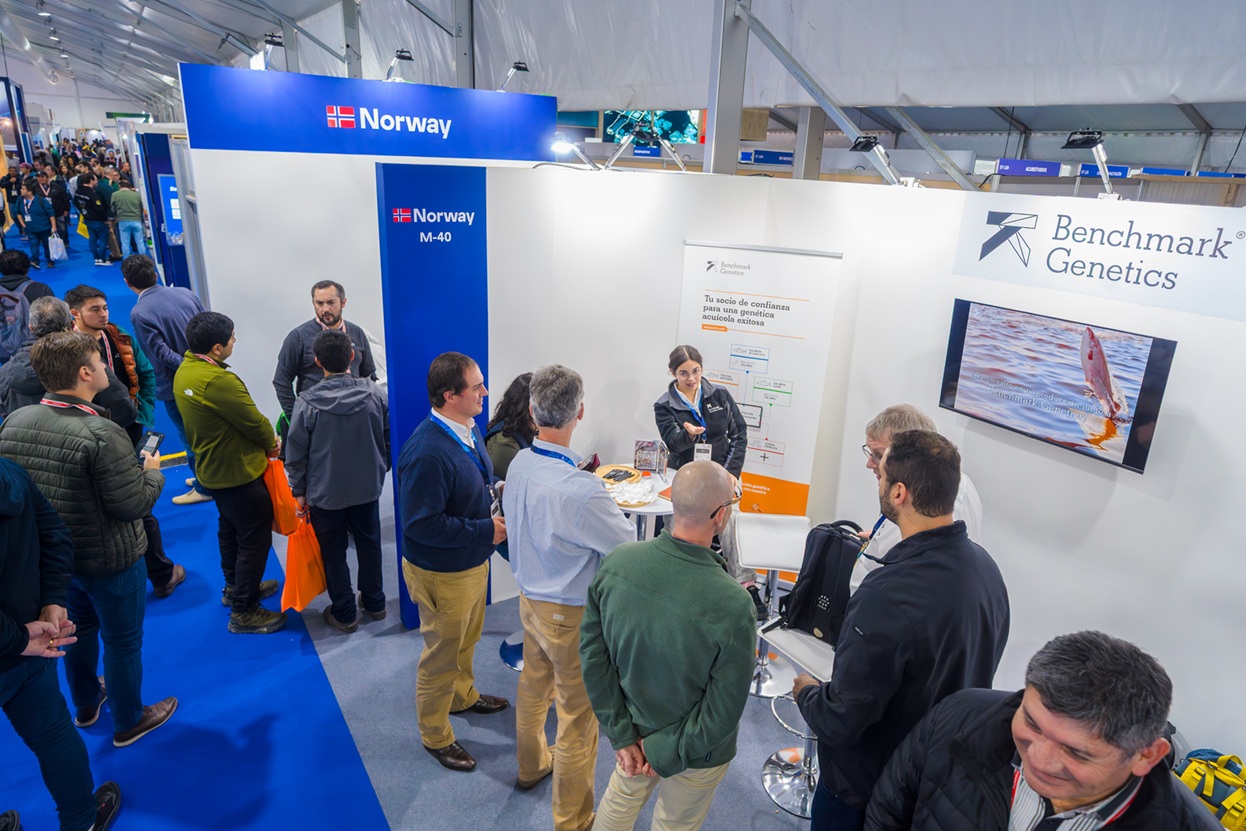
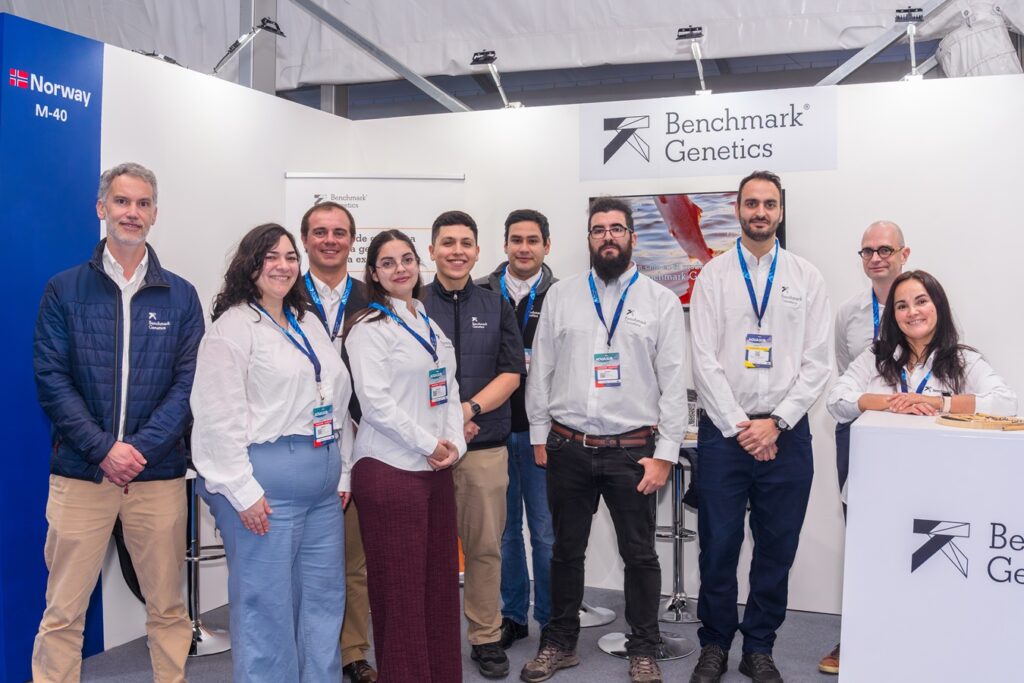
Once again, the company participated as an exhibitor at the most relevant international aquaculture fair in the Southern Hemisphere, where it promoted the advanced genetic services available to aquaculturists in Chile and Latam. Similarly, two of its experts were part of the International Congress held within the framework of the event.
Benchmark Genetics reaffirmed its global leadership in genetic solutions for the aquaculture industry during its participation as an exhibitor at the international AquaSur 2026 fair, where its team was deployed to present its portfolio of services and technologies aimed at driving more sustainable and competitive aquaculture production.
During the fair, executives and technical experts from Benchmark Genetics - among them Dr. Morten Rye, Director of Genetic Services and International Strategy; Bruno Decock, Global Commercial Director, Genetics Services; and Maria Nayfa, Business Development Manager, Genetics Services - presented in detail the strong portfolio that the company has available for Chilean and Latin American aquaculturists.
The services include design and technical support for genetic programs; evaluation of breeders and provision of mating lists for nucleus and multiplier lines; technical reviews and audits; genotyping; cryopreservation laboratory services; and bioeconomic modeling for better decision making.
The company also had an active participation in the International AquaSur 2026 Congress. On Wednesday March 25, the director of Genetic Services and International Strategy of Benchmark Genetics, Dr. Morten Rye, participated as a panelist in the workshop EDIGEN: Perspectives on the application of gene editing in the global aquaculture industry
During his intervention, Dr. Rye explained that aquaculture is currently facing, both in Chile and globally, various challenges related to genetic editing. While significant advances have been made, technical and regulatory challenges persist, which hinder the development and adoption of these tools. "This technology has great potential, but we must also be realistic about how quickly these innovations "can be adopted and implemented in practice," he stated.
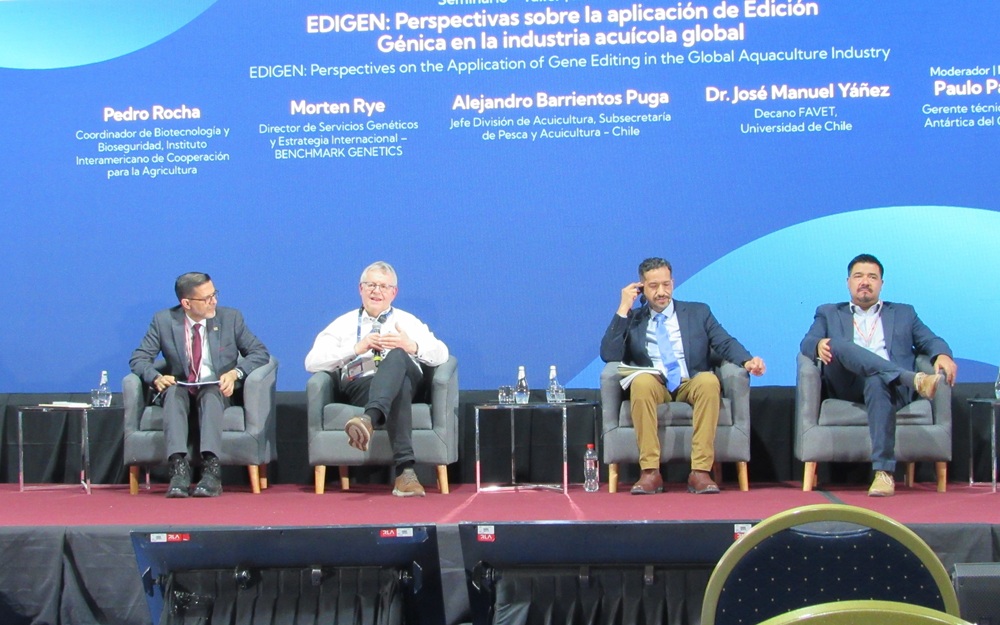
I think that at a global level we are making great progress in the joint debate on these technologies, both in the legislative field and in the dialogue with the stakeholdersstakeholders) and the industry itself,” said Dr. Rye. He also stressed the need for high-level scientific and academic resources to address the complexities of the topic.
Finally, he said that science and legislation must go hand in hand, focusing research and development efforts on features such as animal welfare and disease resistance, in order to improve public acceptance of products obtained through gene editing and at the same time protect the environment.
Comprehensive genetic solutions
On the last day of the International Congress, Thursday, March 26, Dr. Baltasar García, geneticist senior of Benchmark Genetics, delivered the talk “Comprehensive genetic solutions for sustainable and competitive aquaculture”. In his presentation, he detailed how improvement programs, advanced genomics and complementary services – such as bioeconomic analysis and cryopreservation – enable producers around the world to optimize their productive, health and economic results.
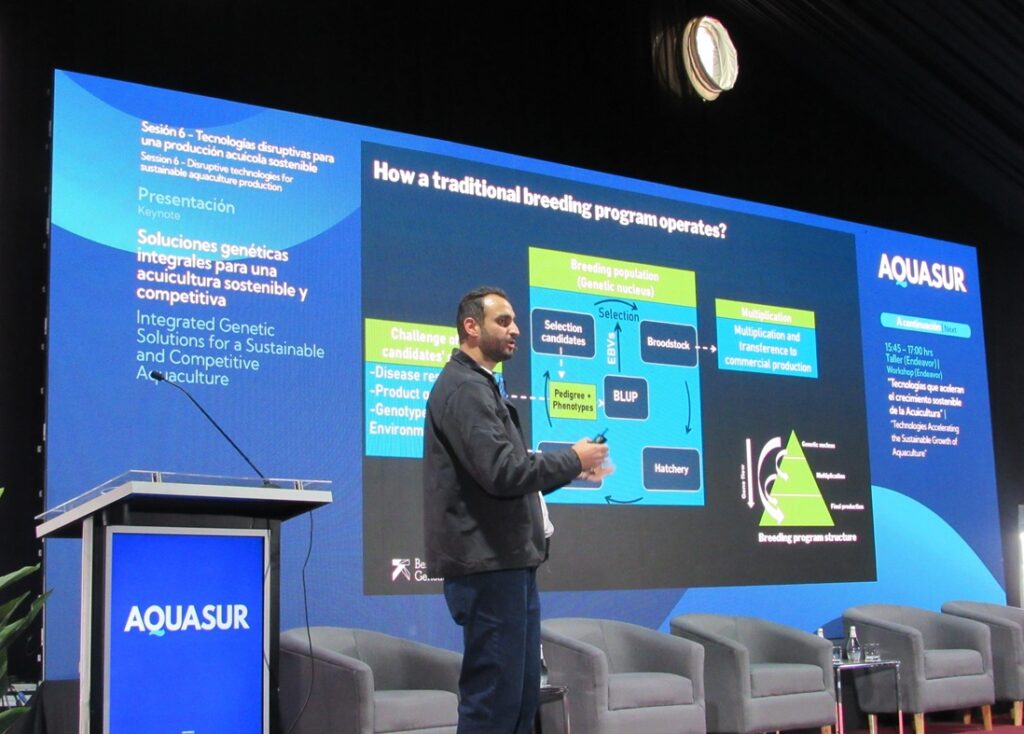
Dr. García explained that genetics has become a key engine for more sustainable and competitive aquaculture. Although it is a more recent discipline than in terrestrial species, it has made it possible to take advantage of biological advantages of fish and other organisms to achieve cumulative improvements between generations, strengthening complex features such as disease resistance, growth and food efficiency. “This translates into more efficient animals, lower production costs and greater sustainability of the system,” he said.
The expert highlighted that, in addition to improvement programs, Benchmark Genetics offers complementary services, such as bioeconomic analysis, which allows translating genetic gain into economic return, helping to define priorities in the various programs (growth, resistance, etc.), strategies and size of the reproductive nucleus. It also offers cryopreservation services, especially relevant in species such as salmon, allow for the preservation of reproductive semen, the optimization of cross traceability and the reduction of operational costs.
“As a whole, these tools – genetic programs, genotyping technologies, cryopreservation, bioeconomic analysis and constant support for R & D – make it possible to advance more accurately, quickly and safely towards selection objectives, maintaining genetic diversity and strengthening the sustainability and competitiveness of production,” concluded Dr. Garcia.