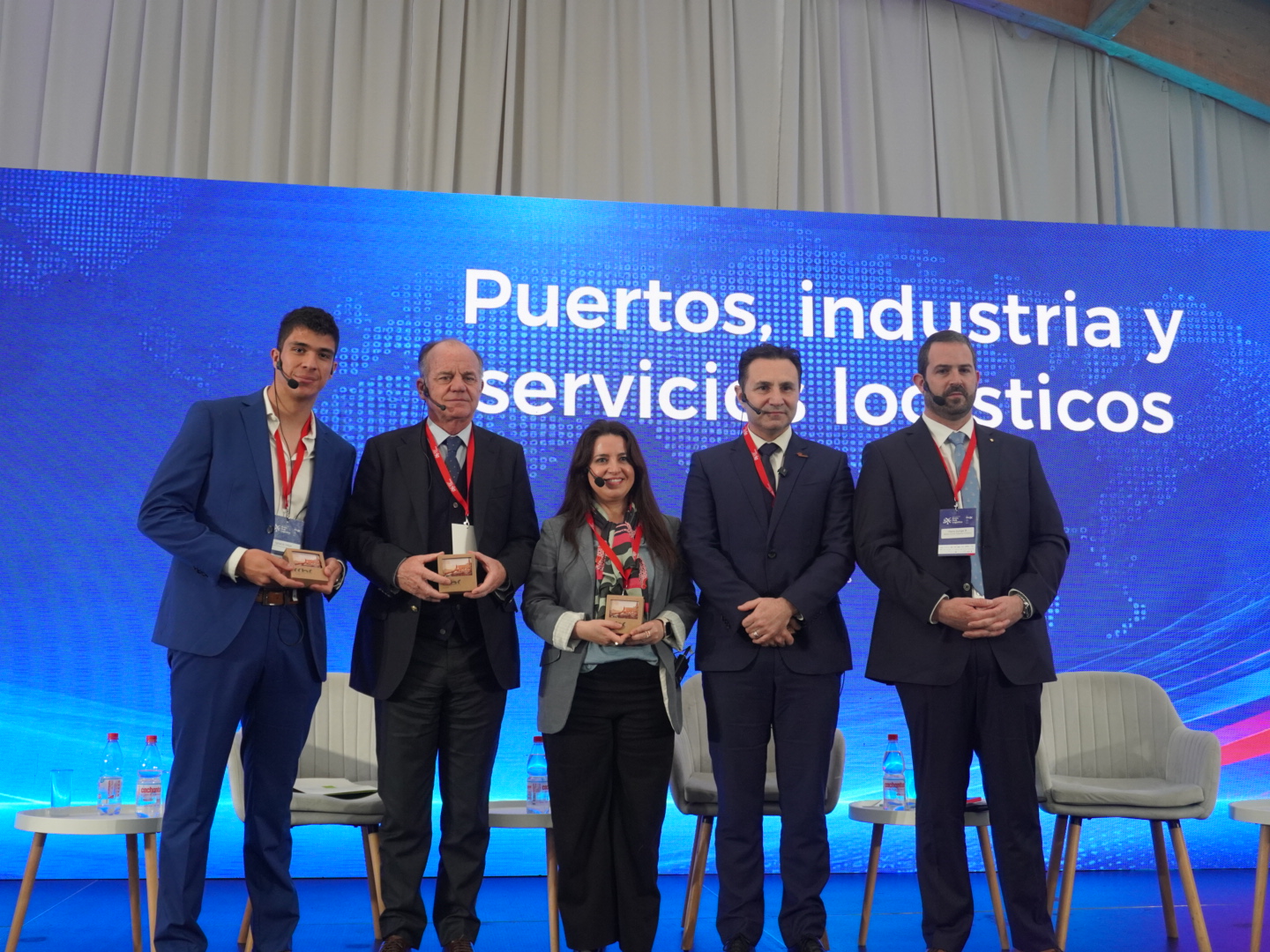
At the meeting, the attendees reiterated the call to salmon farming companies to join the initiative, highlighting its importance for the industry.
Prominent speakers and a rich agenda of topics included the latest Technical Committee of Project Gills, that took place on May 8 in Puerto Varas, an event where companies participated AquaChile, Blumar, Camanchaca, and Multi X, under the coordination of Aquabench.
In addition to representatives of the companies associated with the project, this time also invited were professionals and executives from the health areas of MOWI, Austral Salmon and Chilean Salmon Who, at the end of the meeting, expressed great interest in participating more actively, highlighting that the monitoring of gill health is an important aspect in health management.
The session began with the intervention of Daniel Woywood, technical manager of Aquabench, who referred to his recent participation in Gill Health Initiative (GHI) 2025 in Ireland, where he presented the advances of the "Gills Project," highlighting the collaborative work that salmon farming companies are developing in Chile.
"The Chilean delegation had a tremendously successful performance at GHI 2025," said the executive. "The standardization of a" score "the gill and the exhaustive monitoring we have carried out is a milestone, widely recognized by salmon farming worldwide, so it is essential to preserve and strengthen it over time," he explained.
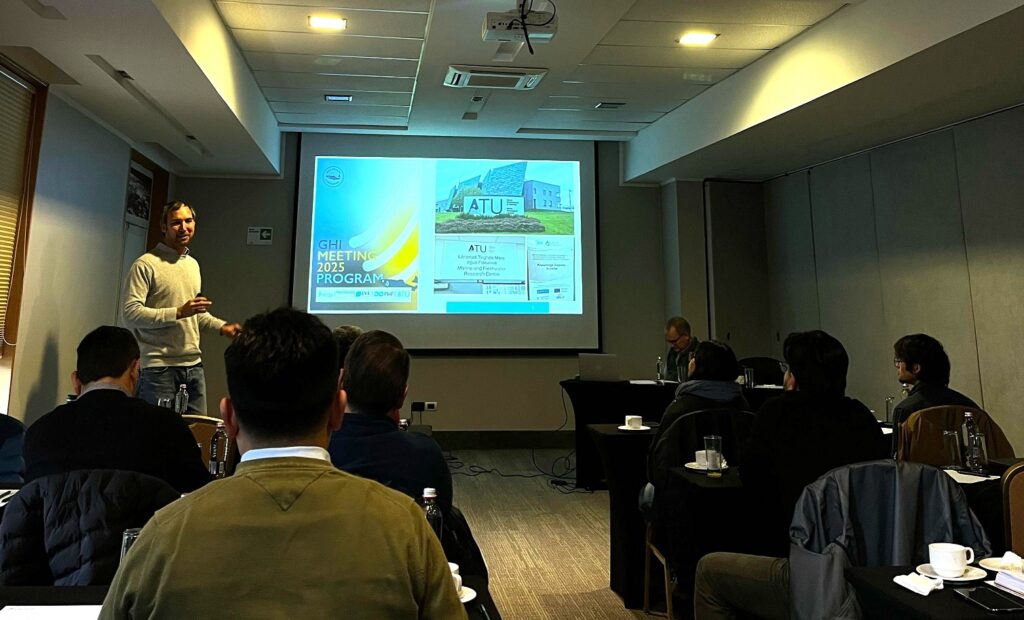
He added that during GHI 2025, representatives from Canada, Norway, Scotland, Ireland, Australia and Chile shared information on the current situation of gill health in their respective countries, agreeing that today, more than ever, it is essential to maintain surveillance. "There are factors affecting gill condition that are very dynamic, such as water temperature, phytoplankton and zooplankton, therefore" we must monitor them permanently. In this sense, the Gills Project is not just a weekly report of score branchial, but it is an initiative that is constantly developing, with statistical evaluations and the incorporation of new measurement indicators, for example, jellyfish, and that also shares among its associates information on prevention and control," said Daniel Woywood.
Status in Chile
The Committee continued with the intervention of Eduardo de la Fuente, leader of the Project, who presented the "Status of Gill Health in the Industry", an opportunity in which he showed the updated figures of the gill health ranking in Los Lagos, Aysén and Magallanes. Likewise, provided relevant information on the evolution of score and the gill health indicator by region and specific geographic area, along with weekly monitoring of algae and jellyfish.
He also announced the actions that the initiative will prioritize over the coming months, highlighting the incorporation of environmental information; the analysis of treatments based on mortality and SFR; the development of a land map of the evolution of gill damage for the cultivation centers, together with the advance of a practical manual for identifying jellyfish species. To the above are added the diagnosis of surveillance of Falls, amoeba, score brandy in fresh water and short operculum.
Subsequently, Francisco Carreño, statistician of Data Analytic in Aquabench, presented an analysis of the evolution of gill damage, with indicators per month of cultivation and region, season of income, weight of income and type of fish farming, among others. He pointed out that it was thanks to this work that it was possible to establish the period during which the gill problems were developed, antecedent of great importance for the centers of cultivation, which allow them to to pay greater attention to the gill health of your fish during these phases.
Significant contributions
The Committee continued with the intervention of the health manager of AquaChile, Alejandro Heisinger, who referred to the evaluation of peroxide baths in branchial disease treatments and the results of monitoring through Gill Sawbs, indicating that this is an analysis that allows early identification of the presence of pathogens related to branchial health, using molecular biology. It also presented evaluations of these treatment based on RFS and the evolution of mortality shown by the centers, before and after procedures.
The meeting was closed by Dr. Sergio Palma, researcher Emeritus of the Pontificia Universidad Católica de Valparaíso (PUCV), who made a presentation on “Zooplankton in the Water Column”. Bachelor of Biology at the PUCV, Master of Biological Oceanography and Doctor of Biological Oceanography at Pierre et Marie Curie University, France, during his 47 years as Professor at the School of Marine Sciences, he dedicated himself to the study ecological zooplankton of the Chilean coast, island areas and inland waters of the Patagonian canals. It has published more than 100 studies and chapters on gelatinous zooplankton, especially cnidaries like syphonophores and jellyfish, including the identification of three new species.