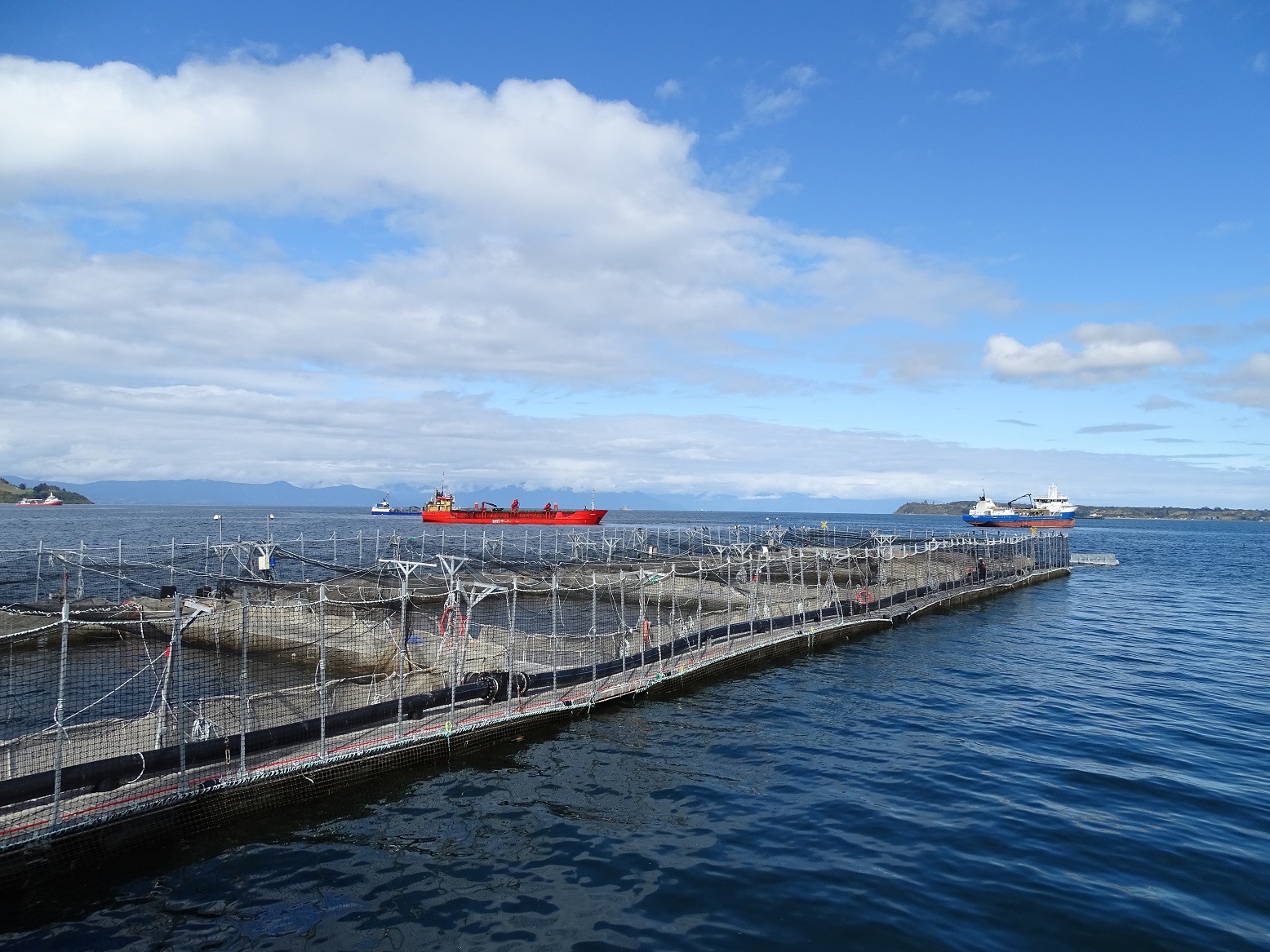
Organized by the EDIGEN team of the Faculty of Veterinary and Animal Sciences (FAVET), this pioneering scientific meeting in the country will bring together national and international specialists with recognized trajectories in research, development and innovation, in the aquaculture sector, to address the advances, challenges and perspectives of the gene edition applied to aquaculture.
As a public-private initiative, EDIGEN seeks to open spaces for a broad, informed and technical discussion on the feasibility of applying genetic editing technologies in animals, particularly in the field of national aquaculture. In this context, the coordinating team prepared this congress as a platform to present different experiences on this topic that is key for one of the largest productive sectors of the country.
“The University of Chile, as a public institution and scientific reference in the region, has the duty to lead these spaces of dialogue and collaboration. This meeting not only brings together researchers of excellence, but also promotes a deep reflection on the responsible, ethical and regulated use of new genomic technologies. Our goal is to contribute to the development of more efficient, sustainable aquaculture and based on scientific evidence, strengthening the role of knowledge as an engine of innovation and development for the country,” says the Dr José Manuel Yáñez, Dean of the Faculty of Veterinary and Animal Sciences (Favet) and director of EDIGEN, who will lead the seminar.
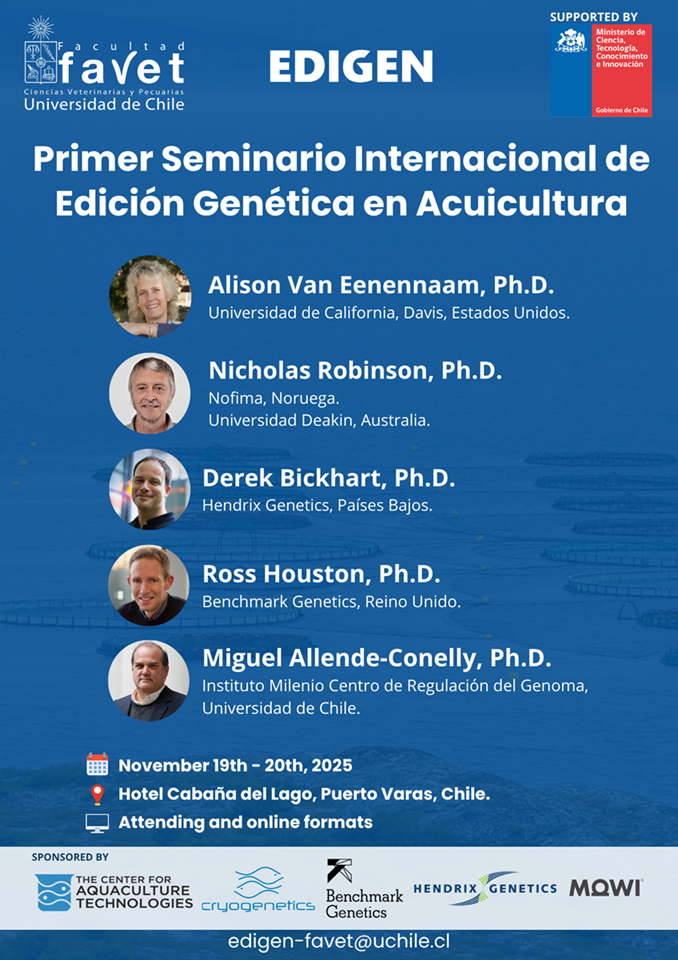
The First International Meeting on Genome Editing in Aquaculture will be held on November 19 and 20 in Puerto Varas, and will have the participation of researchers and researchers from the United States, Russia, Norway, Brazil, the United Kingdom, the Netherlands and Chile, who will present the latest advances in techniques such as CRISPR/Cas9 and its application in species of aquaculture interest, such as salmon, rainbow trout, shrimp, among others.
“This meeting represents a milestone for national science and aquaculture. For the first time, Chile will host an international body dedicated exclusively to the gene edition of aquaculture species, a field that redefines the boundaries of biotechnology applied to sustainable food production,” says Dr. Yáñez, highlighting the strong participation of representatives of different Chilean universities and their team of Research from Favet's Laboratory of Genomics and Aqualogical Genetics.
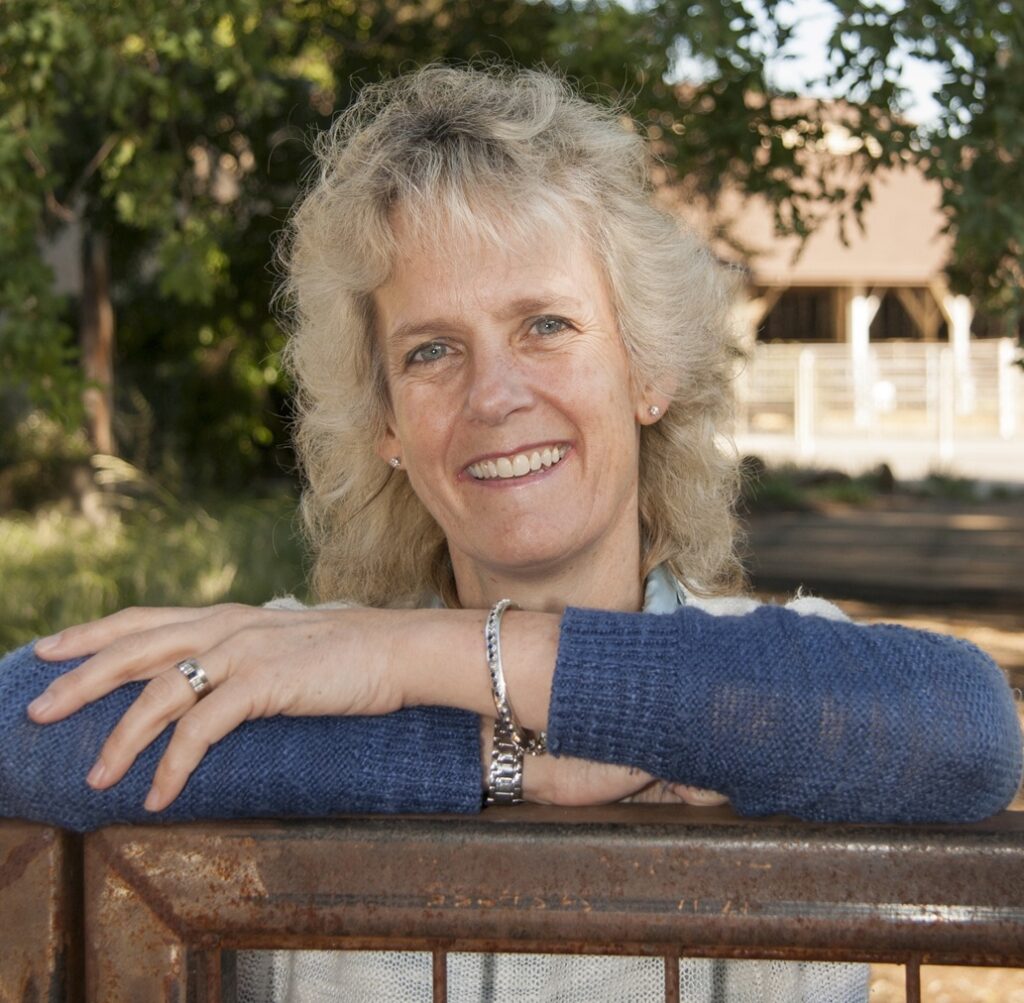
The congress will have an inaugural talk by Dr. Alison Van Eenennaam, leading professor of Cooperative Extension in the field of Genomics and Animal Biotechnology, Department of Animal Science, University of California, Davis, USA, where she has worked for more than 20 years. Dr. Nicholas Robinson, Nofima scientist (Norwegian Research Institute for Food, Fisheries and Aquaculture) and Professor of Aquaculture Genetics at Deakin University, Australia; Dr. Derek Bickhart, bioinformatics from Hendrix Genetics, Netherlands; and Dr. Ross Houston, Director of Genetics and Innovation at Benchmark Genetics, UK.
The meeting will have the participation of leading institutions in aquaculture biotechnology such as the Russian Institute for Fishery and Oceanography (VNIRO), which will present advances in gene editing and improvement in various aquaculture species; EMBRAPA from Brazil, will showcase innovations in tropical species through the AquaCRISPR project; and The Center for Aquaculture Technologies (CAT), from the United States, will address the development and commercial application of strategic features such as sterility, consolidating the international character and applied of the event.
Through round tables, discussions will be held on each block of presentations. The programme also includes a workshop on the Chilean regulatory status of genetically edited foods, with the participation of representatives of public bodies, who will discuss regulatory frameworks, risk assessment processes and opportunities for sustainable development of the sector.
This meeting will be a unique space to know, dialogue and reflect on the challenges and opportunities of gene publishing in aquaculture at local, regional and global levels, promoting collaborative research, knowledge transfer and sustainable production.
For more information, visit the website.