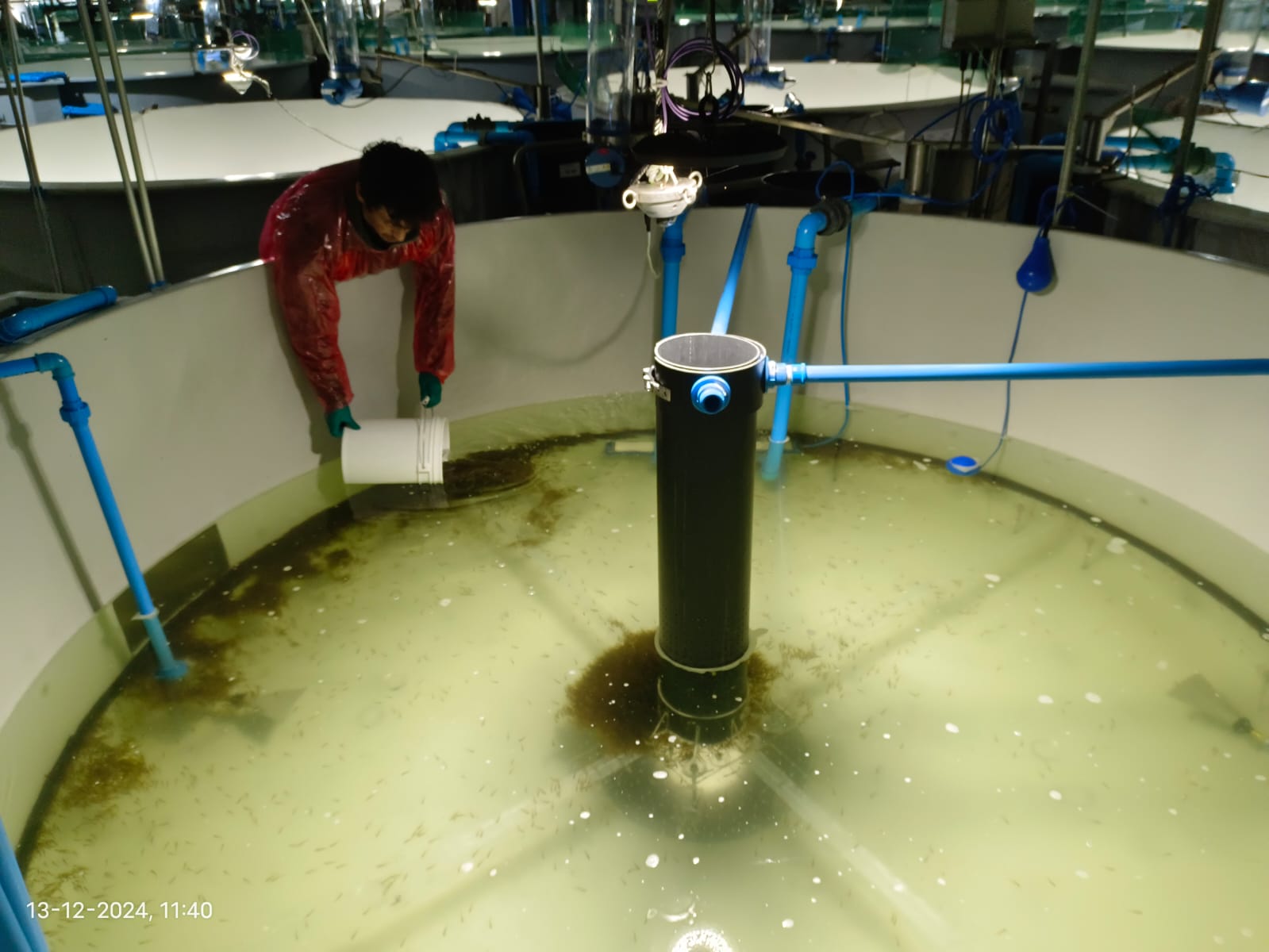
Fish raised with the self-cleaning system showed greater growth and lower variability in weight, key factors for the efficiency of the farming process. Also, the improvement in feed conversion rate and the reduction in mortality were highlighted.
Academics and researchers Pablo Vengas and Katherine Llancaleo, both from the Faculty of Engineering of the Catholic University of the Holy ConcepciónThey have managed to demonstrate the efficiency of their technology, "Self-Cleaning Disk (DAL)", in reducing solids and improving fish welfare during the first feeding stage.
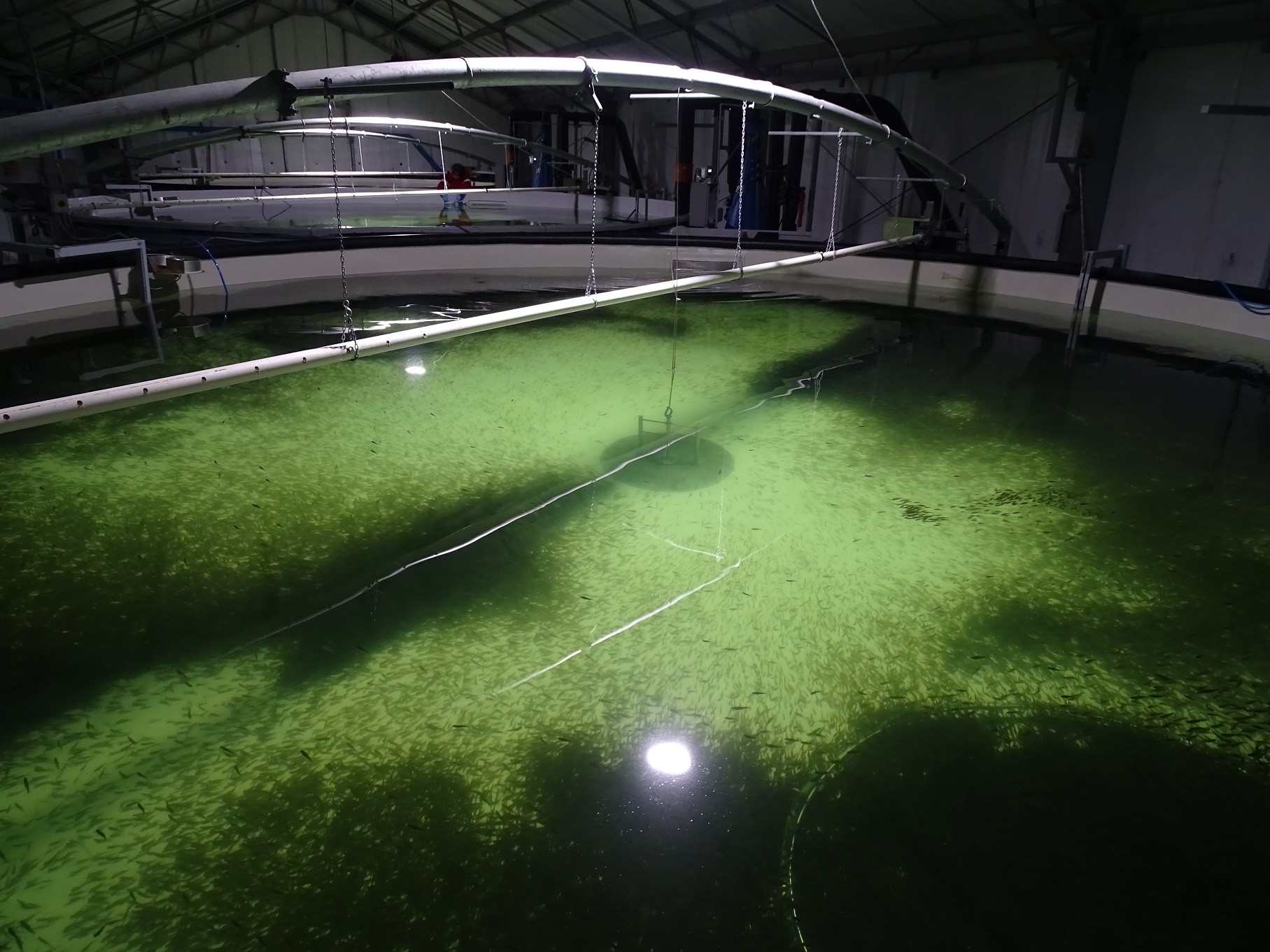
This invention based on a physical system (attachment disc) with a method that allows the rapid and effective removal of solid waste that accumulates in the circular land-based aquaculture tanksIt manages to optimize the fluid dynamic conditions ensuring the formation of the self-cleaning effect and mixing in a pond with low water and energy consumption.
In the recent study carried out in collaboration with Fish farming Las Quemas of the company Yadran salmon, funded by Corfo’s Crea and Valida contest, have managed to validate the positive impact of Self-Cleaning Disk System (DAL) in a center for the cultivation of Salar albaits. The project, developed at the CREA stage, evaluated the scaleing of the prototype and its operation under semi-industrial conditions, with the aim of reducing the negative effects of the accumulation of solid waste inside the cultivation ponds.
"We found interesting what was being generated in the topic of bacterial load, the growth of fish in a shorter time, the behavior they had with technology that was different from traditional, let's say, that was generating benefits in this first stage. We are now entering the validation stage," said academic Pablo Venegas.
Results of the study
The maturation of this technology managed to validate its physical configuration and critical operational variables for the autonomous and continuous removal of waste. It was observed that fish presented better adaptation to the medium, less stress and a more homogeneous distribution in water. In addition, a lower bacterial and fungal load within the ponds was demonstrated, which contributed to improving water quality and reducing disease risks; and Losses.
“For me, testing technology was a complete challenge, from being able to build it and face all the installation challenges, testing it in the system and seeing it work smoothly, it was super rewarding because all the efforts from piloting are reflected, seeing that fish behaved well, distributed better within the pond, that it was easy to get the visual information needed to do the comparisons, being able to see all the learnings and results in terms of behavior, growth and minimal bacterial load,” concluded the project engineer Katherine Llancaleo.
In productive terms, the fish bred with the self-cleaning system showed higher growth and lower variability in weight, key factors for the efficiency of the cultivation process. Also, The improvement in the rate of food conversion and the reduction of mortality were highlighted.
"It is important to comment that while the first stage is in a semi-industrial dimension, the technology was tested in the company's production lines, therefore, the important thing is that technology is being tested within the everyday life in which the company operates, with all the challenges, problems and situations involved in being on the production line. The technology is patented in Chile and Canada, the strategy is to patent just to be able to license and that other companies can produce, produce and develop this self-cleaning disc and that can have the outlet of marketing the product", said Jorge Mancilla, R+D+i manager of the 2030 Engineering Project of the Casa de Estudios.
"Preliminary benefits for fish are displayed, we validate that the technology works. It has been a challenge to learn to do a job with an external entity in this case the university, especially when you have a project or a team that is in testing phase therefore there is uncertainty, risks, it has been a period of learning and a challenge to be able to coordinate between the different actors", said Estanje Ruiz, engineer of the Yadran company.
Projection
With the results, the technology has advanced from the technological maturity level TRL 5 to TRL 7, approaching its implementation at the industrial level. A new validation phase has been proposed to confirm the benefits observed at different stages of production.
These advances mark a milestone in the optimization of aquaculture production, offering sustainable solutions to improve animal welfare and profitability in the salmon sector.