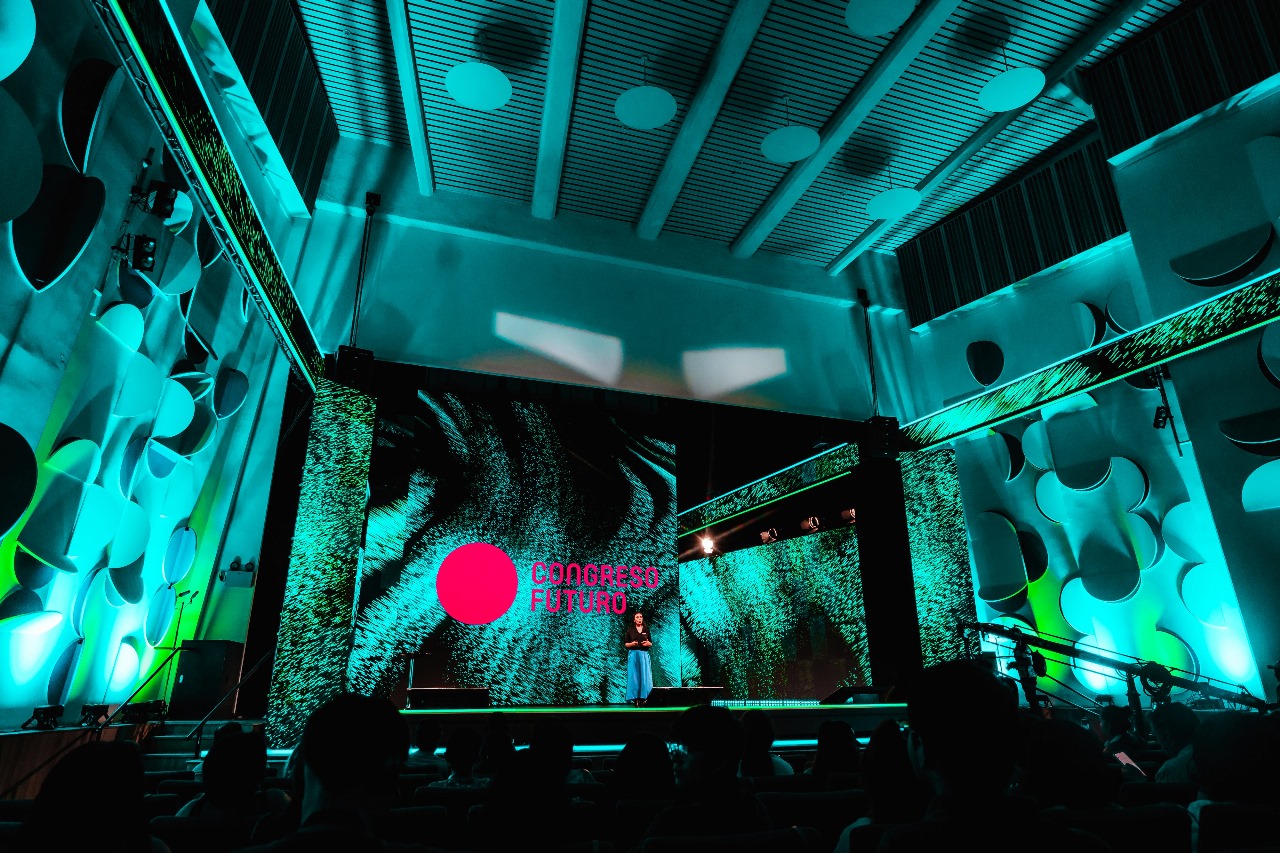
The engineer and representative of the NGO Sustainable Fishing, Pamela Meneses, invited the community to get involved in the challenge of taking care of the oceans.
A space to "project the next steps that establish Chile as a place where the extraordinary happens": this is how Congreso Futuro defined the block in which Pamela Meneses, sub-director of the NGO Pesca Sustentable, participated.
On the third day of the most important event for science, art and innovation, Meneses presented Blue Future, the first tool that promotes the responsible consumption of seafood products as a key axis to boost the blue economy, a model of sustainable economic development that protects marine resources, while generating opportunities for coastal communities.
Origin
"With more than 10 years of experience working with fishing communities, a question that frequently arose was 'how to know which seafood is best to consume?' and we didn't have the answer, because the available data is insufficient. The truth is that nationally there was no criterion to say whether a seafood product harvested in national waters is sustainable," explained Pamela.
With this challenge, a team of marine biologists, but also artists, communicators, developers, designers and engineers began working on the design of this platform that "through a species search engine, allows you to know the sustainability indicator of each one based on criteria such as the population status -the health and abundance of the species; fishery management -how effective the management is, that is if there is" regulations and management measures to care for the resource; and finally the impact on the habitat and bycatch, that is to say whether fishing techniques affect other species and the ecosystem directly or indirectly," he commented.
Regarding the platform, Pamela emphasizes that “its value lies in its ability to boost the Blue Economy, through the synergy of science, as a sustenance for more responsible consumer decision-making; art, as a means to raise awareness and empathize; and the commercialization of seafood, under a sustainable supply policy.”
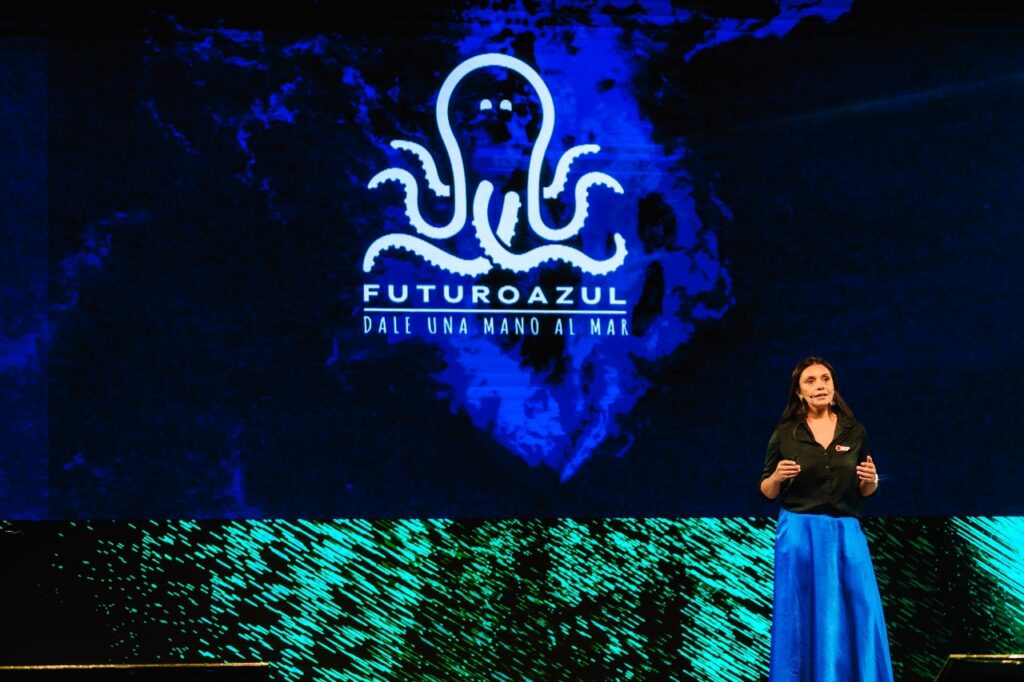
The exhibition ended with an invitation to the community to take part in the challenge of recovering the oceans, with Future Blue as a support: “We want them to take ownership of the platform, to use it to access up-to-date and clear information that allows them to be critical citizens, able to control and demand best practices that are respectful of our oceans and what they deliver to us.”
Congreso Futuro
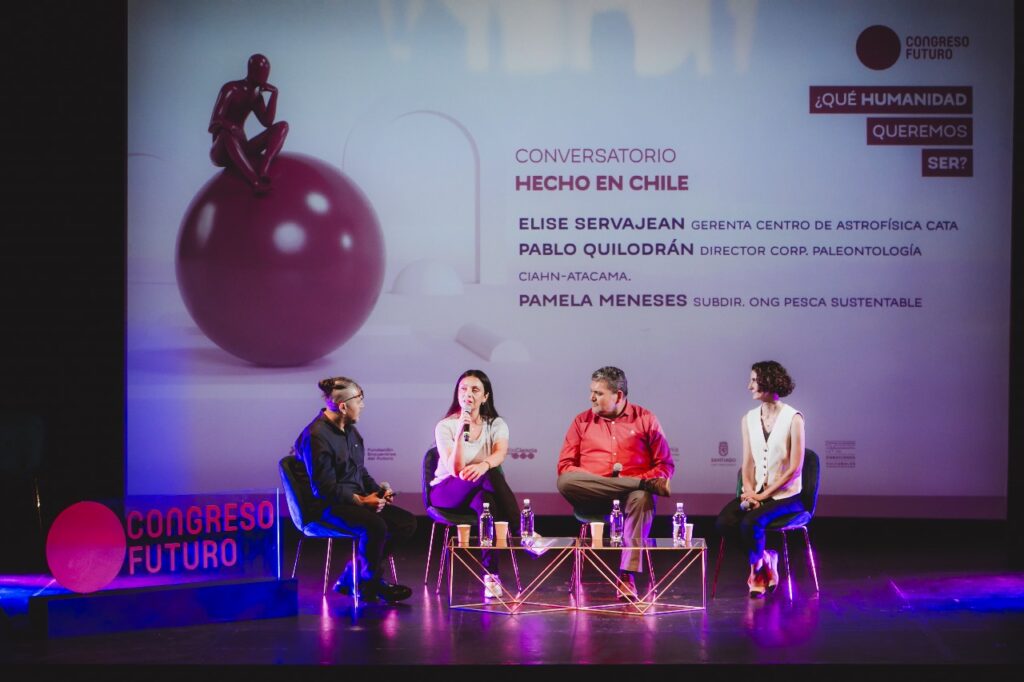
Meneses shared the stage in two instances with the astronomer Elise Servajean, dedicated to the development of astronomical technology and the formation of future astronomers; and the paleontologist Pablo Quilodrán, who works on the protection and diffusion of the paleontological heritage of Bahía Inglesa.
The presentation of Pamela Meneses in the panel “Chile: territory of innovation” can be reviewed in the transmission of the Wednesday, January 15 through the Youtube link.