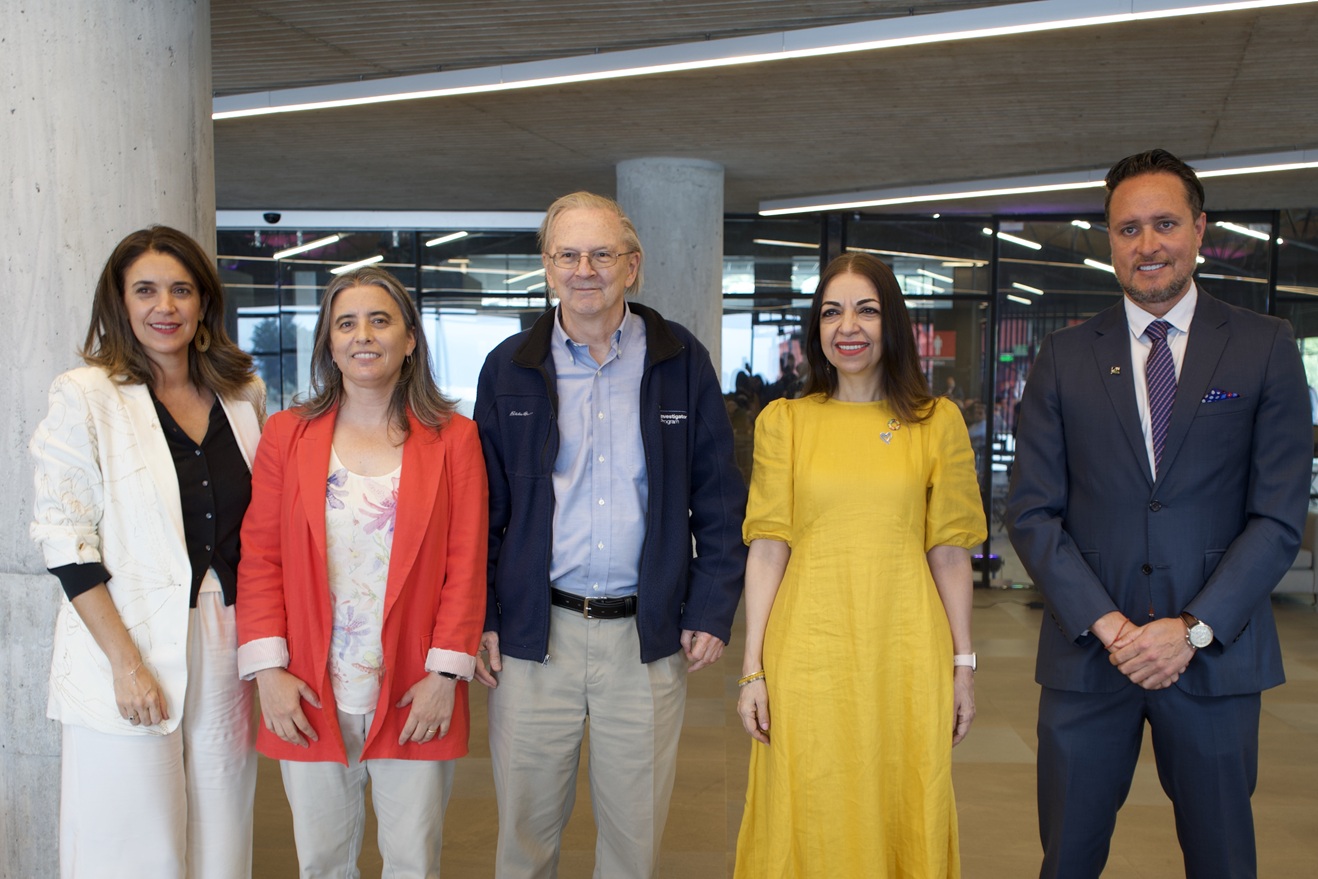
More than 450 people participated in an event that brought together world-class scientists and local leaders to reflect on the challenges of the territory through innovation.
The salmon farming sector SalmonChile participated as an official presenter of the XV regional edition of the Futuro Los Lagos Congress on 14 January in Puerto Montt, together with the University of Los Lagos and the Puerto Montt Municipal Council. The event, held under the theme "Humanity, where are we going?", brought together prominent global speakers such as Nobel Prize in Medicine winner Jack Szostak and nanotechnology expert Yamuna Krishnan, who along with Local figures analyzed the role of science, innovation and public-private collaboration in the transformation of the territory.
SalmonChile's participation was part of the commemoration of the 40th anniversary of the trade association and 50 years of salmon farming in Chile, consolidating the sector's commitment to knowledge transfer, innovation and sustainable development, in an event organized by the Senate of Chile, the Encuentros del Futuro Foundation and the Chamber of Deputies.
"This congress represented a unique opportunity to highlight how salmon farming has transformed the socioeconomic reality of southern Chile and to project the upcoming challenges of the sector," said Marcela Bravo, manager of Studies and Projects at SalmonChile.
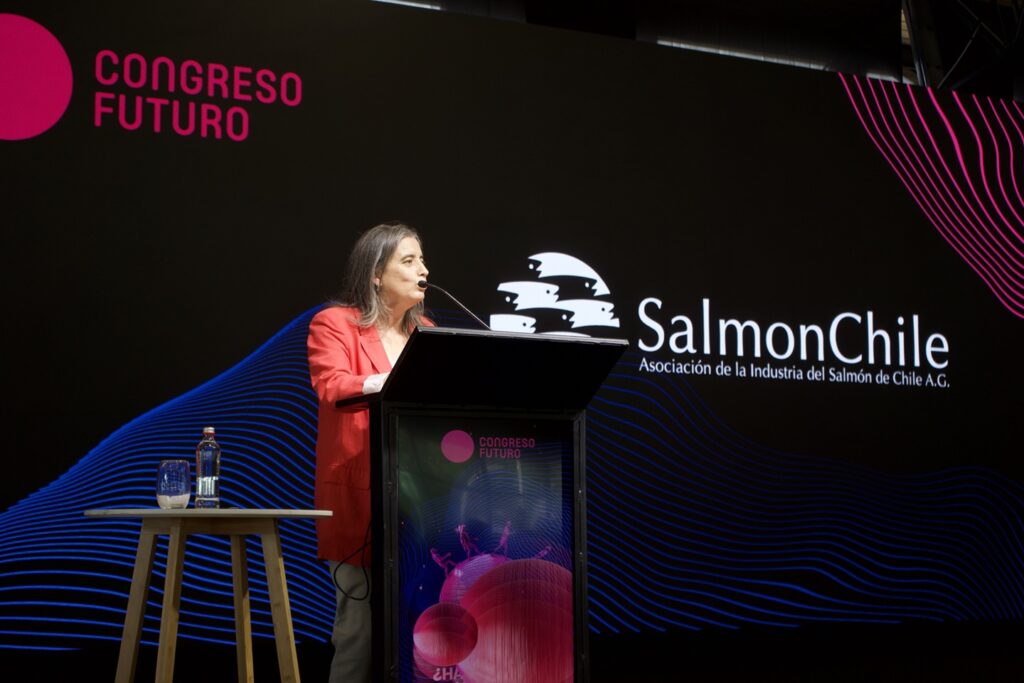
The event brought together more than 450 people who actively participated in the different dialogue and reflection sessions. Each keynote speech was followed by a local dialogue and application panel where different regional representatives shared their experiences and exchanged knowledge, consolidating the main objective of the congress: to apply global knowledge to the local reality of southern Chile.
The Nobel Prize winner Jack Szostak captivated the audience with a deep reflection on the origins of life, inviting them to look at the universe not as a hostile space where life is an improbable miracle, but as a vast laboratory in permanent experimentation. Szostak was assembling the pieces of a molecular puzzle to explain the chemistry that made life on Earth possible, reminding that we are part of a biological process. Much more extensive, continuous and coherent than we usually imagine.
In another masterclass, the geneticist Yamuna Krishnan took the audience on a journey into our own organisms. Her research shows that cells — and the inside of their inside — function as electrical systems of surprising precision. By developing DNA sensors that operate as true "molecular flashlights", she made the invisible visible and highlighted a key idea: the most transformative innovation does not arise of immediate usefulness, but of genuine curiosity.
María Elena Estavillo, meanwhile, offered a critical and necessary look at Artificial Intelligence, warning that it is not a neutral technology, but a direct reflection of those who design and train it. His presentation emphasized that if, as a society—and especially those who enable these systems—we do not recognize our own biases, we run the risk of automating and deepening existing inequalities. His call was to assume a radical responsibility and understanding that the true vanguard is not just about creating smarter machines, but about building collective governances for fairer artificial intelligences.
Felipe Díaz, director of Communities of SalmonChile, participated in the panel "Living in the Sea", where together with Zoila Bustamante, president of CONAPACH, and other experts, analyzed how digital innovation impacts on the social license and coexistence of maritime actors. Also, through its partner company SudVet, the union was present in the panel "Biotechnology, Strategy and Territory", with the intervention of Marcela Delgado, CEO of the company, and Manuel Rozas, CSO and founder of Kura Biotech, who addressed the challenges and opportunities of scaling innovation from the global south.