SalmonChile highlighted a positive year for the sector, with exports of US$6,549 million and representing more than 6% of the total national exports.
The salmon farming sector closed 2025 with positive figures, according to data from the Central Bank analyzed by SalmonChile. With US$6,549 million in salmon and trout exports, the sector achieved a 3% growth compared to the previous year, reaffirming its strategic importance for the national economy.
The sector valued the 2025 closing figures, calling them a support for the resilience and competitiveness of the sector. According to the analysis carried out by the association on the Central Bank's data, salmon and trout exports reached US$6,549 million, which represents a 3% growth compared to the previous year and consolidates the strategic value of salmon farming for the development of the south-southern zone and the national economy.
From SalmonChile they highlighted that these results are not accidental: the quarterly report compiled by the sector reveals that salmon farming already represents 6% of Chile's export matrix. Thanks to the productive and commercial management of its associates, salmon has significantly distanced itself from other non-mineral export basket products, doubling the value of cherries (US$3.380 billion) and positioning itself as the second most exported product in 2025.
With this performance, salmon farming - largely driven by SalmonChile's sustainable growth strategy - has recorded three consecutive years of increase, standing just a step away from surpassing the historical record of 2022 (US$6,606).
Arturo Clément, president of SalmonChile, highlighted the impact of these figures. "The results of 2025 once again confirm salmon as the undisputed leader of Chile's non-mineral exports, reaching 6,549 million dollars. This figure not only reaffirms the strategic position of our productive sector for the national economy, but also shows that a single product, salmon, has an economic impact comparable to sectors" complete as the fruit or forestry sectors.
The report also reveals that in 2025, Chilean salmon accounted for 48% of industrial food exports, 29% of total food and 15% of the country's non-mineral exports. These indicators highlight the importance of the sector as a fundamental pillar of Chilean foreign trade.
In terms of international markets, the United States continues to be the main destination with 40% of exports ($2.399 million), followed by Japan with 17% ($1.044 million) and Brazil with 13% ($796 million). In particular, it highlights the growth of the Japanese country, which increased by 11 per cent over the previous year in export value.
In terms of production, Chile increased its salmon harvest by 14% during 2025, while globally, together with Norway, they accounted for 77% of the world's salmon production.
“Chilean salmon farming remains an engine of development for the southern regions and an ambassador of Chile to the world. We will continue to work on innovation, sustainability and market opening to maintain this leadership in the coming years,” said Clément.
The analysis also reveals that four producers account for 50% of Chilean salmon exports, while the top ten account for 78% of the total. By species, Atlantic salmon dominated exports with 72%, followed by Pacific salmon with 23% and trout with 5%.
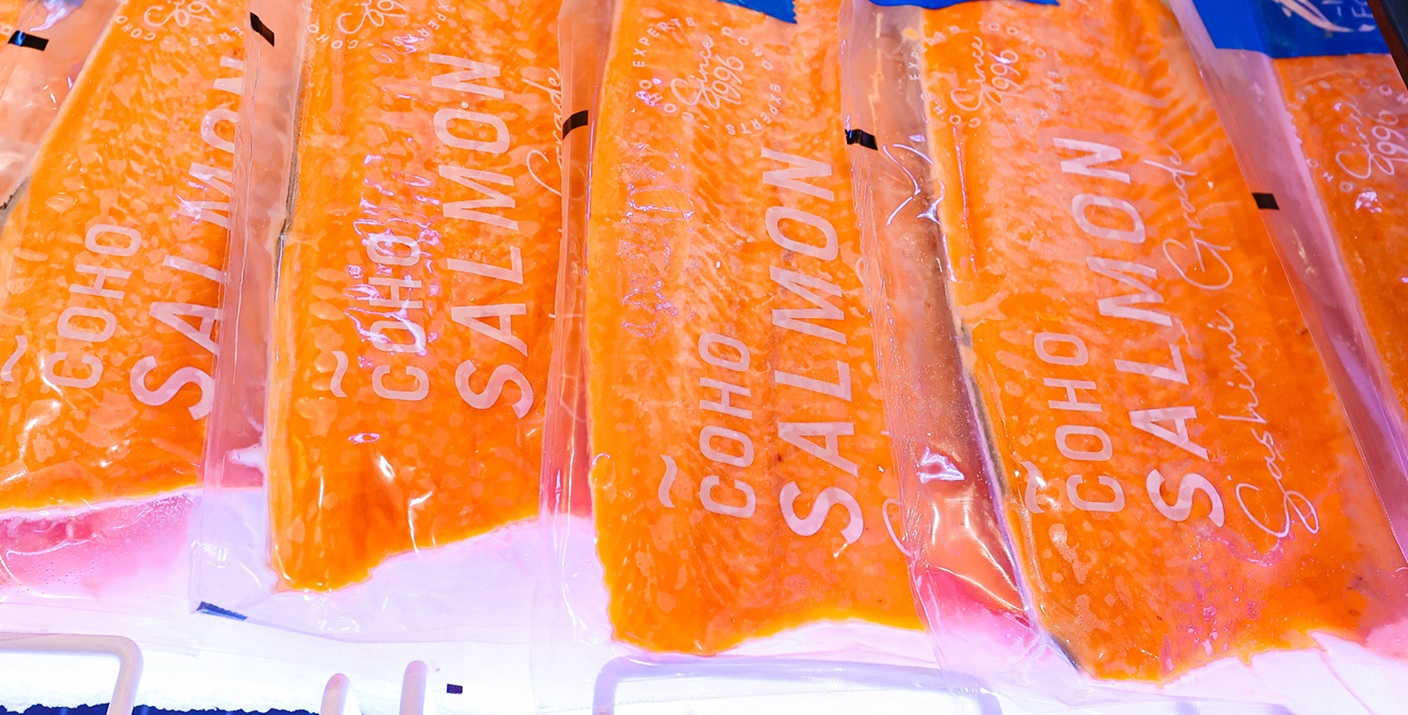
The most sought-after formats on the international market were fresh Atlantic salmon fillet (25%), frozen Atlantic salmon fillet (18%), fresh Atlantic salmon (16%), and frozen H/G coho (14%), demonstrating the diversification of products and the ability of salmon farming to meet different consumption preferences in global markets.