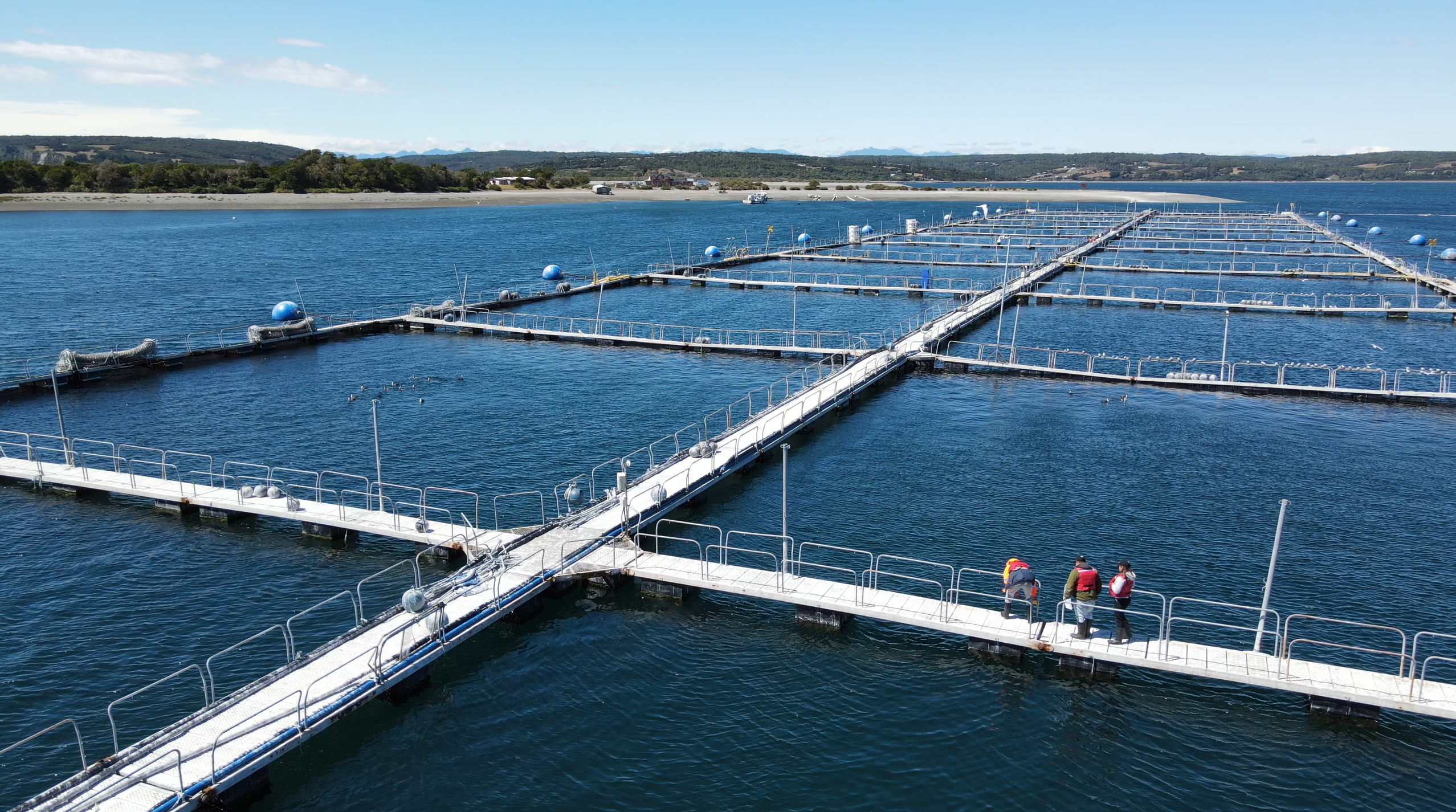
The new digital platform aims to prevent -among other things- incidents, workplace accidents and environmental disasters.
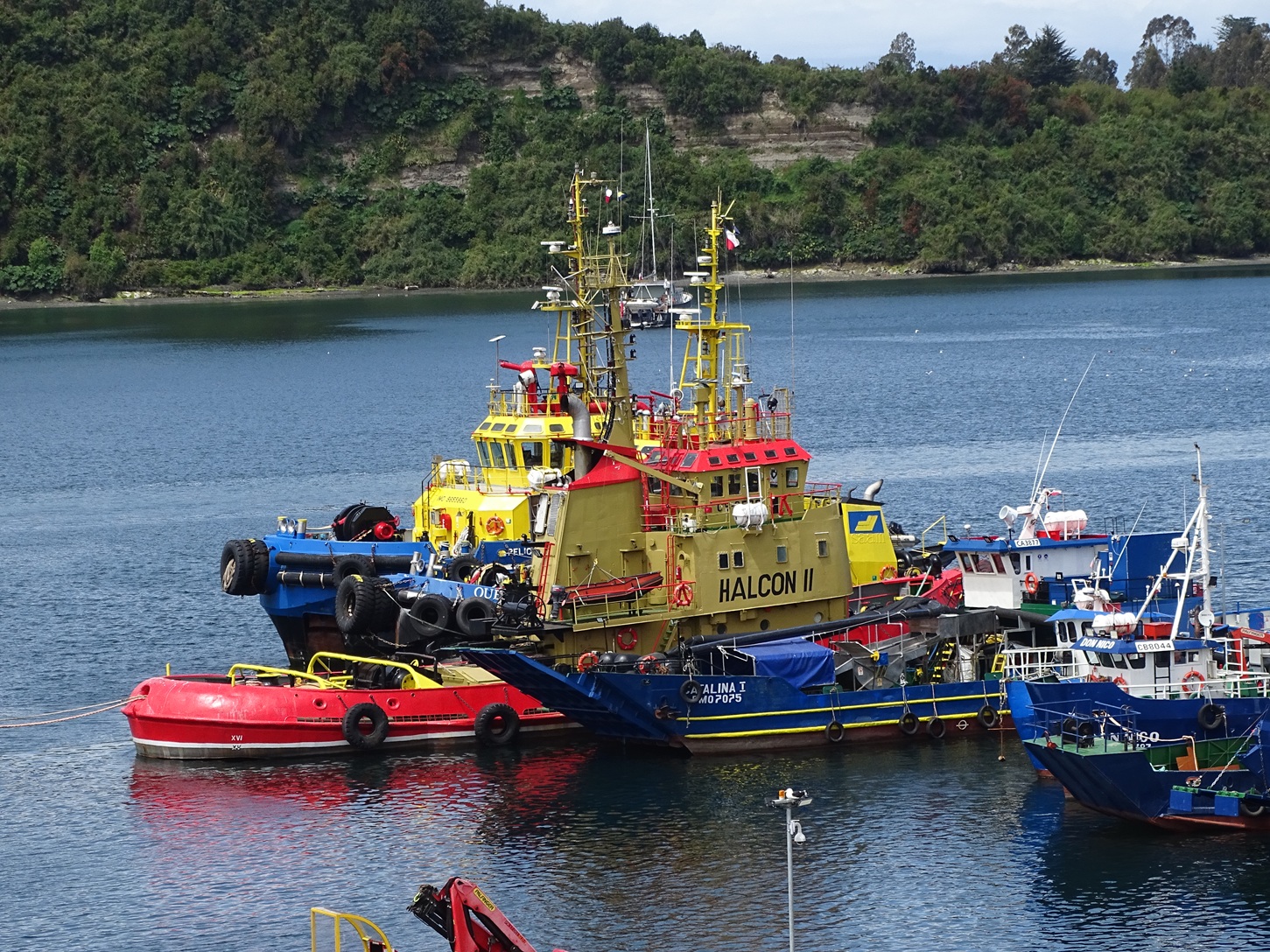
Due to the corrosive ions and numerous organisms contained in seawater, the materials commonly used in the construction of maritime structures suffer continuous wear and tear. To this is added the constant attack of the waves and marine currents, hydrodynamic loads that both static and floating structures must withstand throughout the year. Hence that it is essential to control, inspect and maintain periodically these structures to extend their lifespan and, above all, to prevent accidents.
Despite the importance of the issue, until 2020 it was unthinkable to have the traceability of all the elements that make up the floating structures used in the various maritime productive activities. The history of critical facility infrastructure, such as Salmonid or port protection dams cultivation centreswere lost in a "sea" of folders, packed documents, certificates and records impossible to search quickly and in a timely manner. This, on many occasions, delayed maintenance, endangering production or, more seriously, the lives of workers.
You may also be interested in » Shipyard will debut at AquaSur
However, from the promulgation of the exempt resolution (R.E.) No 1.821 of 18 August 2020, the Under-Secretary for Fisheries and Aquaculture (Subsecretariat) provided that, in order to prevent the massive leakage or loss of resources in intensive farming systems or the removal or loss of exotic resources in extensive crops, companies should have cultivation and anchoring modules with safety conditions appropriate to the geographical and oceanographic characteristics of site granted.
The rule stipulates that the status of modules should verify at the beginning of the production cycle and then every six months and annuallythe maintenance, if necessary, must be carried out for the restoration of safety conditions. In addition, each centre must have a record of all actions executed. In the specific case of the cultivation modules and the anchoring of the centres, the resolution states that "the safety conditions must be certified annuallyby a duly qualified professional or entity."
On the basis of these new requirements, the company ALSUR Engineeringdedicated to the development of marine and oceanographic engineering through the innovation and digital transformation, and specialist in inspection, diagnosis and certification of aquaculture and port infrastructures, began to work in a software de traceability and maintenance of floating structures.
That's how he was born. ALSURCheck, a digital platform for the management and traceability of maritime, aquaculture and port infrastructure whose main objective is "to manage, control and document the state and location of structures in the marine environment, achieving greater efficiency and service life of these assets, in order to avoid accidents, accidents at work and environmental disasters", explains the general manager of the company, Gerardo Cardenas Vargas.
Advantages
ALSURCheck allows easy resolution of the problems of traceability and documentation of the state and history of critical maritime infrastructure, as well as manage and plan maintenance from a single platformproviding reports, indicators and notifications. The system is based on the load of information associated with each culture centre, including inspections of anchoring structures and systems. As these are done, a history of each, allowing to highlight and correct observations.
Gerardo Cárdenas highlights the interest of the aquaculture industry in this field, since 2019 they have been working on the implementation of new standards in terms of floating infrastructure of sea water, raising the demands of construction and innovation in rafts-jaula to provide greater safety and efficiency to the production of Salmonids.
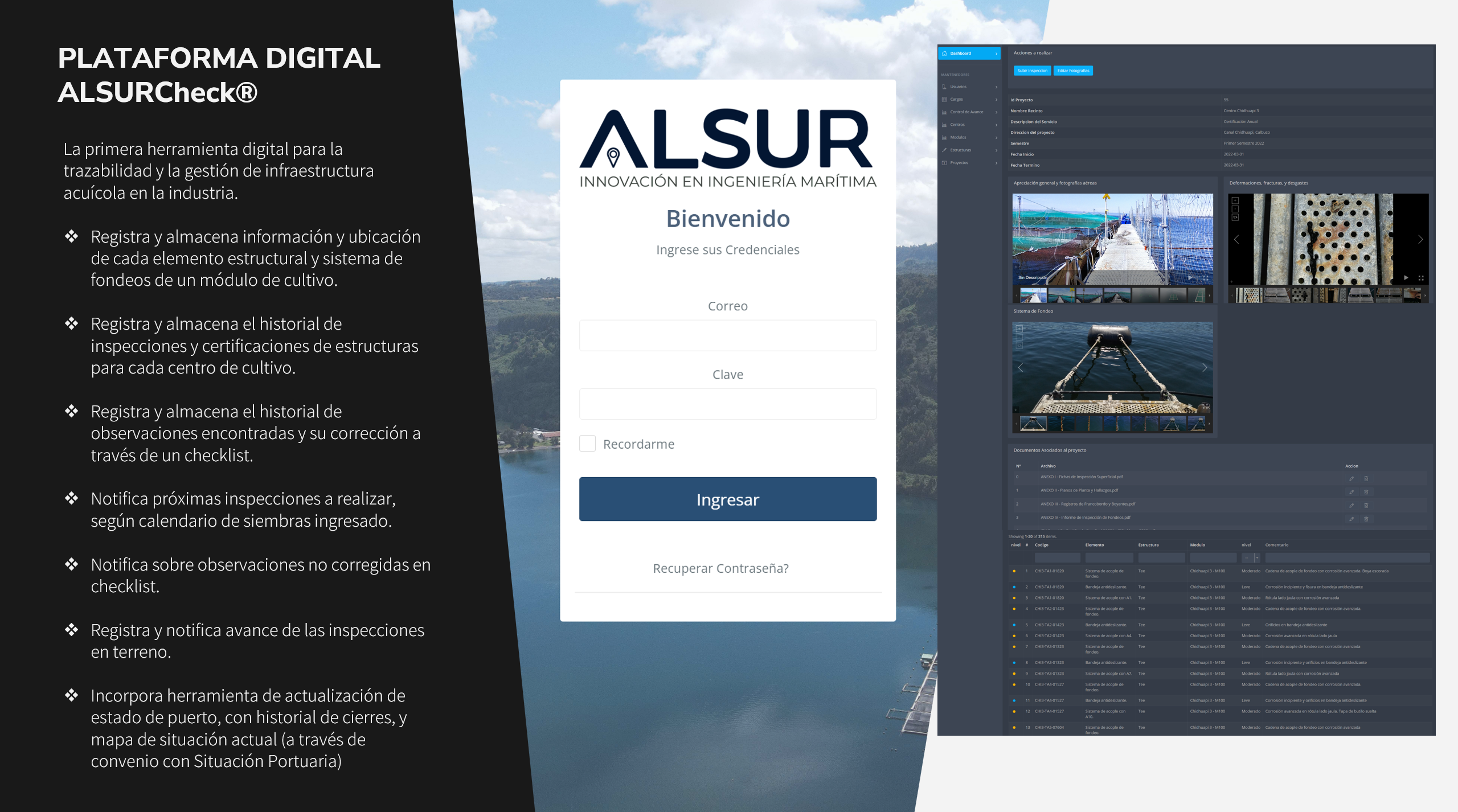
The executive claims that the platform is "very friendly." since, once the information is entered, the system is able to generate a data bank and history of each structure that composes the center of cultivation; this, as the inspections are generated.
Likewise, it allows the user highlight and send notifications of the status of observations. Thus, when the client performs a survey and correction of the latter in the inspection, the system highlights them as corrected, generating a full report the traceability of each floating structure of the breeding centre.
As an example, in a standard culture center, composed of modules of eight metal cage rafts (40 by 40 meters -m- each), where each cage has 40 corridors of 10 m, two tee and two crossings, the system is able to supply the traceability of each item which make up the cultivation module. In short, each corridor has its own history of revisions on the ground, observations and repairs.
In addition, ALSURCheck can identify the changing or moving corridors along its service life, reporting immediately when an item is identified in a module other than that recorded in the previous inspection.
Port and mining management
ALSURCheck is also very useful for the management of the port and mining industry, whose infrastructure must be kept fully operational and optimal state, considering that a structural failure may diminish the productivity and efficiency in the movement of loads, and as a result, cause economic losses and logistical problems.
"The harbour infrastructure, located mainly in the ocean coast, is constantly whipped by surf of type swell or 'bottom sea', which transports a lot of energy that the structures absorb and dissipate to maintain a quiet and safe well for the docking of ships. For this reason, the maintenance, routine inspection of critical port infrastructure and the generation of traceability of its components, is vital within logistics planning and occupational health and safety programmes of the companies in both sectors", concludes the general manager of ALSUR Engineering.
*Photo credits: courtesy of ALSUR Engineering.