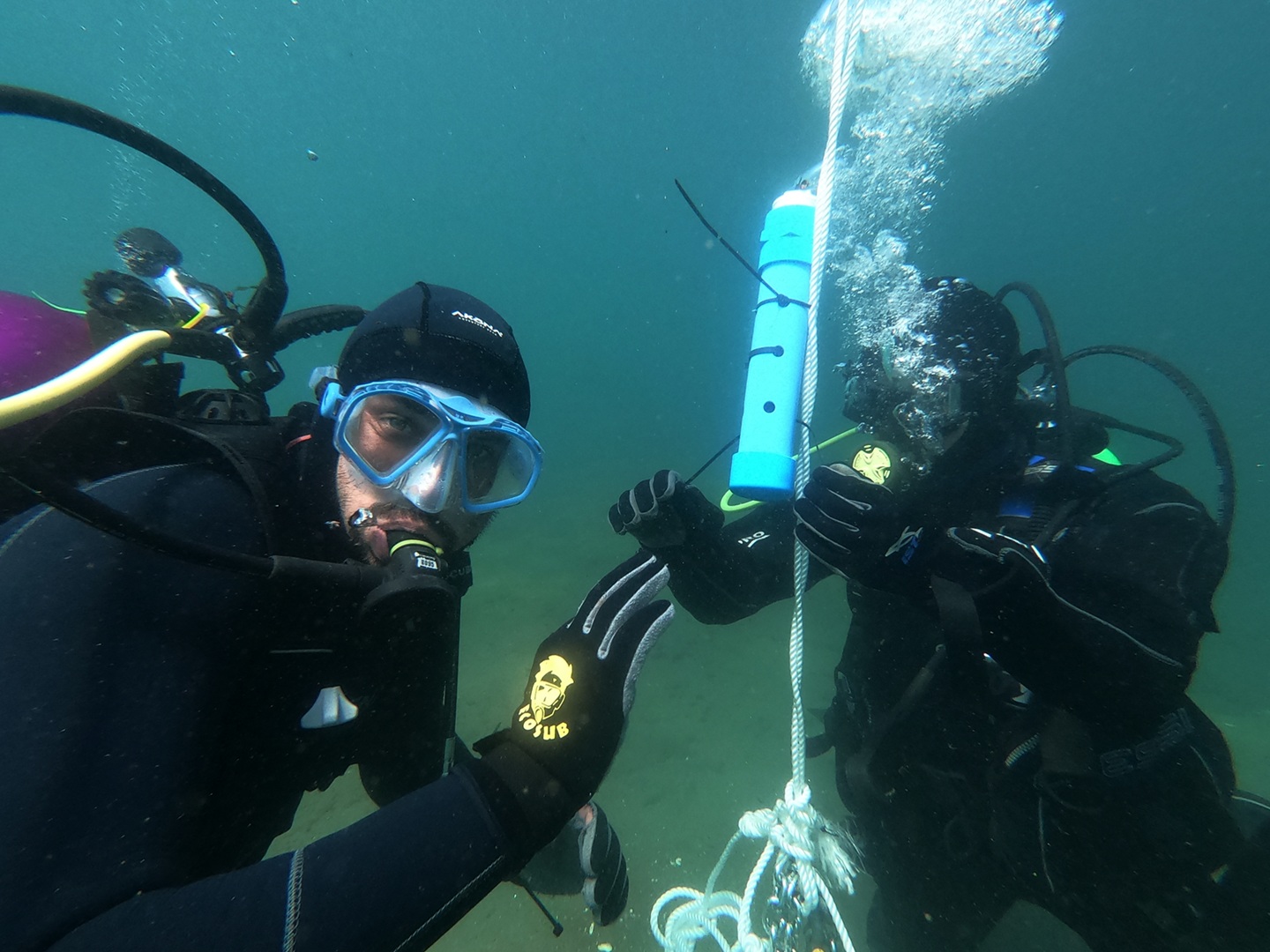
The Fondecyt Regular project of Dr. Pamela Fernández will study populations of Macrocystis pyrifera from the south of Chile to understand the mechanisms that regulate the release of dissolved organic carbon, with the collaboration of institutions from New Zealand, Hong Kong and the United States.
The i~mar Center of the University of Los Lagos and the MASH Millennium Nucleus celebrate the recent awarding of the project Fondecyt Regular 1260526, 2025 12 "Unravelling the Physiological Mechanisms and Key Drivers Influencing DOC Production and Release in the giant kelp" Macrocystis”, led by the researcher Pamela Fernández. The initiative will delve into one of the most relevant and least understood topics in marine ecology: the role of the giant clam (Macrocystis pyrifera) in the carbon cycle and its contribution to the coastal ecosystems of southern Chile.
This algae is a species of high ecological, economic and sociocultural value. It forms vast underwater forests that sustain extraordinary biodiversity and, in addition, has the ability to fix large amounts of CO2. However, there is still scientific uncertainty about how this species releases dissolved organic carbon (DOC) and how these processes influence their potential contribution to carbon blue, a key element in addressing climate change.
“During this research we will be working with different populations of the giant kelp Macrocystis pyrifera of southern Chile, since these localities present populations with different life strategies – annual and perennial – and different degrees of exposure to the waves, which will allow to compare how they respond to the environment and how their carbon release rates vary,” explained Dr. Fernández, who will lead sampling in sectors such as Carelmapu, Pargua, Metri and Ilque.
The project includes a series of laboratory and field experiments to evaluate DOC release mechanisms, effects of light, nutrients, biomass and seasonality, and the contribution of biomass Environmental DNA (eDNA) in water and sediments. This will be the first research in Chile using eDNA to estimate the persistence of the genetic material of Macrocystisopening up new tools to monitor underwater forests.
The work has the participation of the co-investigator Rodrigo Torres (CIEP) and a strong international team composed of Juan Pablo Sáenz (Cawthron Institute, New Zealand), Juan Diego Gaitán (University of Hong Kong) and Catherine Pfister (University of Chicago)which consolidates a comparative and multidisciplinary approach to one of the most productive marine ecosystems on the planet.
The results of this Fondecyt will allow specifying the role of giant flight in carbon flows in coastal environments and provide evidence for future conservation strategies, sustainable management and nature-based climate mitigation initiatives.
With this award, ULagos and MASH reinforce their leadership in the study of South Pacific macroalgae forests and their impact on the health of marine ecosystems and coastal communities dependent on them.