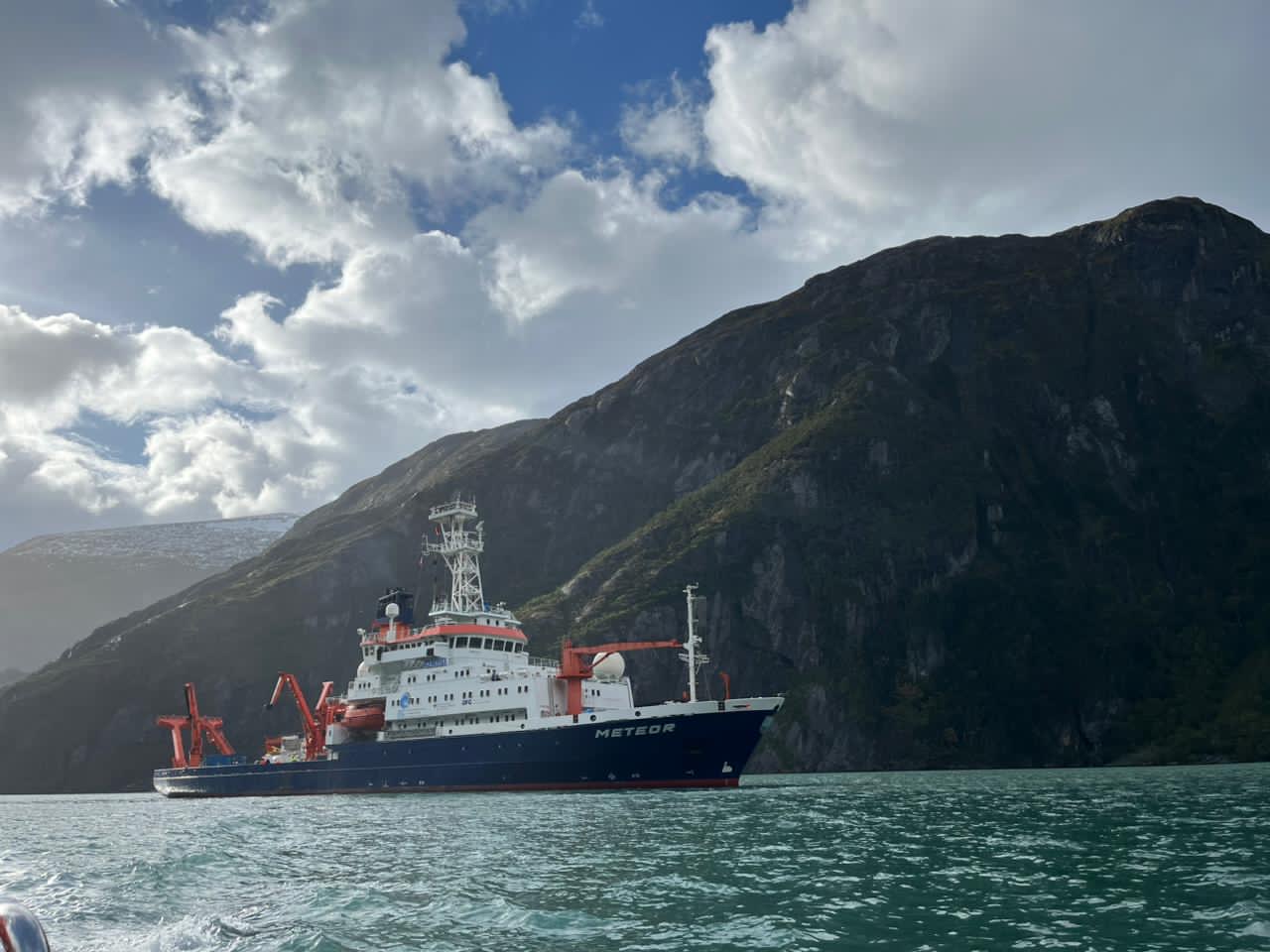
Travesía on board a German ship has been conceived as a floating laboratory that sails from the southern canals to the south-central area of the country, measuring in real time the conditions that favor the appearance of the so-called “red seas”.
Dr. Patricio Díaz and Dr. Iván Pérez-Santos, along with Dr. Pilar Aparicio of the i~mar Center of the University of Los Lagos, were invited to participate in the scientific expedition M218 TRACK HAB, currently aboard the German research vessel R/V Meteor, which these days is touring the fjords and glaciers of Chilean Patagonia with a key mission: to better understand the Harmful Algales Flowerings (FAN) that affect the marine ecosystems and coastal communities in southern Chile.
This cruise, which brings together 27 scientists and scientists representing German, Chilean and other institutions, is an initiative led by Dr. Bernd Krock, who is a researcher specialized in phycotoxins at the Alfred Wegener Institute for Polar and Marine Research (AWI), located in the city of Bremerhaven, Germany. The voyage aboard the ship has been posed as a floating laboratory sailing from the canals south to the south-central part of the country, measuring in real time the conditions that favor the appearance of the so-called “red tides”. Specifically, the ship sailed from Punta Arenas on April 2 and will arrive at the port of Talcahuano on May 6, after visiting 95 sampling stations in this vast area.
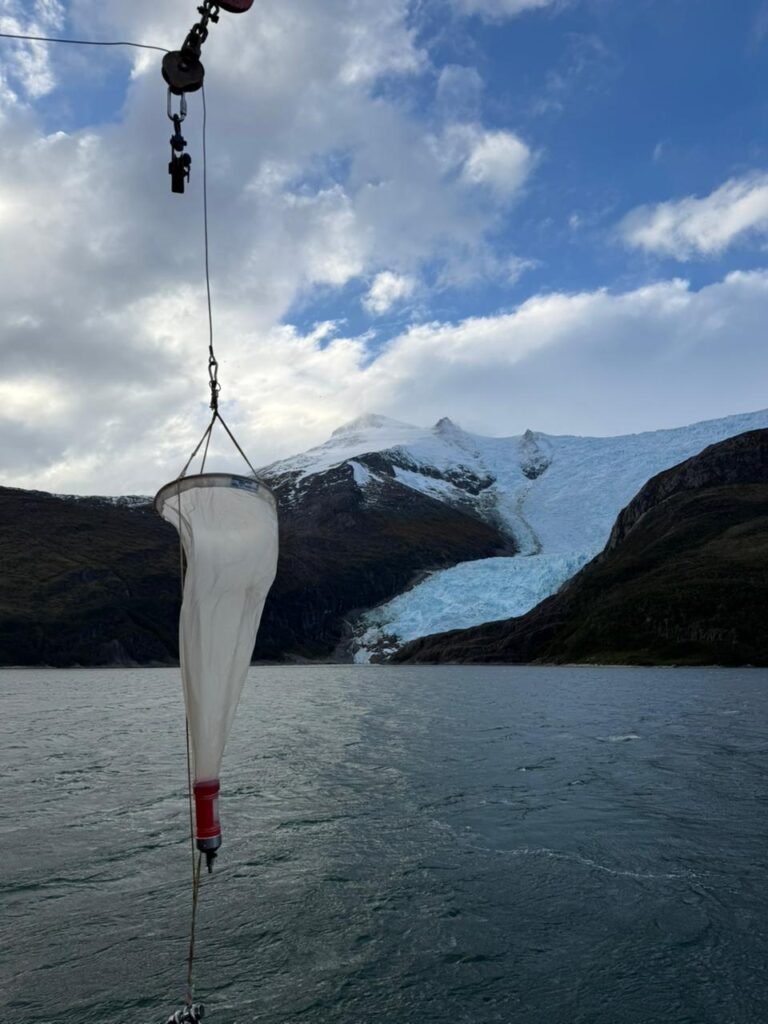
“This scientific expedition is the most extensive one developed so far in terms of geographic coverage and variables that are being recorded to better understand the occurrence and impacts of NAFs in Chilean Patagonia,” said Dr. Patricio Díaz.
The German boat has fully equipped laboratories that allow water samples and sediments to be processed as soon as they are collected. As the cruise progresses through fjords and channels surrounded by glaciers, the team performs oceanographic measurements using state-of-the-art instruments that record the hydrographic conditions of the water column, as well as turbulence and bio-optical parameters. So, one of the objectives is to identify the total phytoplankton community with a focus on toxic species, determine and quantify toxins and analyze nutrients, among other parameters, allowing the presence of NAF to be related to the characteristics of each fjord and channel, as explained by the researcher.
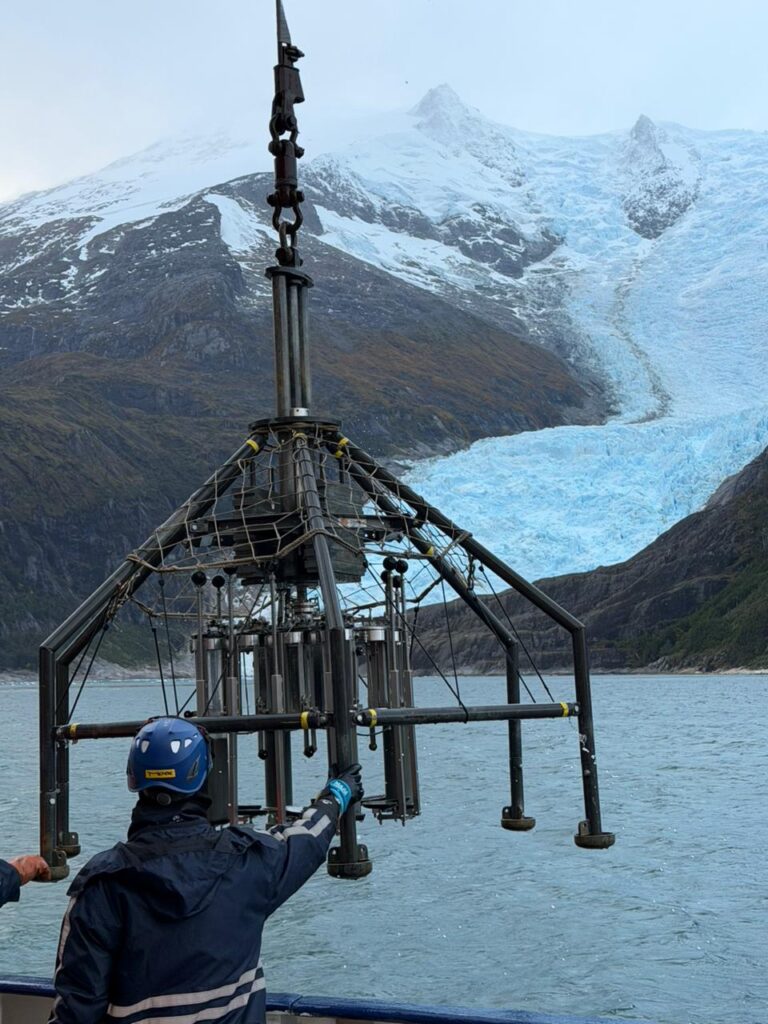
Dr. Patrick A. Díaz added that ice-to-mountain navigation offers a unique scenario to study how the discharge of fresh water from glaciers and rivers modulates the hydrographic conditions of this remote area.
The research team representing the University of Los Lagos was invited by virtue of its experience in FAN, physical oceanography and plankton ecology in Patagonian fjords. His work focuses on characterizing the distribution of toxic microalgae, evaluating the levels of toxins present in water and phytoplankton, as well as the occurrence of resistance stages of this cell in sediments (sydiment cysts). resistance) that can give rise to future blooms. In addition, the ULagos team is focused on collecting valuable turbulence data from the water column and its spectral footprint, in order to advance the understanding of these complex events.
The participation of researchers ULagos in the M218 TRACK HAB expedition adds to a trajectory of more than two decades researching marine-coastal ecosystems in southern Chile. Thanks to this accumulated knowledge, the team can compare current observations with previous records and detect long-term trends associated with climate change and human activity. In this way, the cruise not only generates data of the highest scientific value, but also strengthens regional capacity to anticipate and manage NAF events, providing inputs for decision-making by public bodies, coastal communities and the productive sector.
FANs in Fjords and Channels of Patagonia
The NAFs have been consolidated as one of the main threats to artisanal fishing, aquaculture and public health in Patagonia. Large-scale events in recent decades have shown that these blooms of microalgae producing toxins can spread rapidly, modifying the food chain, causing mortality of marine species and generating significant socio-economic impacts. In this context, the M218 TRACK HAB expedition seeks to answer urgent questions: how do these events originate?, what routes do the bodies of water that transport the microalgae follow?, how do the climate and melting of glaciers influence the dynamics of the NAF? What is the diversity of species and toxins in this vast ecosystem? Since what time have the resistance cysts of toxic microalgae in sediments been present? Is it the pressure? anthropic coastal activities the one responsible for the increase in the occurrence of FAN events or were they always present?
As the R/V Meteor continues its route between fjords and glaciers, the M218 TRACK HAB expedition consolidates collaboration between Chilean and European institutions around a common challenge: protecting Patagonian marine ecosystems and the people who depend on them. From the University of Los Lagos, this work reaffirms the commitment to a science linked to the territory, that is realized in the own sea that we inhabit and that seeks concrete responses to the environmental problems facing our region.