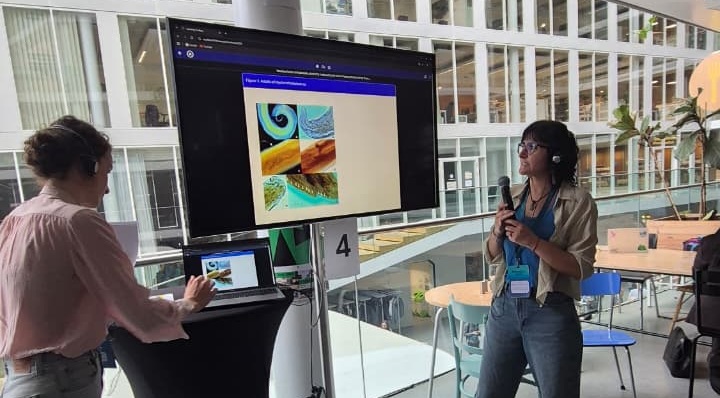
The event brought together in China representatives from more than 15 countries, including scientists, authorities and industry members, to address this growing global challenge.
Between 2 and 11 December, the Salmon Technology Institute (INTESAL) de SalmonChile was part of the Chilean delegation that attended the International Training Program on Prevention, Control and Mitigation of Harmful Algal Blooms (HABs), organized by the Institute of Oceanography of the Chinese Academy of Sciences (IOCAS). This event brought together representatives from more than 15 countries, including scientists, authorities and industry members, to address harmful algae blooms (NAFs).
NAFs have become a critical challenge at the global level. With annual growth of more than 2 per cent, they affect more than 60 countries and cover about 25 per cent of the world's coastal waters, impacting an area of over 30 million square kilometres. These blooms not only pose a threat to marine ecosystems, but also have significant economic consequences, compromising food security and sustainability of industries such as aquaculture.
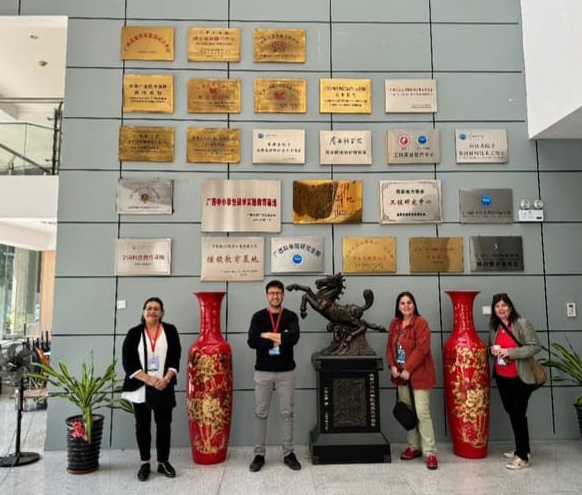
During the meeting, the Head of Environment of INTESAL, Ximena Rojas, stressed that “joint work between different actors is essential to reduce the impacts of these natural events. It is only with collaboration, research and will that challenges that transcend borders and affect global food security and sustainable development can be addressed.”
For his part, Dr. Jorge Mardones, from the Center for the Studies of Harmful Algae (CREAN) of the Institute of Fisheries Development (IFOP) and part of the GlobalHAB Scientific Steering Committee, highlighted the technological advances presented by IOCAS, noting that “our participation in this event has allowed us to deepen the scientific understanding behind the development of innovative technologies, such as Chinese modified clays, that have proven to be a promising solution for NAF control. These technologies not only increase the efficiency of algae flocculation, but also improve the absorption of nutrients and toxins, which transforms them into key tools to mitigate the impacts of these events in coastal areas.”
INTESAL's participation in this international program focused on sharing experiences, strengthening knowledge and exploring advanced technological solutions. The Chilean delegation stressed the importance of advancing early warning systems and effective mitigation strategies, which will enable this phenomenon to be addressed with a comprehensive and collaborative approach.