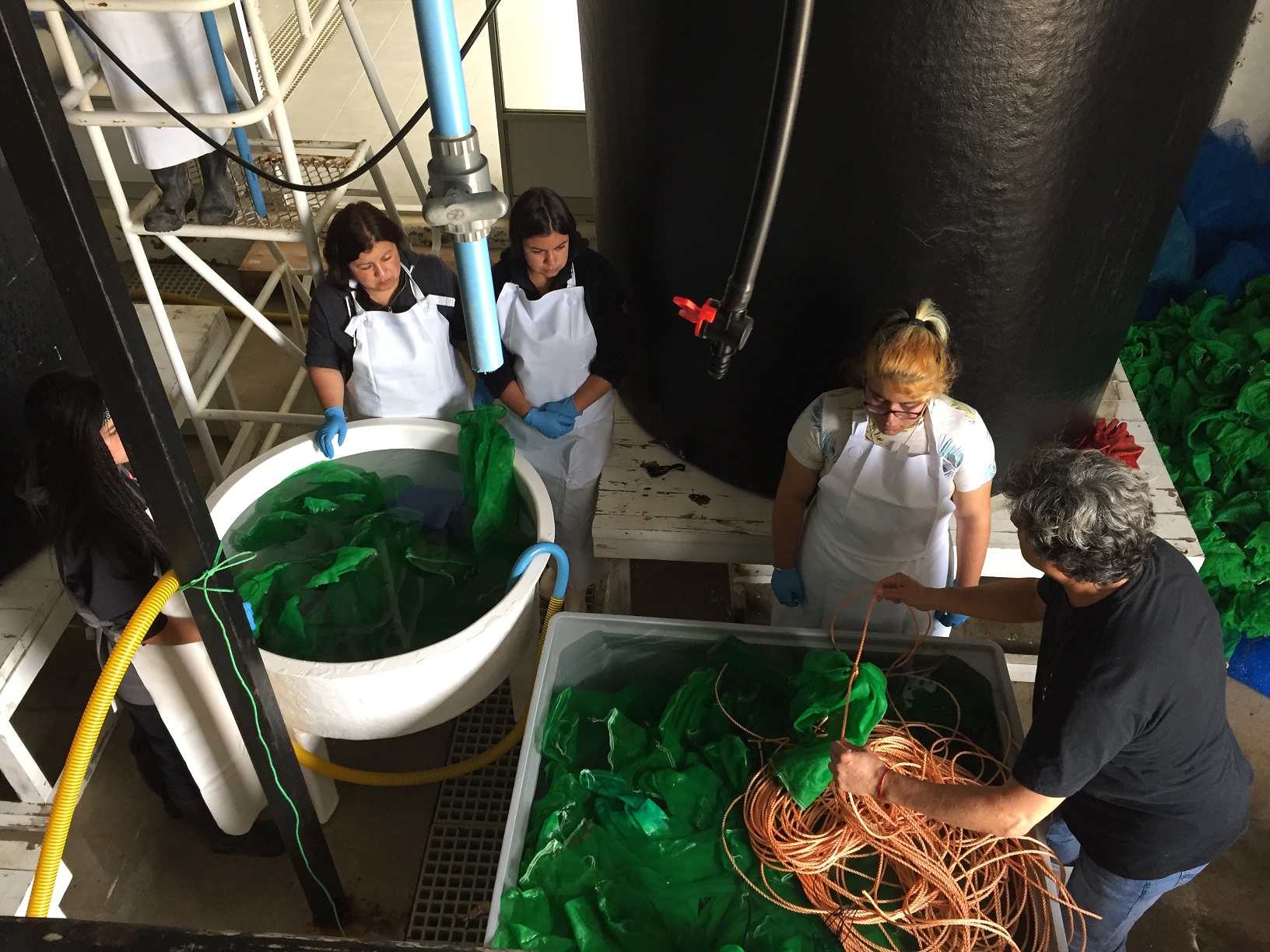
The initiative will allow a diagnosis of technical high schools throughout Chile that will assess educational, productive and curricular capacities, aiming to consolidate a triple impact model that links education, production and territorial development through the establishment of school cooperatives.
The Aquaculture Technology Innovation Center, AquaPacific was awarded a national tender mandated by the Subsecretariat of Fisheries and Aquaculture which will allow to evaluate, diagnose and propose improvements to technical-professional schools (TP) with a specialization in aquaculture, within the framework of the update of the Small-Scale Aquaculture Regulation (APE).
The proposal, titled "Diagnosis and improvement proposals for strengthening technical professional high schools with aquaculture training within the framework of the modification of the Small Scale Aquaculture Regulation," has as its main objective to generate a national inventory of technical professional high schools that have offered aquaculture in the last decade and to evaluate their educational, productive and curricular capacities, as well as the profile of their teachers.
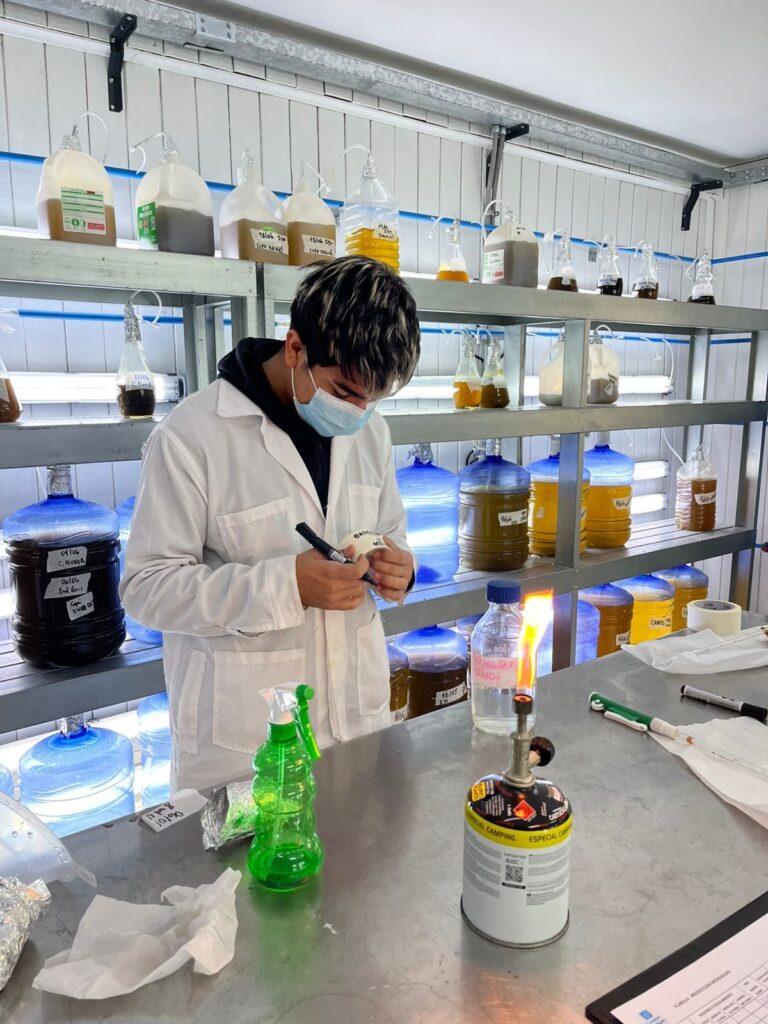
From this diagnosis, concrete proposals will be developed to update their management models, strengthen their curricula and train their educational communities in the school cooperative model, with emphasis on sustainability and territorial relevance.
This work is based on a previous experience driven by Fundación Chile with support from AquaPacífico in the Carmen Rodriguez Henriquez High School from Tongoy, where a successful triple impact socioeconomic model was implemented: social, productive and environmental.
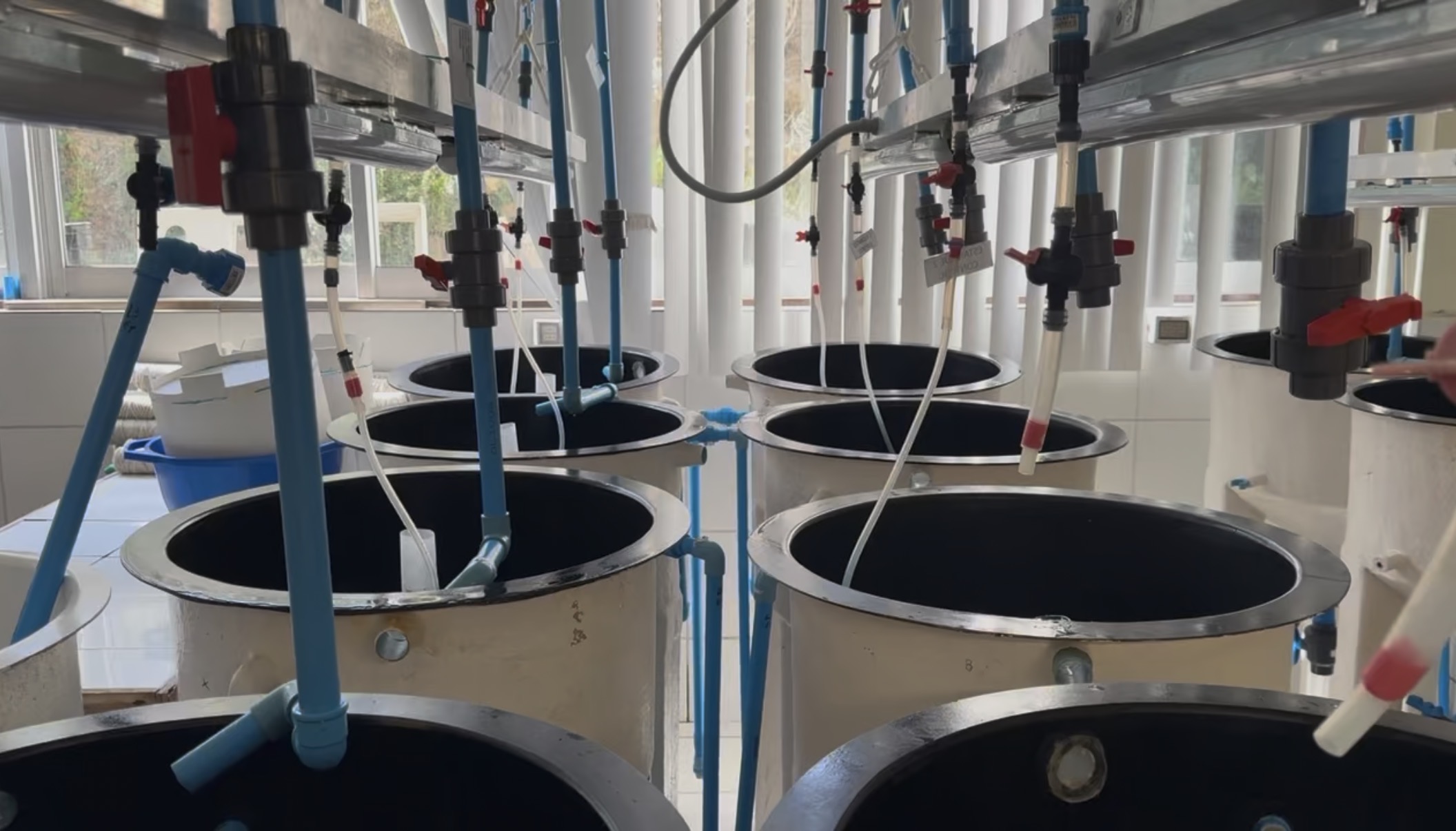
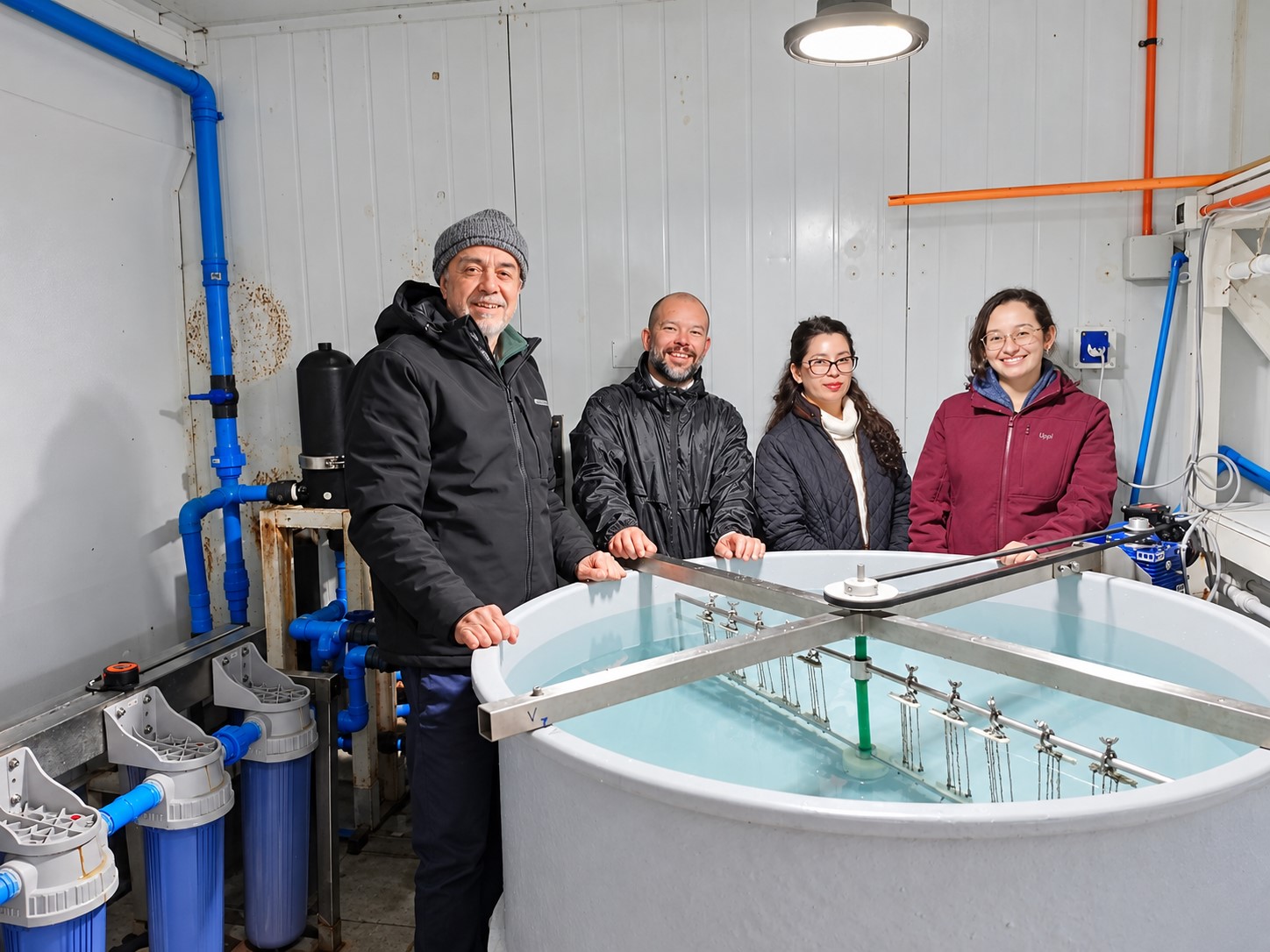
Through the activation of an operational hatchery, students and teachers produce mollusc seeds (such as the Northern oyster – Purple scallop) and formally market them through a school cooperative. This model not only supports the infrastructure and operationality of the centre, but also facilitates the closure of the training cycle, especially in contexts where access to professional practices is a barrier, especially for young women.
“Establishing the school cooperative has not been a difficult process, there is a legal framework that allows you to make or create organizations that require time and dedication. However, there is a group of students who are very motivated with the cooperative; this teaches them to organize, to agree on issues and to coordinate with each other,” says Oscar Leiva Teachers of the Lyceum of Tongoy.
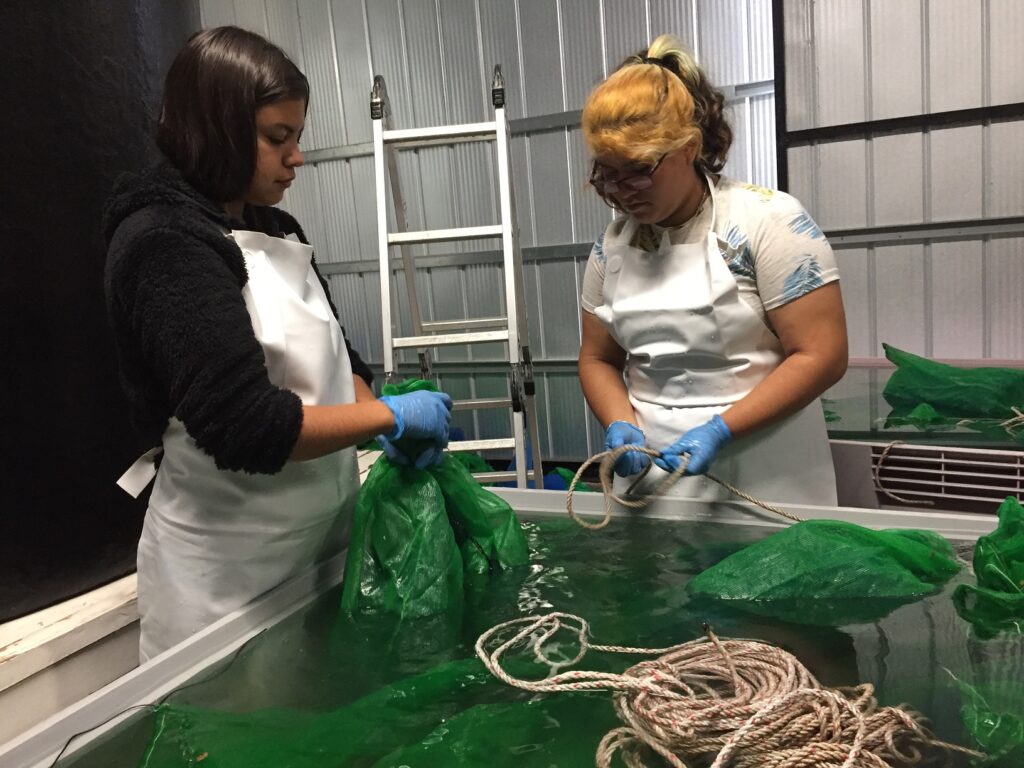
Adding that “while it has been a teaching process for both students and us, we have gained experience in the formation of a cooperative that has led us to guide other lycées who are also in the process of forming one.”
“The innovation model is not about creating a new technology, but about how the existing technology is transferred, articulated with local capabilities and becomes a real source of development for the territories,” explains Daniel Arriagada, AquaPacific project manager and leader of the initiative.
This initiative is being replicated in other regions such as Mehuín in Los Ríos, where the local lyceum produces, through the CoopeMehuín School Cooperative, seeds of Choro ZapatoChoromytilus chorus) for the repopulation of their rivers, thus projecting a productive activity of the sustainable coastal community.
Model Implementation
AquaPacific, as a Technological Center for Aquaculture Innovation, promoted by the Universidad Católica del Norte and Fundación Chile, has been a key player in the transfer of technical, training and administrative knowledge to these establishments.
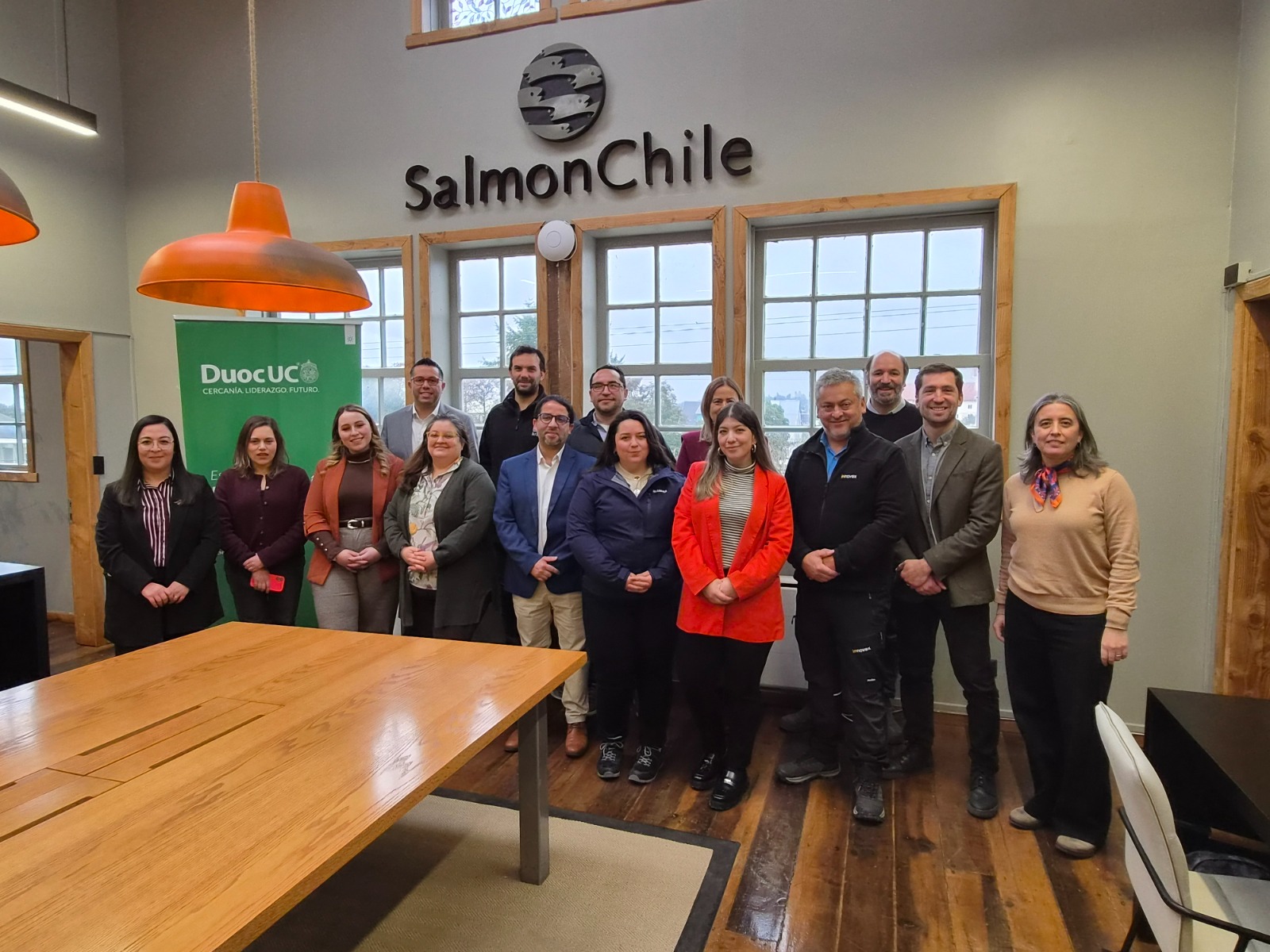
In partnership with the company Connectemos, specialized in school cooperatives, a comprehensive evaluation and monitoring process has been designed to ensure the effective implementation of the model in different local contexts.
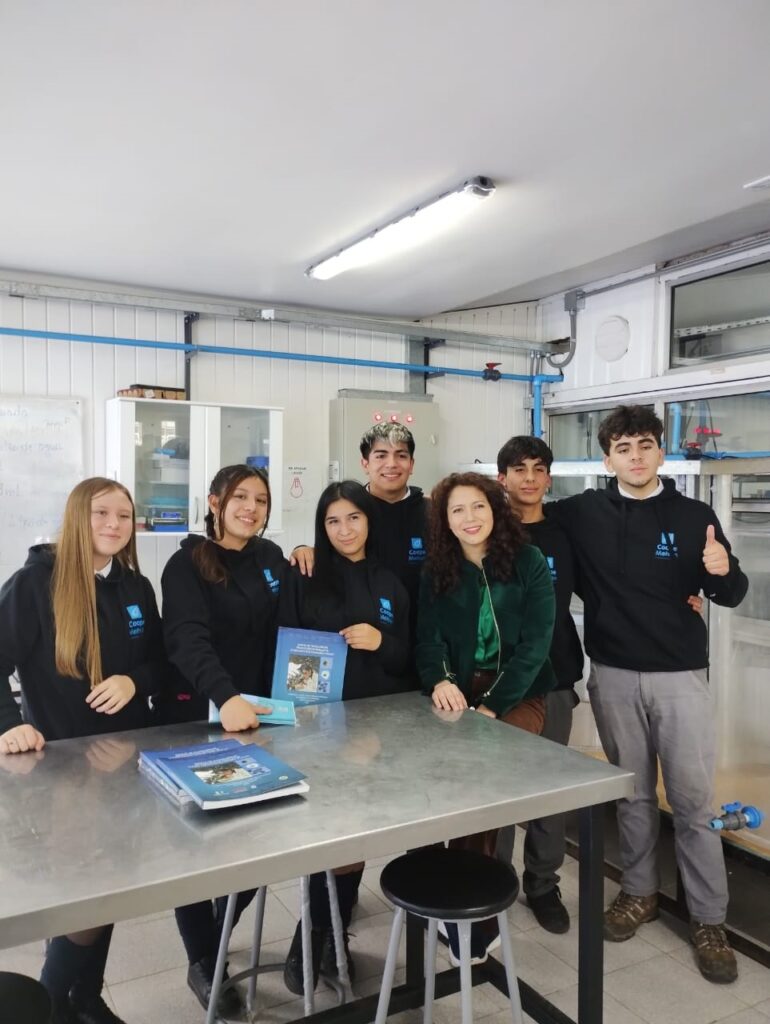
As proposed by Connect with us the sequence of work with students and teachers considers an initial diagnosis and then trainings regarding what is a cooperative and its characteristics, roles and faculties of those who participate, leadership and business culture, business model and legal conformation (through the Social Statute, formal and legal document that contains the key elements of the cooperative).
“From our beginning we have the vision that Cooperative Education is a key tool for social transformation, considering that cooperative work contributes to meeting several of the Sustainable Development goals of the 2030 Agenda, such as the “End of Poverty” (by allowing participants to have a permanent job source) and “Quality Education” (which allows them to experience a teaching process – active and quality learning), achieving a contribution to the local and regional ecosystem as a result,” says María José Viveros, co-founder of Connectemos.
This initiative not only contributes to strengthening technical and vocational education in Chile, but also positions TP lyceums as strategic actors in the development of Small Scale Aquaculture, allowing them to integrate into the formal productive matrix of the country.
It is important to note that, in September of this year, Director Claudia Soto will present this innovative model at the INNAQUA 2025 Congress, thus reaffirming AquaPacific's commitment to social innovation and the construction of a more inclusive, decentralized and sustainable aquaculture ecosystem.