The team led by Dr. Patricia Gómez presented four research studies at CIBAL 2025, winning an award for best presentation and projecting applications in cardiovascular health, sustainable production and nutraceuticals.
An outstanding participation had the Microalgal Ficolab Research Group, from the Department of Botany of the Faculty of Natural and Oceanographic Sciences (FCNO) of the University of Concepción, at the First Ibero-American Congress of Algal Biotechnology (CIBAL 2025), held in Antofagasta between August 25 and 28.
The team, led by the academic from the Department of Botany, Dr Patricia Gómez Vergara, presented four oral papers, covering various areas of microalgae and cyanobacteria biotechnology, from human health to industrial sustainability, achieving also an important recognition for the quality of its science.
Award winning research and high impact
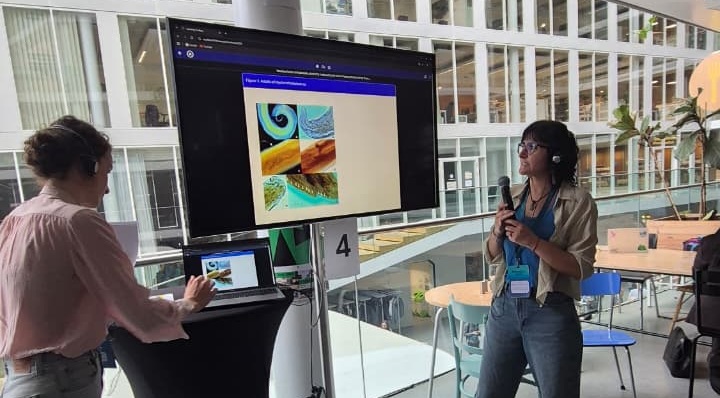
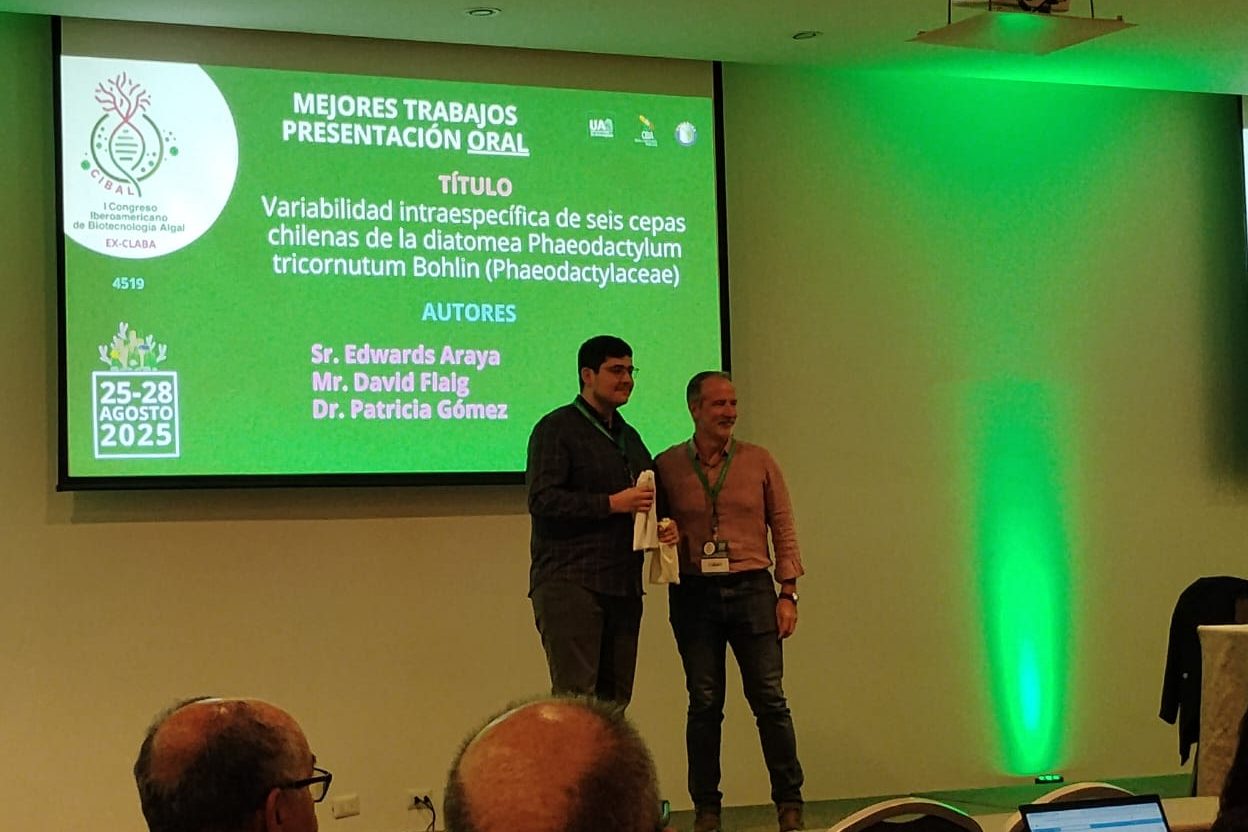
One of the highlights of Ficolab's participation was the recognition received by the former student and current collaborating researcher of the laboratory, MSc. Edwards Araya. His introduction, entitled “Intraspecific variability of six Chilean strains of the diatomea Phaeodactylum tricornutum Bohlin (Phaeodactylaceae)”, was awarded one of the three best oral presentations among more than 90 papers presented.
This research, funded by the FONDEF ID 22I10127 project led by Dr. Gómez characterized six strains of this omega-3-producing diatom, isolated from different regions of Chile.
“We assess the combined effect of strain identity and the availability of silicate in the culture medium on its attributes of growth and biochemical composition,” explained MSc. Edwards Araya.
The results revealed a variability that favors genetic improvement by simple selection and showed that the availability of silicate affects biomass in a strain-specific way, a key finding to optimize its cultivation.
Collaborative science for cardiovascular health
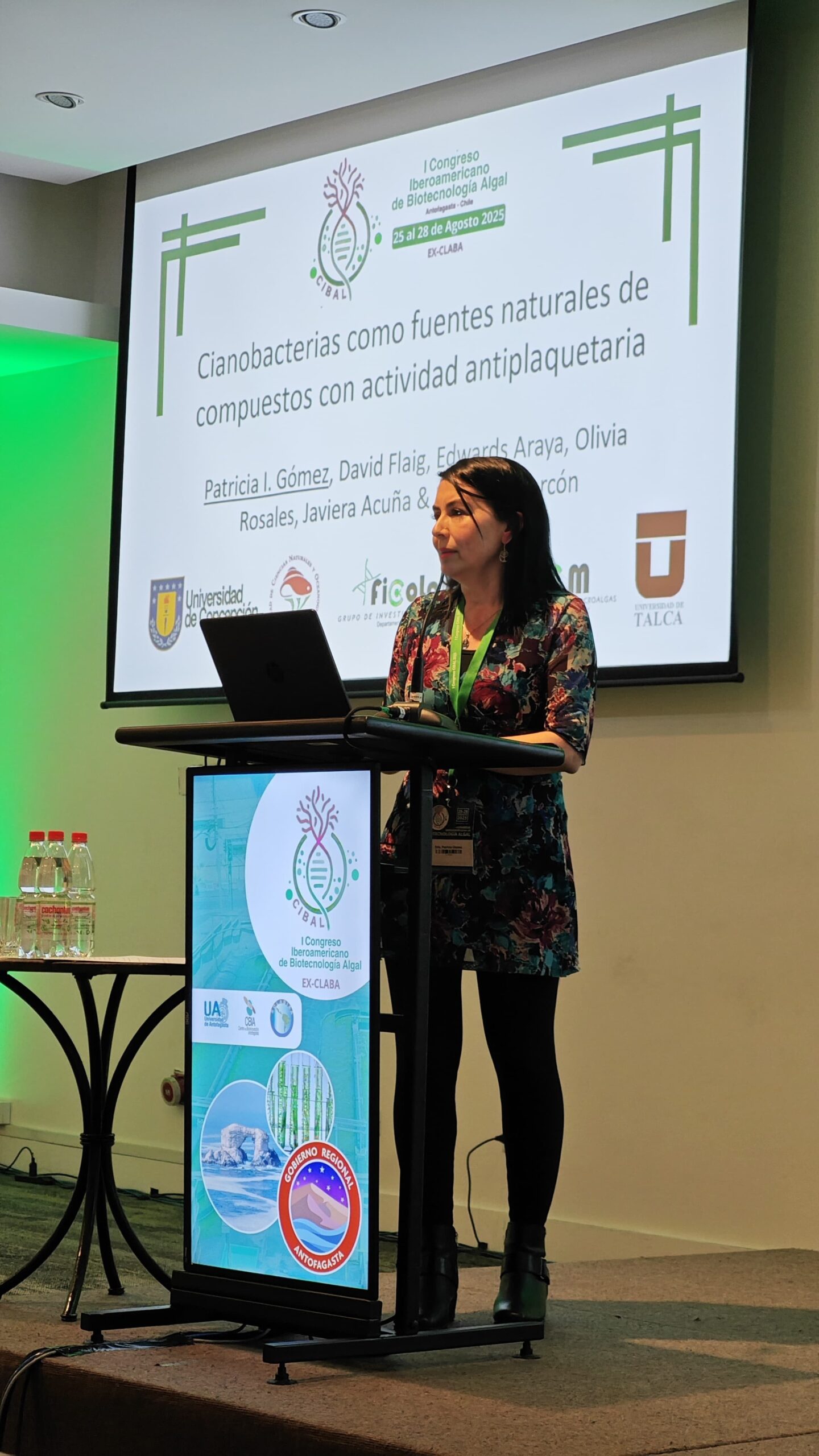
Dr. Patricia Gómez, Director of Ficolab, presented the work “Cianobacteria as natural sources of compounds with antiplatelet activity”, a joint research with the Research Center on Thrombosis and Healthy Aging of the University of Talca.
The study analyzed nine strains of cyanobacteria from Chile and Bolivia, of which eight showed a potent activity to inhibit platelet aggregation. This discovery opens the door to the development of natural and sustainable production alternatives to traditional drugs used in cardiovascular diseases, which often have serious side effects.
Ficolab UdeC and Algal Biotechnology
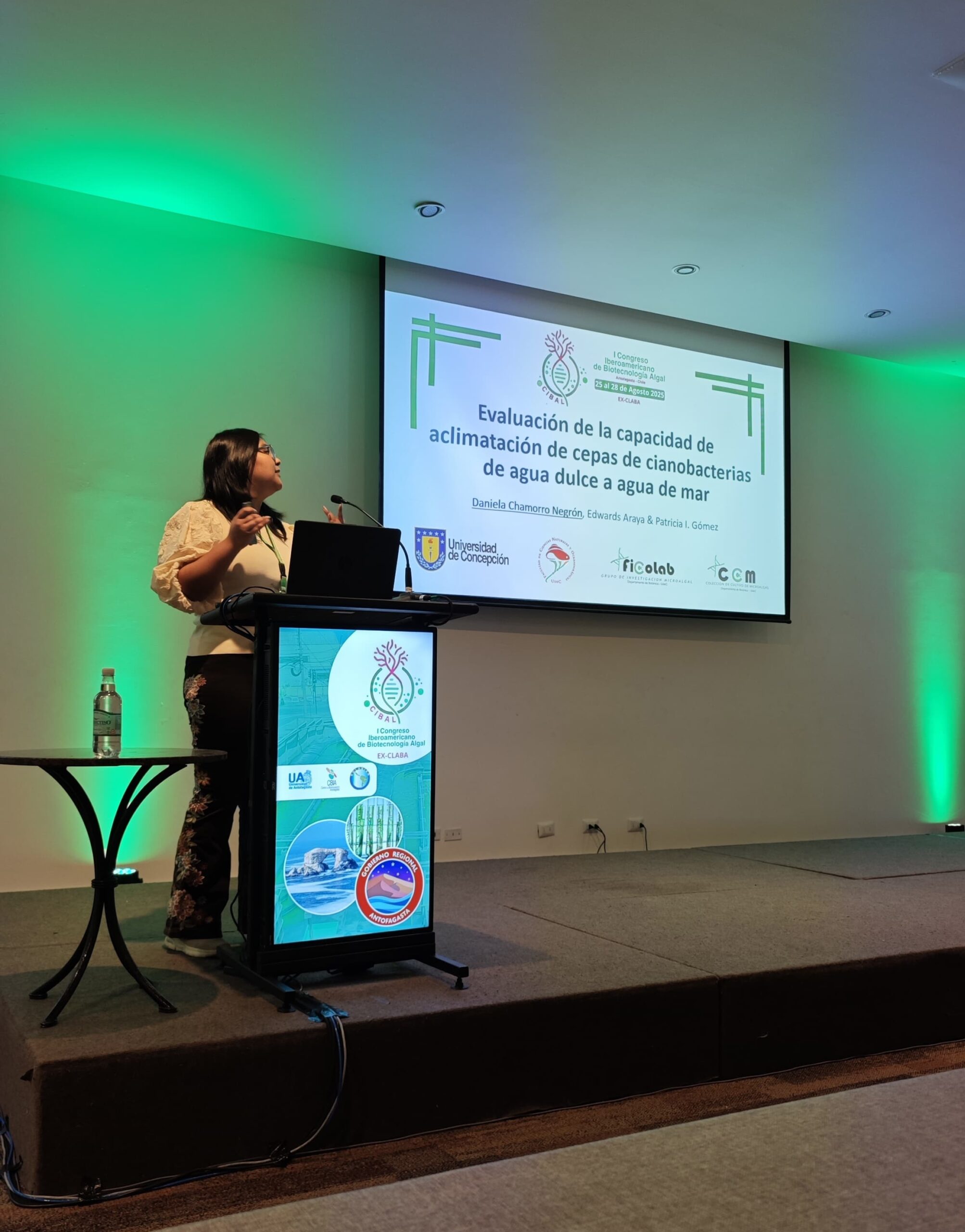
Demonstrating the commitment of Ficolab to the training of new scientists in research and Algal Biotechnology, the Marine biologist and former thesis of the laboratory, Daniela Chamorropresented the results of its Title Seminar: “Assessment of the acclimatization capacity of strains of freshwater cyanobacteria to seawater”.
His research addressed the challenge of water scarcity in microalgal biotechnology, demonstrating that one of the strains studied not only managed to acclimatize to an intermediate salinity, but even grew better. This result projects a significant saving of fresh water by incorporating sea water in the productive scaling of cyanobacteria of commercial interest.
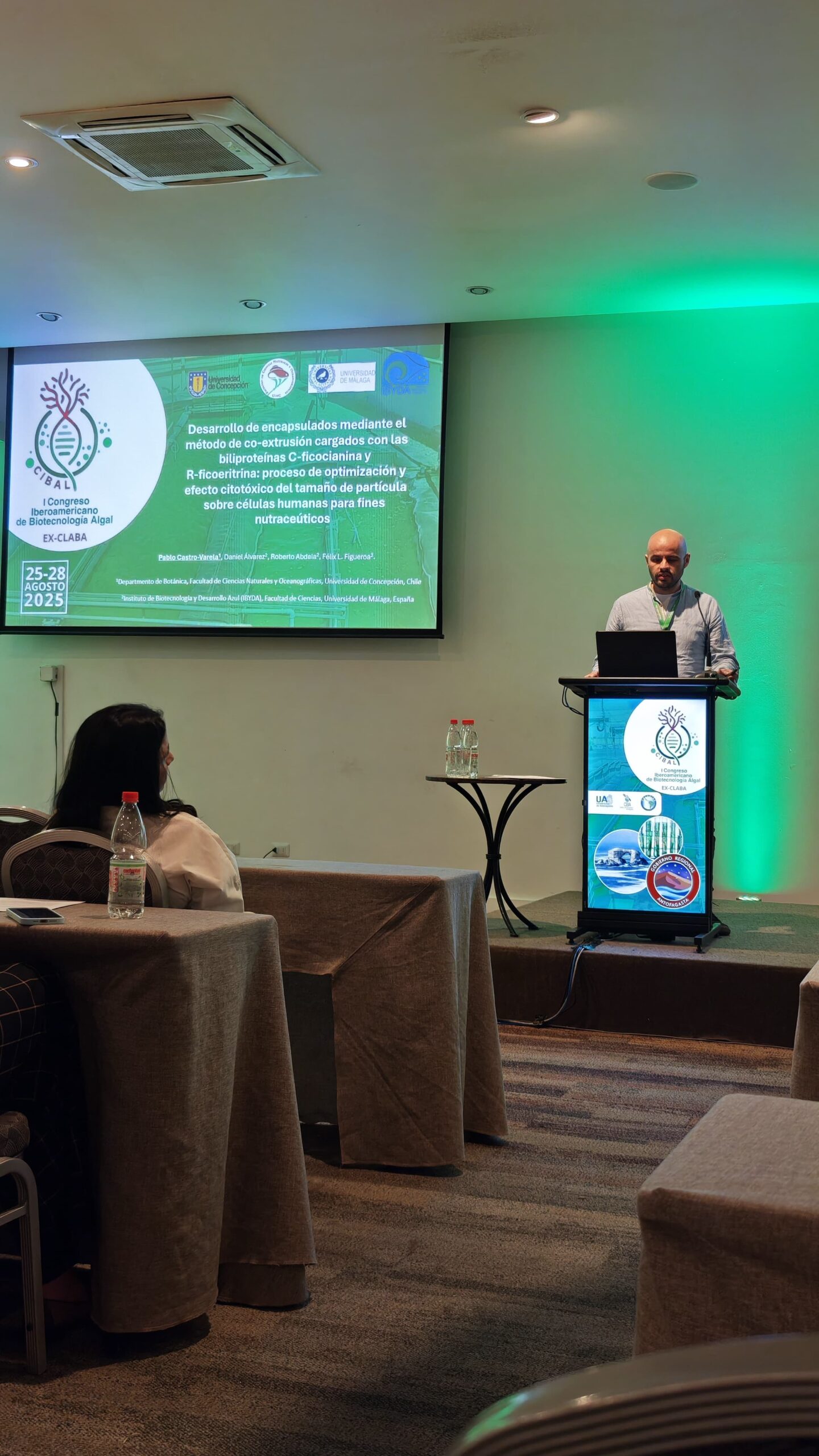
Finally, the academic of the Botany Department and researcher of Ficolab, Dr. Pablo Castro Varela, expounded the work "Development of encapsulated by the method of co-extrusion loaded with the bilyproteins C-phycocyanin and R-phycoeritrine: process of optimization and cytotoxic effect of particle size on human cells for nutraceutical purposes", fruit of his collaboration with the international project Nazca (Blue Nutricosmeceuticals with Cyanobacteria and Macroalgae) of the University of Malaga (Spain).
The research optimized the process to encapsulate pigments of cyanobacteria and macroalgae, discarding its cytotoxic effect and validating its potential for nutraceutical applications.
Congress with history and future for Ficolab
The CIBAL 2025 is the first Ibero-American version of the Latin American Algal Biotechnology Congresses (Claba), an event in which Ficolab UdeC has participated actively since its inception in 2004. In fact, the UofC hosted a successful version in 2012, which promoted scientific collaborations that have lasted until today.
Dr. Gómez said that “it is important to share our work with scientists working on related issues, in doing so we can find new directions to our research, new people to team up and also, to expose ourselves to scientific criticism, which helps us to grow and improve every day.”