With more than 40 hours of online training, the program addressed the environmental, health and socio-economic challenges of salmon farming and mussel farming, consolidating a space for global academic exchange around sustainability and animal welfare.
During the second half of 2025, the Interdisciplinary Center for Aquaculture Research (INCAR) carried out a course focused on productive densities in salmon farming and mussel farming, addressed from an interdisciplinary perspective.
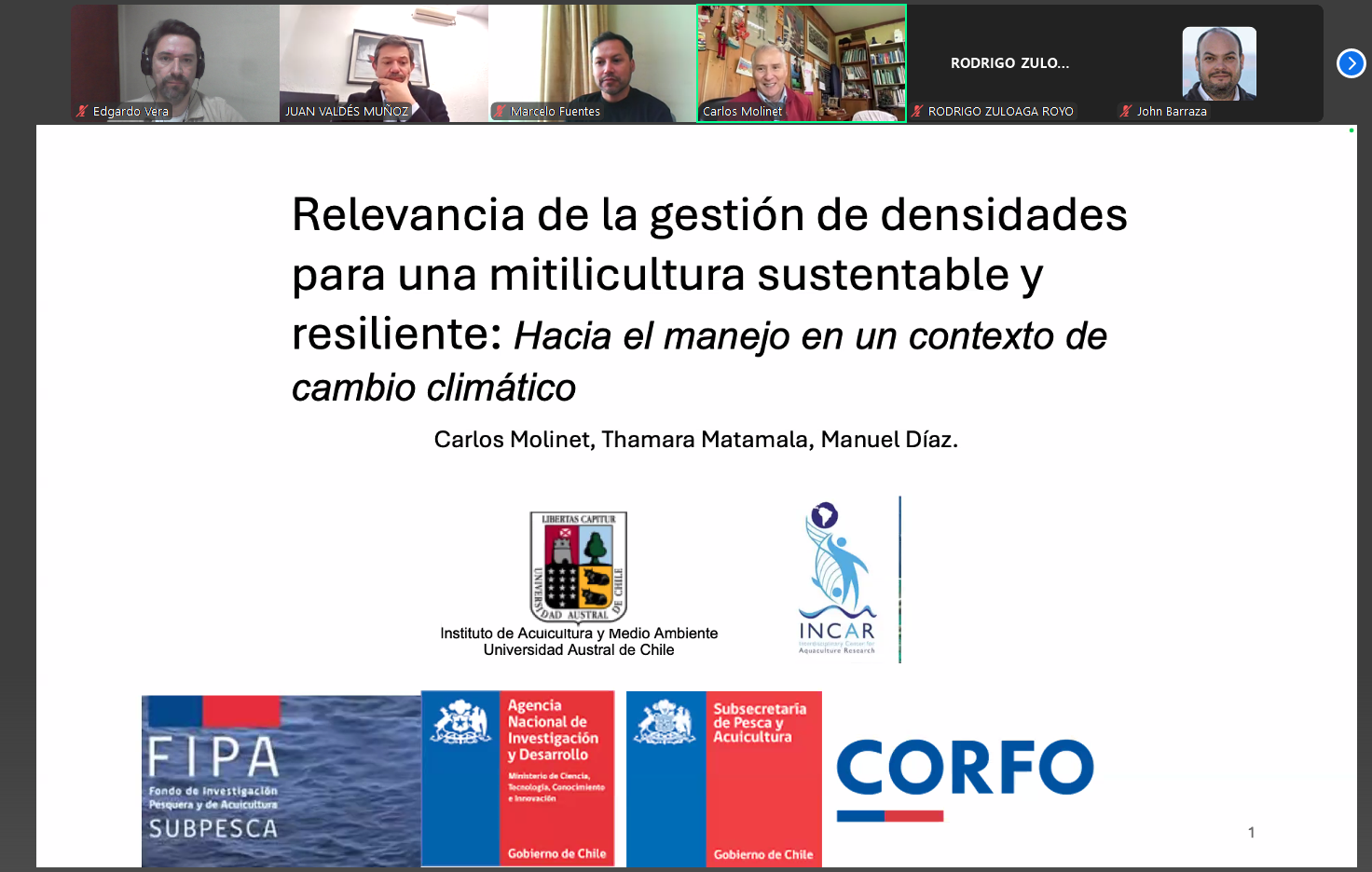
The activity, certified by Andrés Bello University (UNAB), was held online through the Zoom platform, with a total duration of 40 hours. It featured the participation of professionals and students from the aquaculture area from Mexico, Spain, Peru, Argentina and Chile, thus consolidating the course as an international academic exchange space.
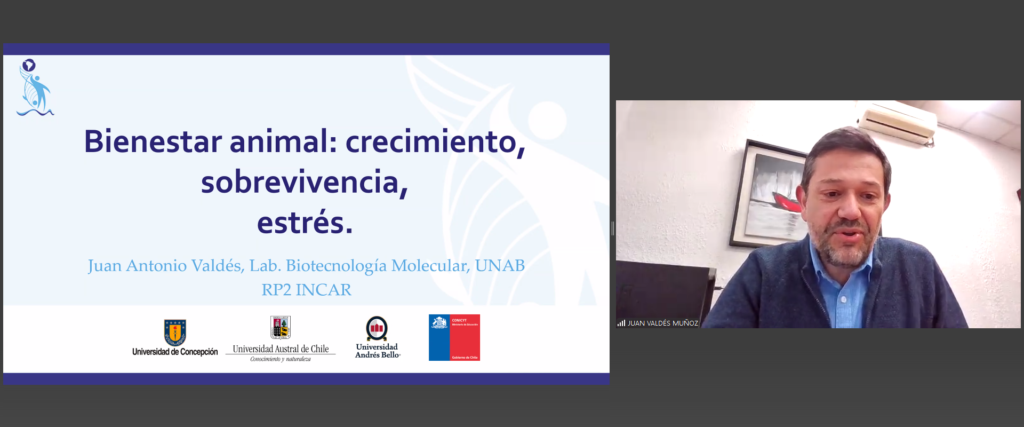
The coordinator of the course, Academic from Universidad Andrés Bello and Associated Researcher at the INCAR Centre, Dr. Juan Antonio Valdés, stated that the structure of the program "allowed a progressive understanding of the concept of productive density, integrating physiological, environmental, regulatory, sanitary, economic and social dimensions, which significantly enriched the discussion. The online format and the systematic use of scientific literature encouraged participation and critical analysis.
The programme included a wide range of content relevant to modern aquaculture such as Stocking densities in salmon, fish, shrimp and molluscs: carrying capacity and parasitic load, Animal welfare: growth, survival and stress, Comparison of density regulations in salmon producing countries (Chile, Norway, Canada), Regulation of stocking density and Percentage of Seed Reduction (PRS), Environmental consequences and productive densities and spatial distribution of salmonids, Socioeconomic implications of a traffic light system to regulate densities and maximum productivity, Impact of climate change on cultivation densities (risk maps), Frequency of recurring pathogen outbreaks (Caligus, bacteria, viruses), with emphasis on P. salmonis, Environmental consequences of the use of antibiotics, Non-pharmaceutical alternatives to the use of antibiotics and antiparasitics, and Management of densities for a sustainable and resilient mussel farming.
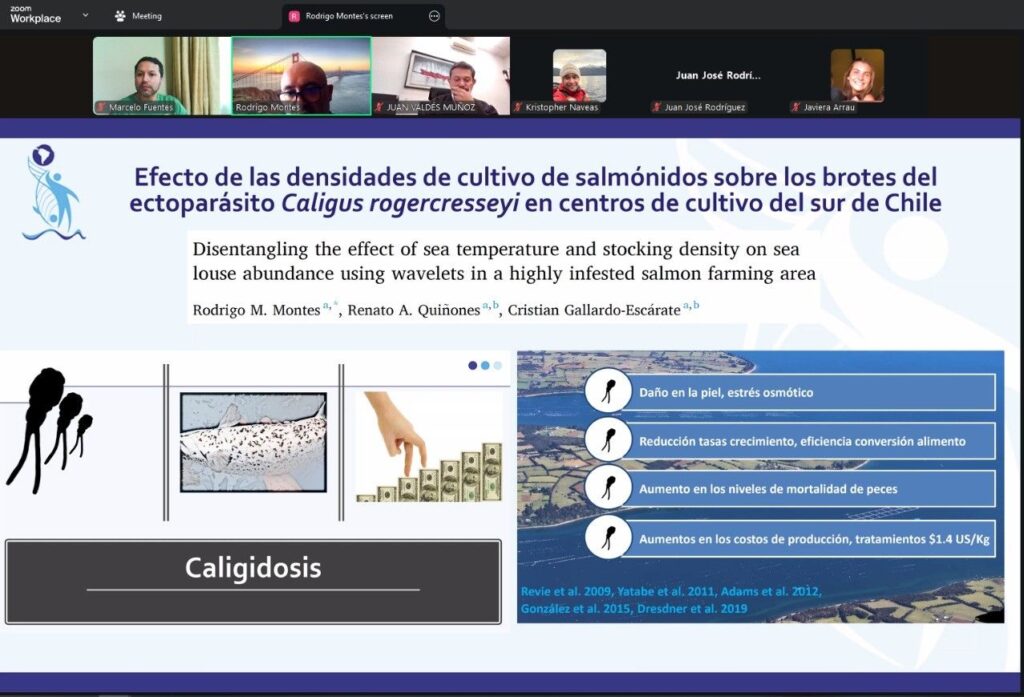
Among the researchers from INCAR who participated as teachers in the course were Dr. Juan Antonio Valdés, Dr. Jaime Figueroa, Dr. Alex Romero, Dr. Rodrigo Montes, Dr. María Lorena González, Dr. Carlos Chávez, Dr. Leonardo Salazar, Dr. Doris Soto, Dr. Jorge León Muñoz, Dr. Jessica Fuentes and Dr. Carlos Molinet.
Dr. Valdés added that the interdisciplinary focus of the course is consistent with the way aquaculture issues should be addressed, "as it is a complex socio-ecological system where production decisions simultaneously impact animal welfare, the environment, the economy and governance. The course shows that variables such as stock density cannot be analysed solely from the" productive efficiency, but they require integrating scientific knowledge, regulation, animal health, climate change and socio-economic effects. This approach favors a more informed, realistic and sustainable decision-making process, aligned with the current challenges of Chilean aquaculture.
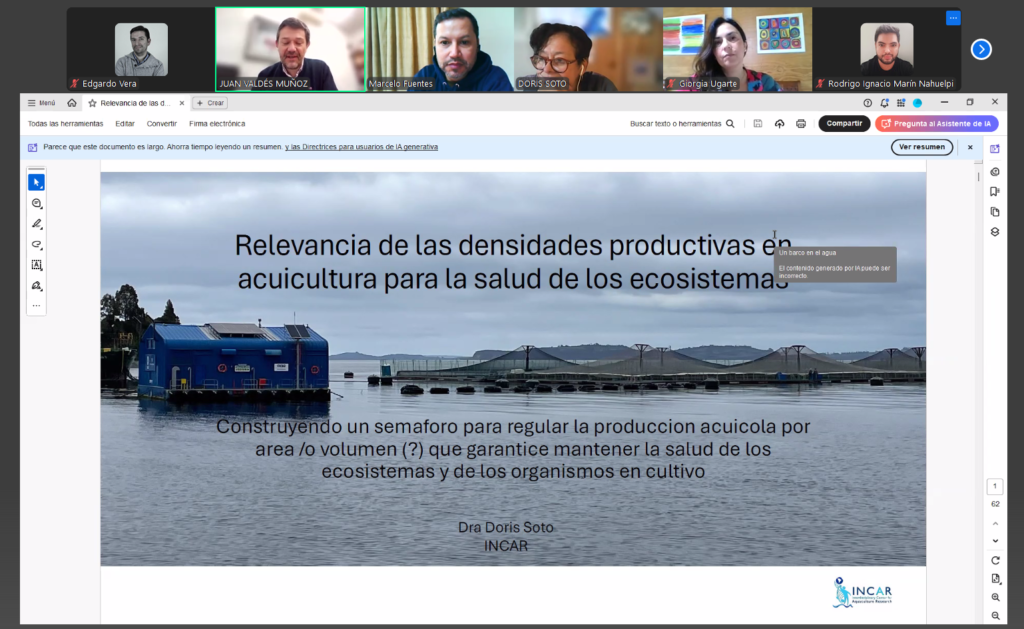
This course allowed participants to acquire tools to face the current challenges of aquaculture, promoting sustainability, animal welfare and productive resilience in changing environmental scenarios, while directly contributing to the development of a sustainable and responsible aquaculture, "by integrating topics such as animal welfare, carrying capacity, density regulation, use of" Antibiotics, non-pharmaceutical alternatives and the effects of climate change, promote a preventive and adaptive vision of production management. Likewise, the incorporation of comparative approaches and management systems, such as the traffic light system, strengthens the discussion on public policies and production practices aimed at reducing environmental and health impacts, improving the social legitimacy of the activity," explained the Academic. from UNAB.
In the researcher's view, among the main challenges for future versions of the course is to deepen the analysis of case studies applied to specific territories, incorporating real production and environmental data. Likewise, the practical integration could be strengthened through interdisciplinary workshops or simulations of regulatory and productive decision-making. "Another relevant challenge is to expand the discussion" towards predictive and monitoring tools (models, sensors, early warning systems), as well as strengthening the participation of productive and regulatory sector actors, which would allow a more direct link between science, public policy and industry," concluded.