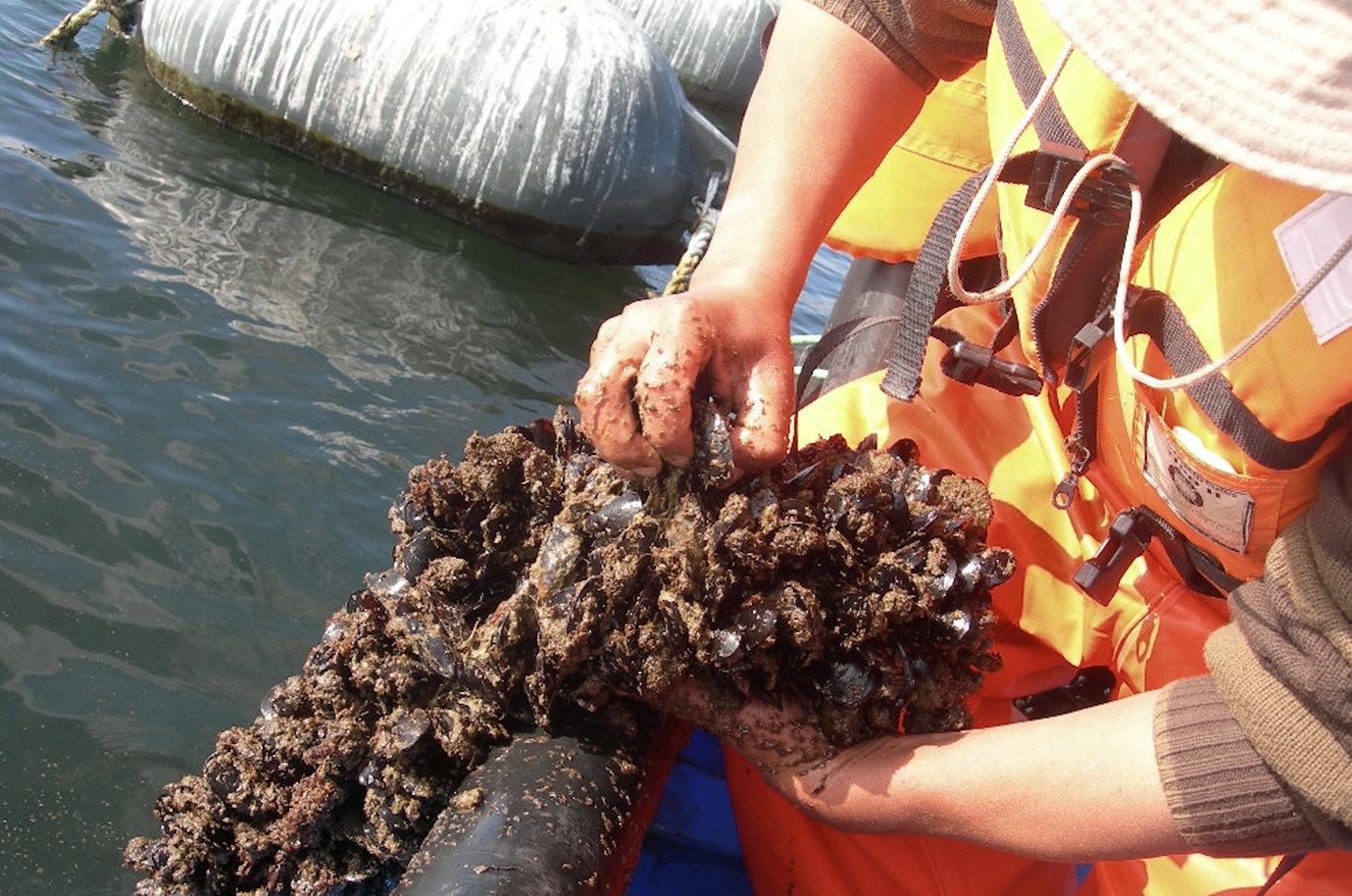
One of the sectors that could be affected is the Chilean mussel industry, especially in the Los Lagos Region.
Although there is still uncertainty about the intensity it could reach, in the coming months, researchers from the Center for Research in Biodiversity and Sustainable Environments (CIBAS) of the Catholic University of the Holy Concepción (UCSC) warn that an eventual El Niño event in 2026 could generate significant changes in marine ecosystems, aquaculture and the country's biodiversity.
El Niño corresponds to the warm phase of the El Niño-Southern Oscillation (ENSO), a natural climate event that occurs when the surface waters of the Equatorial Pacific Ocean have higher than normal temperatures.
This condition modifies atmospheric circulation and climate patterns in different regions of the planet, influencing precipitation, temperature, marine productivity and nutrient availability. El Niño varies from year to year and occurs irregularly every two to seven years and can generate significant effects on both terrestrial and marine systems.
Greater uncertainty for mussel farming
For the CIBAS researcher and engineering faculty academic at UCSC, Christian Díaz, one of the sectors that could be affected is the Chilean mussel industry, especially in the Los Lagos Region.
According to projections from national and international climate centres, there is an evolution towards El Niño conditions during 2026, with the possibility of persistence and intensification in the coming months, although there is still uncertainty about its final magnitude. In that scenario, the main effect for mussel farming would not necessarily be a unique and immediate impact, but an increase in environmental variability and of "incertidumbre productiva", señaló.
The academic explained that phenomena associated with El Niño could influence fundamental aspects for mussel production. "In the Los Lagos Region, where the Chilean mussel industry is concentrated, El Niño could affect growth, meat yield, physiological condition and natural seed collection. These effects are explained because El Niño can modify oceanographic conditions such as sea temperature, salinity, stratification, renewal of water and availability of natural food; in addition to climatic variables such as the precipitation regime,” he said.
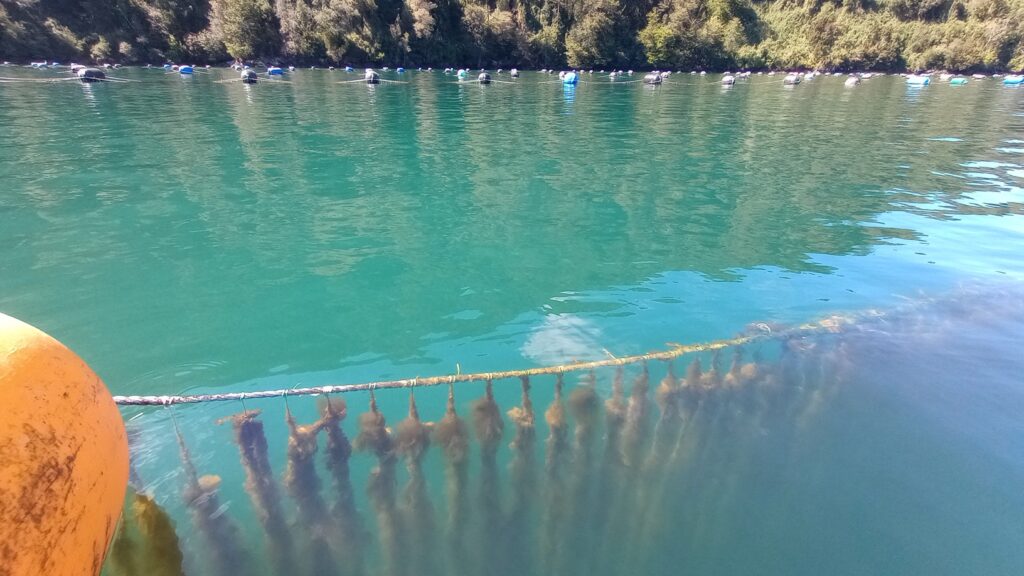
With regard to coastal communities, Díaz stressed that impacts will depend on the intensity of the event and the adaptive capacity of each territory. “If El Niño increases environmental variability, it can generate uncertainty in mussel seed harvesting, fat times, meat yield and crop programming, especially affecting small and medium producers, who tend to have lower capacity to absorb losses or delays in production,” added the academic.
However, the researcher emphasized that these scenarios can also be transformed into opportunities for strengthening the sector. “Rather than interpreting these climatic and oceanographic conditions only as a threat, we must see them as a sign or opportunity to strengthen small- and medium-scale aquaculture through environmental monitoring, technical assistance, productive diversification, territorial management and warning systems. early,” he concluded.
A natural laboratory to study genetic adaptation
From a scientific perspective, the researcher CIBAS and academic of the Faculty of Sciences UCSC, Dr. Maribet Gamboa argues that El Niño offers a unique opportunity to understand the adaptation mechanisms of marine organisms.
“El Niño is a truly large-scale ‘natural experiment’ to understand how aquatic populations respond genetically and evolutionaryly to abrupt environmental changes.” The academic explains that oceanographic alterations associated with the phenomenon generate differentiated responses among individuals of the same species.
“Some may have genetic variants that allow them to tolerate high temperatures, lower concentrations of dissolved oxygen and changes in salinity or fluctuations in food availability,” he said.
He also warned that extreme events can also significantly reduce the genetic diversity of certain populations. “Extreme environmental disturbances can cause massive mortality in some species and significant reductions in population size. This causes genetic diversity to decrease, reducing future adaptive potential and increasing vulnerability to new climate events.” He warned.
For Gamboa, one of the most relevant applications of these studies is the identification of resilient populations that can be transformed into reservoirs of genetic diversity and priority focal points for conservation.
Possible effects on macroalgae
Another biological group that could undergo relevant changes is marine macroalgae. This was explained by the researcher CIBAS and academic of the Faculty of Sciences UCSC, Dr. Ricardo Otaiza.
“The coasts of Chile are affected by El Niño with a potential impact on marine biota, including macroalgae. The impact of this warm event is greater in the northern part of Chile, decreasing towards the central south zone.”
According to the researcher, variations in temperature and nutrients can directly affect the growth and reproduction of these organisms.
“Depending on the intensity and duration of the Child, changes in sea temperature could affect the abundance (coverage or biomass) and productivity (growth) of macroalgae. Likewise, depending on the time of year, it could also affect algae during their reproductive processes.”
Particular concern is generated by underwater forests to flee, due to their ecological importance. “The impact that these changes can have on the runaways, large brown algae of the order Laminariales forming submarine forests, would be a greater impact at the community level, and could impact on many other organisms that live with them,” explained Dr. Otaiza.
Anticipate to meet the challenges
Although specialists agree that it is still early to accurately determine the magnitude of the effects that El Niño could have during 2026, they highlight the importance of environmental monitoring, scientific research and early planning to reduce risks and strengthen the adaptive capacity of ecosystems and productive activities linked to the sea.
In a climate change scenario, understanding how species, coastal communities and productive systems respond to natural climate variability events such as El Niño will be key to designing conservation and sustainable development strategies for the future. In this regard, the Center for Research in Biodiversity and Sustainable Environments of the UCSC is committed to contributing to the dissemination of this contingency. environmental.