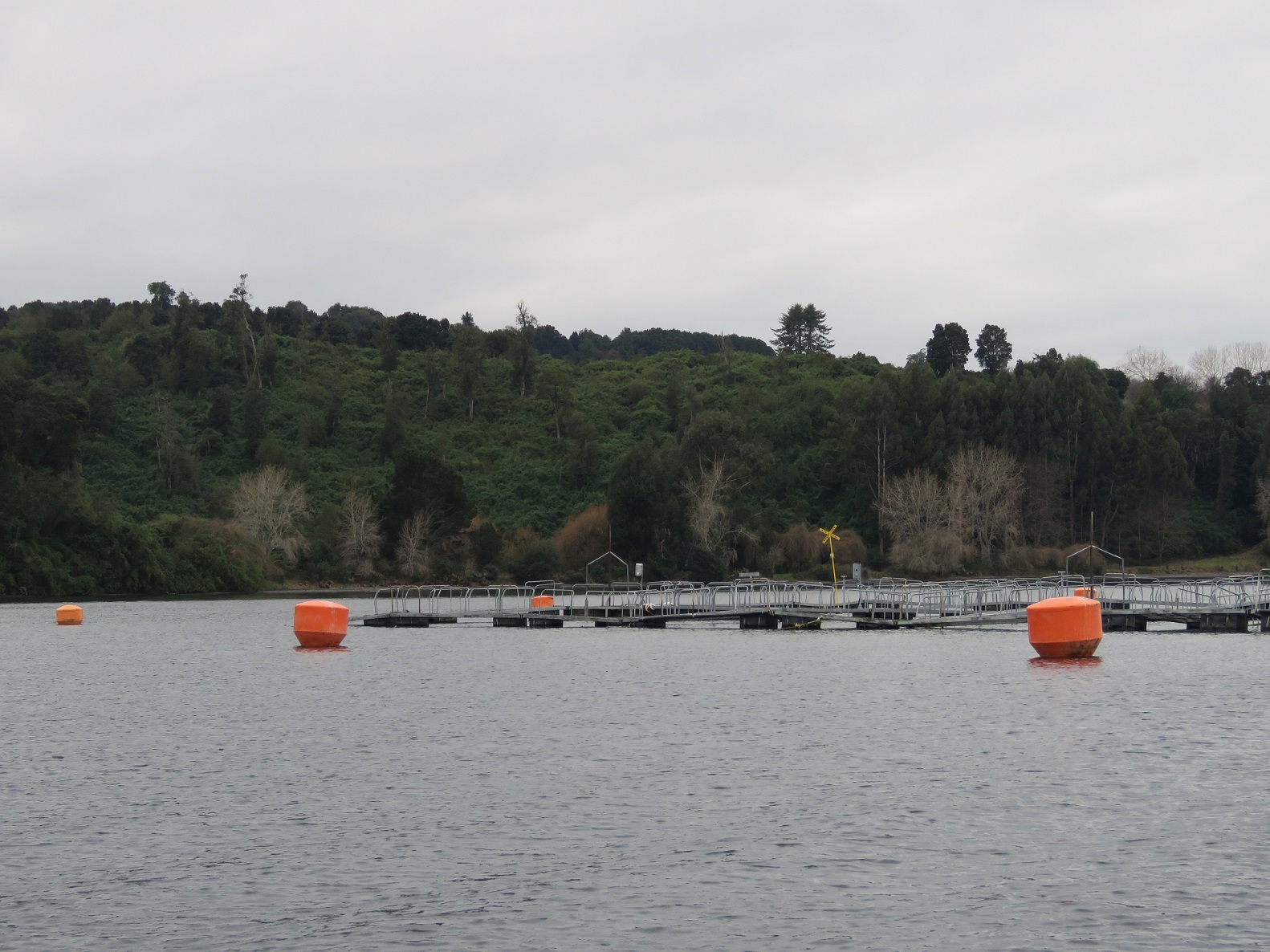
Aquaculture is a productive sector that is growing rapidly due to the increasing need to provide food protein to the world population. However, there are concerns related to its environmental impact and adverse social effects.
In this context, a group of researchers from different parts of the world, among whom stands out the academic from the University of Talca and associate researcher of Interdisciplinary Center for Aquaculture Research (INCAR), Dr. Carlos Chávez, published the article titled «Environmental, economic and social sustainability in aquaculture: the aquaculture performance indicators, in which they examine results of aquaculture within a framework of three sustainability pillars through the analysis of data collected using the Aquaculture Performance Indicators.
Using this approach, data has been collected for 57 aquaculture systems around the world across 88 metrics that measure social, economic or environmental outcomes. "First we examined the relationships between the three pillars of sustainability and then we analyzed the performance in the three pillars by technology and species," explain the authors in the document.
The analysis carried out by the researchers shows that the economic, social and environmental results, on average, reinforce each other mutually in global aquaculture systems. "Based on this, we can say that sustainable aquaculture production is possible and the fundamental trade-offs between economic, ecological and social sustainability should not be considered the norm, although they may exist in specific cases. However, the" results also indicate that there is a significant variation in the degree of sustainability in different aquaculture systems, which supports the observation by Naylor et al. (2021) that this is a highly heterogeneous industry.”
“Heterogeneity is very interesting and our results indicate that some important debates are probably too simplified. This is more obvious in the discussion on the relative merits and potential of freshwater aquaculture versus marine aquaculture. Our results indicate that this is not a particularly interesting distinction, as the systems work quite similarly in all three. dimensions of sustainability. Rather, there are other factors that seem to be more important, such as the difference between molluscs and fish or the degree of control over the production process,” the authors explain.
However, the analysis carried out by experts also shows a significant variation in the degree of sustainability in different aquaculture systems, and the weak performance of some production systems in some dimensions provides opportunities for innovative policy measures and investments to further align sustainability objectives.
“Aquaculture production systems vary widely in terms of space, production technology, species and market. The identification of negative performance results in some species and specific dimensions should not imply a rejection of this food production technology, but is useful to inform public policy decisions and investment,” the authors stress.
However, these analyses are only the beginning, and the continued development of the database of Aquaculture Performance Indicators (API) will facilitate the analysis of more detailed questions and significantly help to improve the sustainability of the aquaculture sector. An extension of the database will be beneficial as it will allow the analysis of specific subsystems and make the sample more representative of world aquaculture. For example, additional seaweed observations would facilitate the analysis of one of the fastest growing parts of the aquaculture sector.