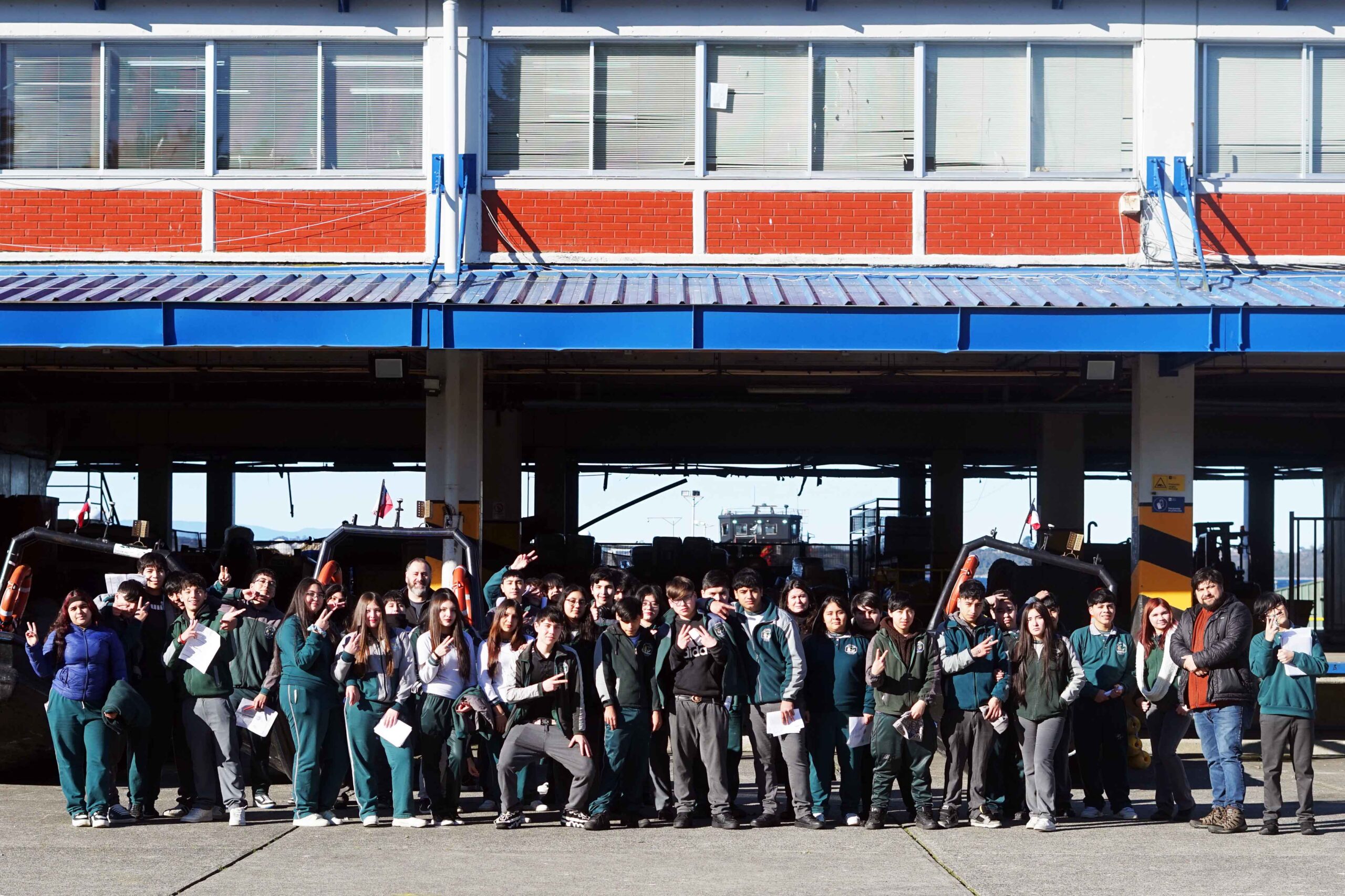
The Liceo Técnico Profesional Bosque Nativo has an enrollment of 700 students, distributed between first and fourth year.
Thirty nine students who are currently in their second year of high school at the Bosque Nativo Puerto Montt Technical Professional High School, made a technical visit to Fundación Chinquihue, an opportunity in which they toured the facilities of the "Viviana Videla Vidal Seed Production Center" or hatchery, as well as it is also known.
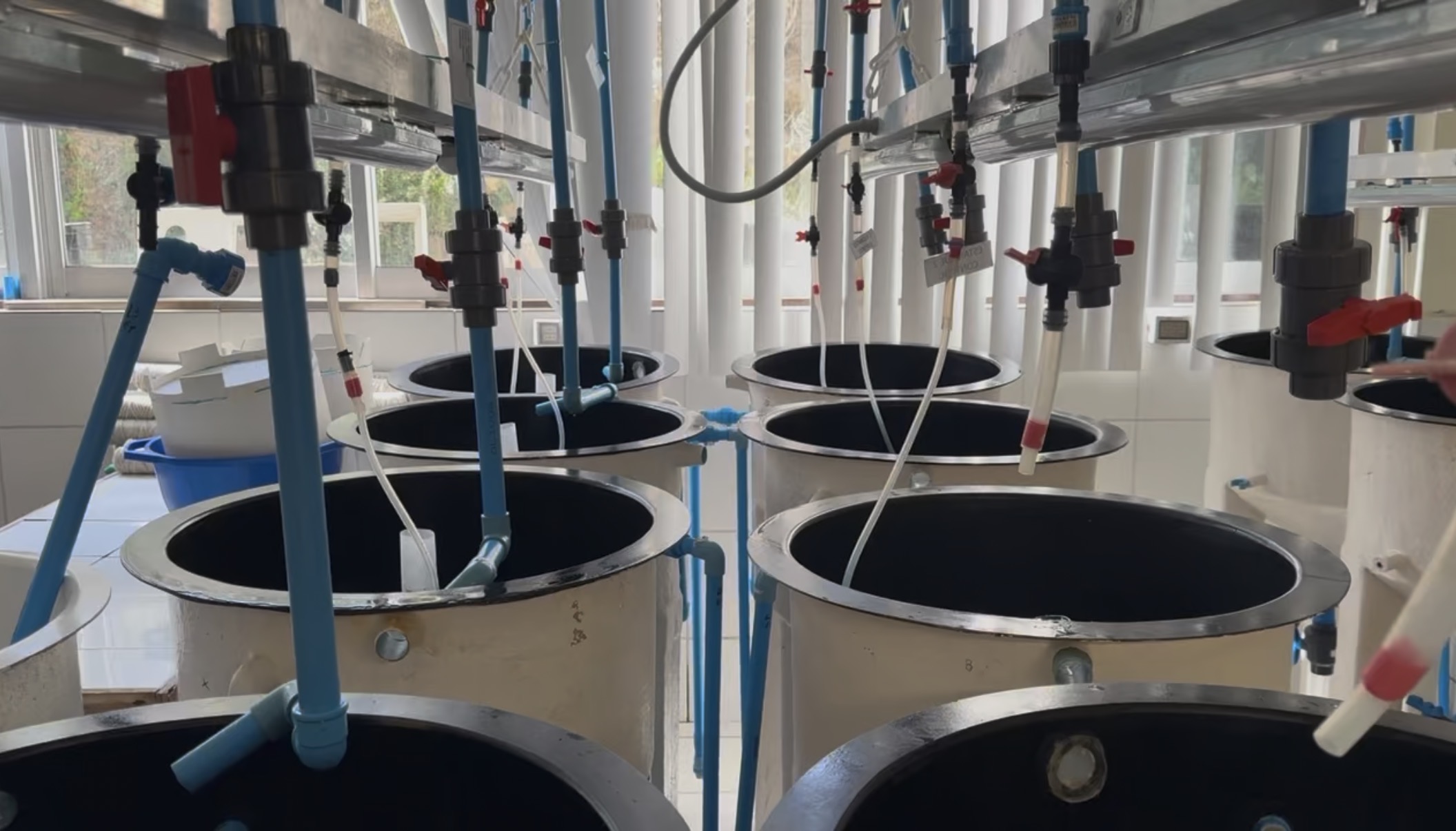
Accompanied by teachers Jorge Soto and María de los Ángeles Cares, the young people made a complete tour of these facilities, an opportunity in which they could observe in detail benthic larvae under the microscope, and learn about the different production rooms, such as the microalgae, larvae, and broodstock conditioning rooms and nursery, and become familiar with the cultivation of species such as the red abalone (Red abalone), the sea urchin (White mussel), the Japanese oyster (Giant scallop) and the North ostion (Purple scallop).
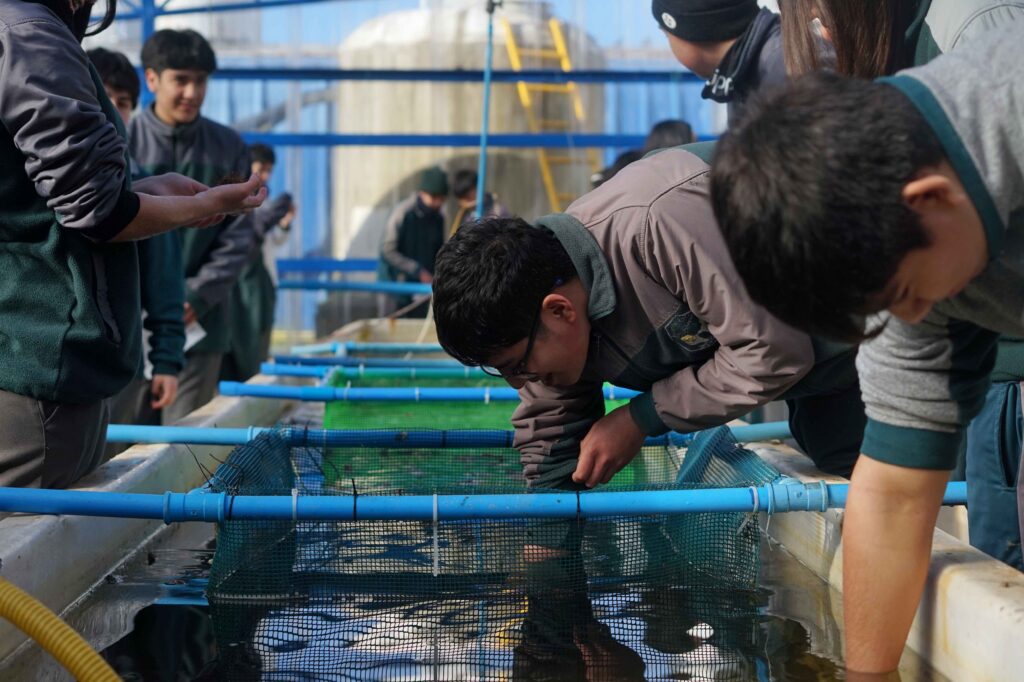
This visit was aimed at providing a relevant experience for students, since they are close to choosing one of the four technical specialties offered by the lyceum from the third half year: agricultural, hotel, aquaculture and administration, logistic mention.
Jorge Soto Vargas, head of the specialty of lyceum aquaculture, explained that this visit to Fundación Chinquihue had the main objective of presenting students with an alternative of continuation of studies, related to the “development of aquaculture in the region and the different options in which they can develop their professional future. So, the idea is to bring aquaculture closer to second-rate students who are thinking about to choose a specialization.”
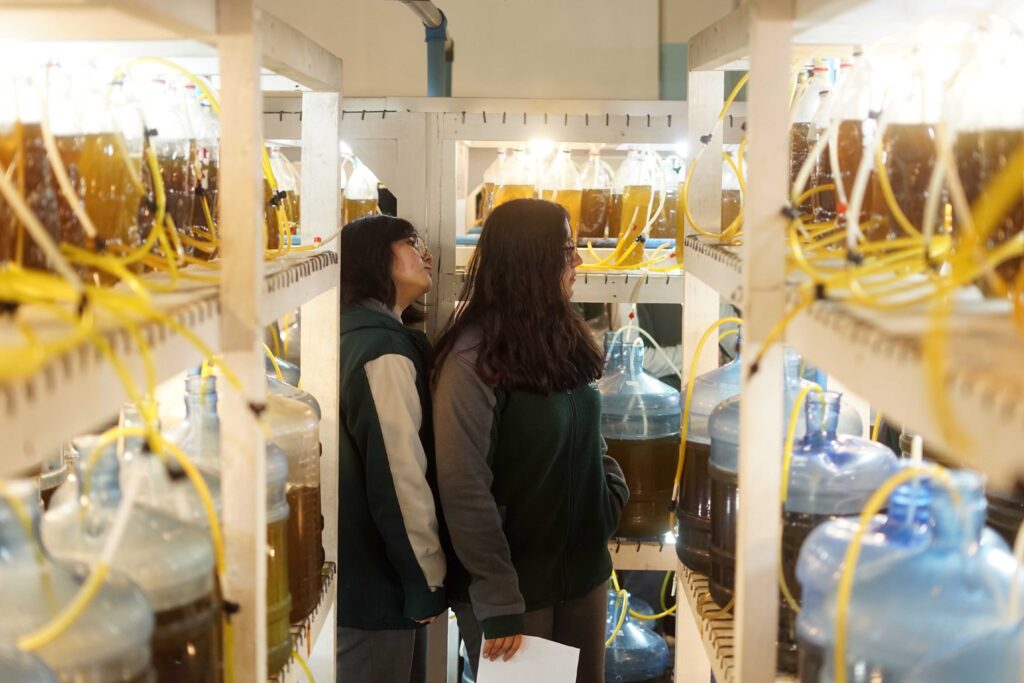
The teacher also said that “to encourage aquaculture activity today is fundamental, since the development of the region is based on this productive activity”. Along the same lines, he explained that currently they have some students whose relatives are dedicated to “craft fishing, to the collection of shore, therefore, it is very relevant to bring students closer to the work that the foundation does.”
María de los Ángeles Cares, professor of aquaculture at the aforementioned educational institution, said it is very important that students “know the specialty of aquaculture, that they become familiar with it. They were very happy and excited.”
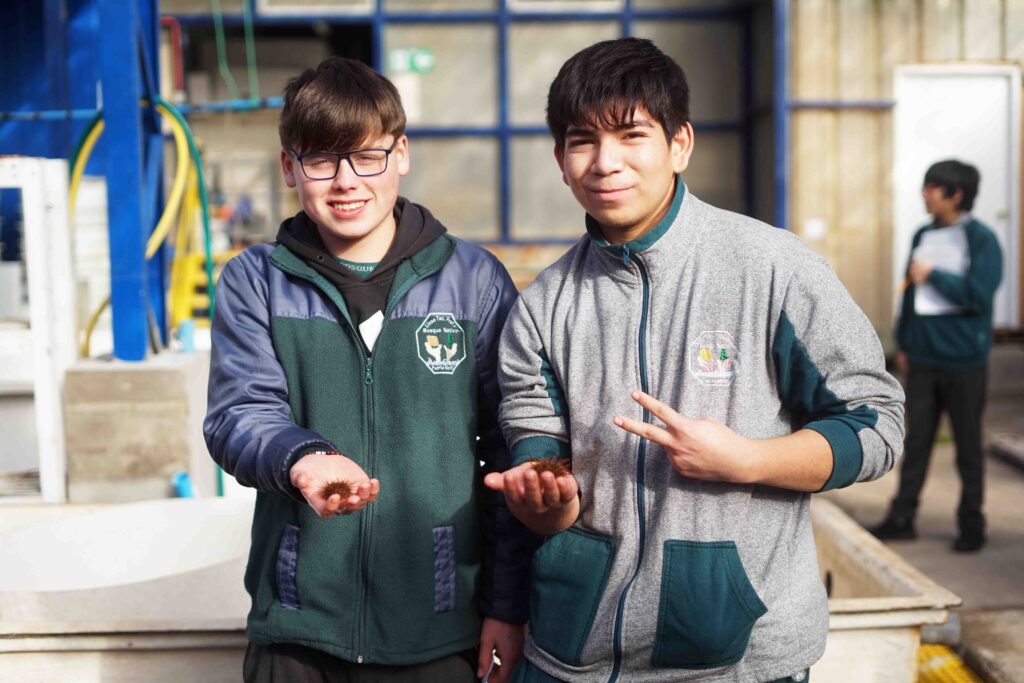
The teacher indicated that “through what you show them in the hatcheryThey start choosing the specialty. There are many of this course who want to enter aquaculture; it was important to show them where they will develop in their practices later.”
Professional internships in APE
Jorge Tillería, head of the hatchery Fundación Chinquihue explained that the foundation currently has an agreement with the native forest lyceum, this for the realization of professional practices with its aquaculture students. “The lyceum has the mode of dual practice, which means that we have four students in practice during the year. They are two middle third and two middle fourth,” he explained. The professional of Fundación Chinquihue said that “we are part of the the promotion of small-scale fisheries and aquaculture in our region and the country. In this sense, the transfer of knowledge to students is relevant for their training, as well as the transfer of knowledge in crops and production that are different from salmon farming. Today there are few institutions working on the expansion of small-scale aquaculture, considering that the Lakes region has great potential to advance its development.”