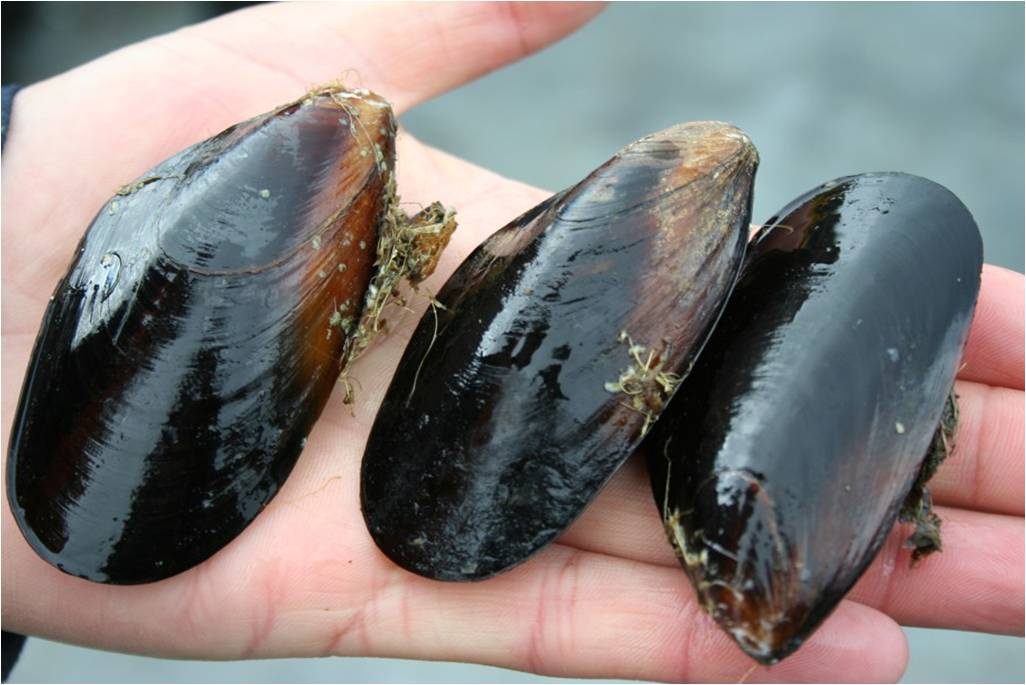
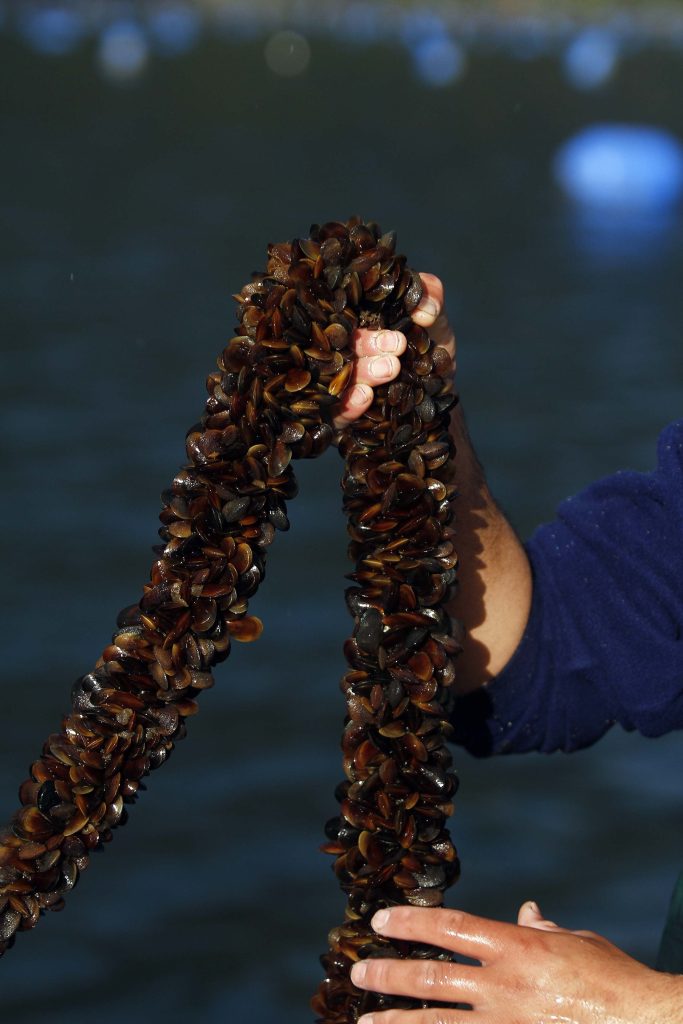
Research aims to evaluate the ecological performance of a laboratory and pre-industrial scale prototype using optimal biomaterial from mussel farming.
National scientists will lead a Fondef I+D project aimed at developing artificial reefs using biomaterial derived from mussel farming. Dr Begoña Peceño from UCN; and Dr Nelson Lagos from UST will head this initiative which includes the collaboration of Dr Jorge Muñoz from UST; and Dr Claudio García from USACh, along with AmiChile e Emit it and Southern Reloncaví A.G.
According to Yohana González, general manager of AmiChile, "this research aims to promote the sustainability of mussel farming and the conservation of marine ecosystems", supporting an initiative that addresses one of the main challenges of the activity: the management of the shells of farmed mussels.
The project, which has a duration of 24 months, aims to evaluate the ecological performance of a laboratory and pre-industrial scale prototype using optimal biomaterial; carry out a comparative economic and environmental assessment with traditional concrete artificial reefs; design a regulatory procedure for the disposal of artificial reefs in the Lakes region; and transfer and disseminate the results to the scientific community, authorities, mussel farmers, innovators and the general public.
Scientific view
Regarding this, the project director, Dr. Begoña Peceño Capilla, clarifies that, "although research on the design of artificial reefs has focused on the use of conventional materials, such as concrete, there is an underestimated problem in these interventions: the high pH of these materials limits the settlement and development of marine organisms. This project aims to address this issue through the recovery of the carbonate present in the shells, which acts as a pH regulator, which could reduce it compared to traditional material.
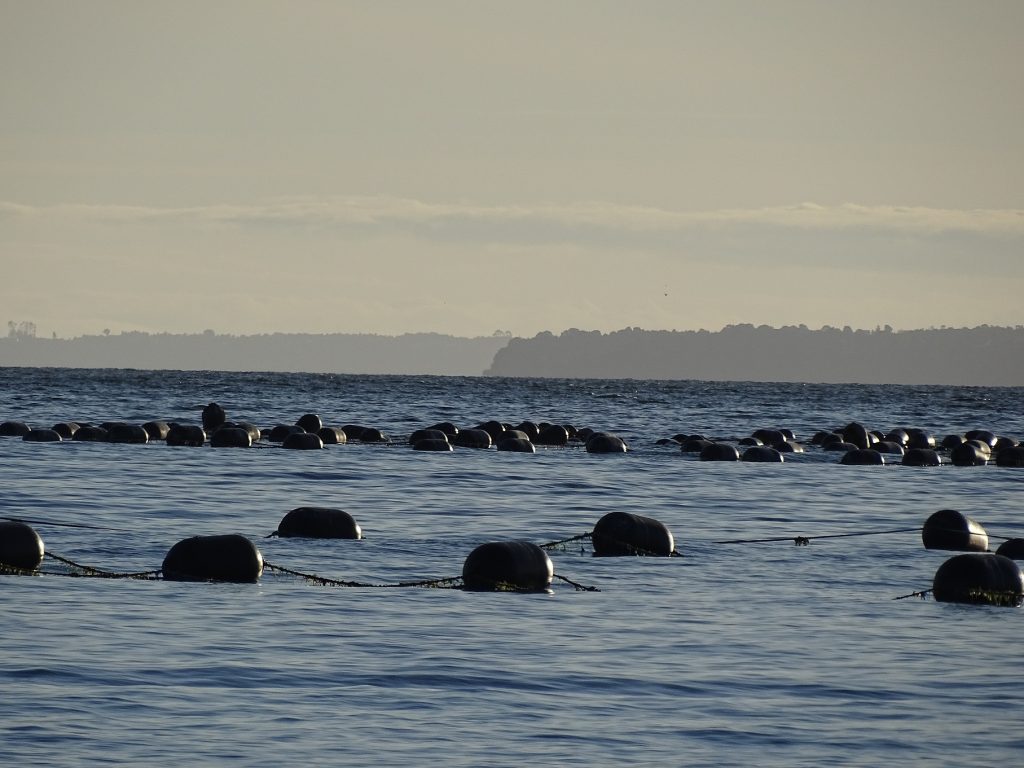
The researcher adds that, in addition, “biogenic accumulation of carbonate in materials facilitates the settlement of more organisms, thus promoting biodiversity in a positive cycle. The main objective of this project is to develop a material and design artificial reefs using aquaculture waste (shells) to improve the settlement of marine organisms. To achieve this, the carbonate composition will be optimized calcium, porosity and heterogeneity of the material.”
Meanwhile, UST Director of the CiiCC Center, Dr. Nelson Lagos, highlights the multidisciplinary nature of the proposal, “since it brings together several approaches that are necessary to achieve research objectives. Some of them are mechanical engineering, eco-engineering, materials sciences, ecodesign, benthic ecology, restoration and solutions based on nature, as well as the transfer of knowledge to potentials users of results. This integration requires high doses of innovation and it is in that direction that the group of researchers of the proposal advances.”
Finally, AmiChile’s executive comments that “we are very optimistic about this research, which will not only contribute to advancing the goals of the next Clean Production Agreement, but could also contribute to increasing marine biodiversity in the Los Lagos region, where mussel production is concentrated.”