Puerto Varas was the host of the most important scientific meeting in the world on Caligus control, bringing together 249 experts from 5 countries and consolidating Chile's leadership in salmon farming research.
With a positive balance and the announcement of its next edition in Bergen, Norway for 2028, this Thursday concluded the Sea Lice Conference 2025, the most relevant international scientific event on the control of sea lice, which for four days turned Puerto Varas into the world center of aquaculture research with the participation of 249 experts from the main salmon producing countries: Norway, Faroe Islands, Ireland, Canada and Chile.
The conference, organized by the Austral University Aquaculture Institute of Chile, the Interdisciplinary Center for Aquaculture Research (INCAR) and the Salmon Technology Institute (INTESAL) de SalmonChile, developed an intense academic program that included 3 keynote speeches, 12 thematic sessions, 60 oral presentations and 25 posters, constituting an unprecedented platform for the exchange of knowledge on health management, animal welfare and technological innovation in salmon farming.
As the organizing committee we feel deeply satisfied with the work carried out. We believe the quality of the presented works was high and very diverse, so we have a great input to contribute to the next edition. We hope that by 2028, research continues to advance more and more towards the applicability of the Caligus issue on a global level, to directly contribute to the sustainability of "sector", said Sandra Marín, from the Institute of Aquaculture and Environment of the Austral University of Chile, Puerto Montt campus.
The event was highlighted by the diversity of its participants, including 51 academics, 43 producers, 126 service providers, 9 trade representatives, 5 sector authorities, 14 journalists and 1 representative from an NGO, reflecting the multidisciplinary and integrative nature that characterized the conference.
The opening day featured the notable participation of Arturo Clément, president of SalmonChile, who along with representatives from the Austral University of Chile and SERNAPESCA, emphasized the importance of promoting sustainable solutions that harmonize productivity, animal welfare and environmental protection.
Thematic sessions covered key areas such as Fish Welfare, Pharmacological and Non-Pharmacological Treatments, Modeling and Epidemiology, Biology and Ecology of Sea Lice, Genetics and Genomics, and Management and Regulations, where innovations such as the use of artificial intelligence for real-time monitoring, phytogenic additives to strengthen fish immunity and new predictive models were highlighted.
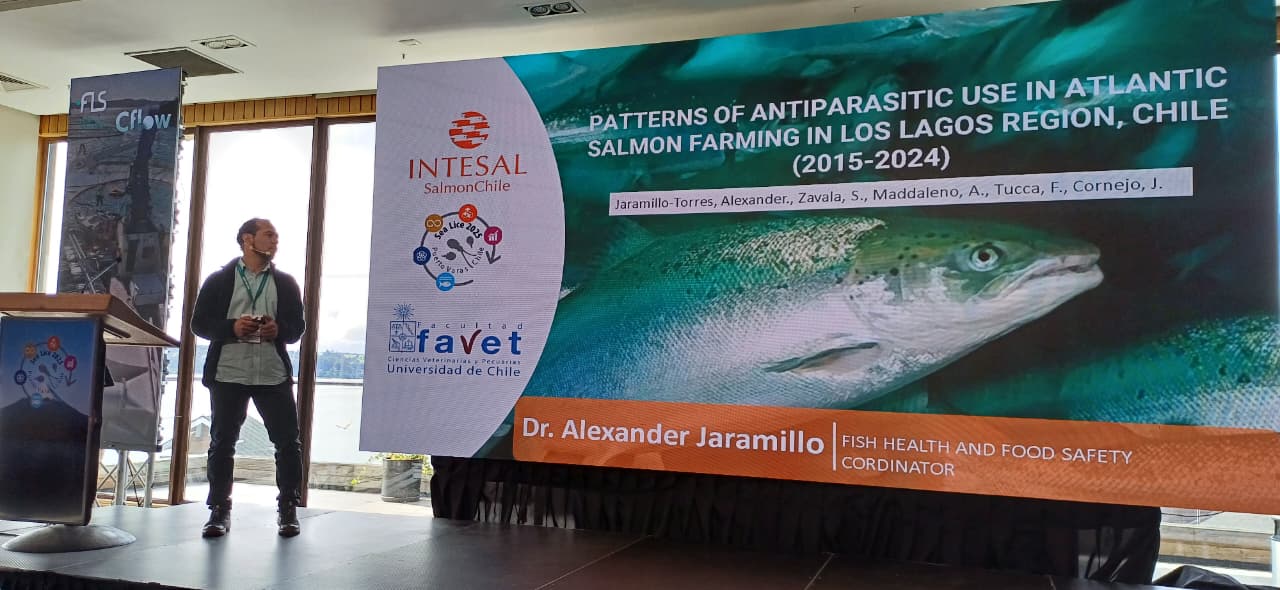
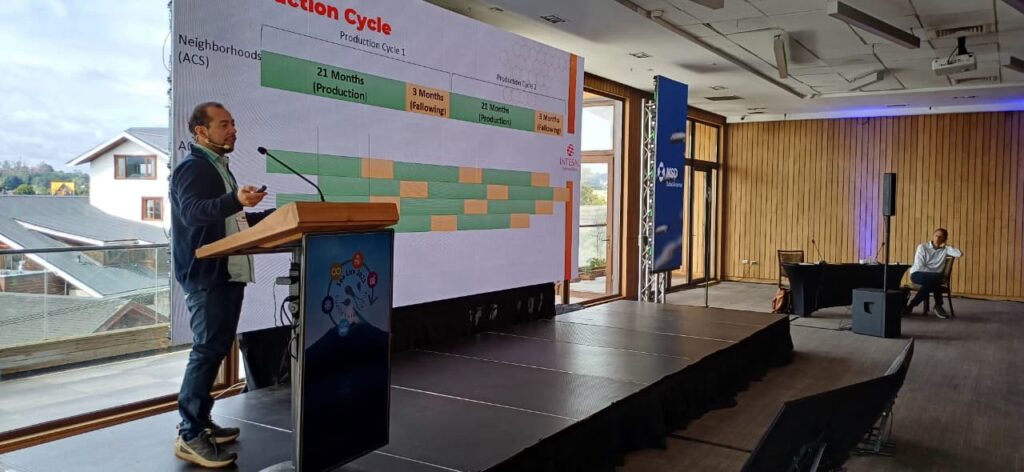
During the sessions on treatments and epidemiology, the Health and Safety Coordinator of Intesal presented the results of a study carried out in collaboration with the Faculty of Veterinary and Agricultural Sciences of the University of Chile on patterns of use of antiparasitics over the last decade.
We have identified significant differences in the use of antiparasitic agents at the level of the ACS (Salmonid Concessions Group). This variability clearly indicates the need to implement differentiated health strategies for each ACS. To achieve effective management of Caligus and protect the health and welfare of the fish, it is essential to move towards the integration of productive, environmental and "sanitarios", said Alexander Jaramillo, Coordinator of Health and Safety at INTESAL.
The event, which will return to Chile in future editions, was supported by important companies in the sector such as MSD Animal Health, Cflow, Sudvet corp, Mowi Chile, AQUA PHARMA Group, Aquabyte, STIM, Tidal and Imenco, and the support of specialized media such as Salmonexpert, Medios AQUA, InfoSALMON, Mundo Acuícola, Panorama Acuícola and AQUACULTURE Magazine.