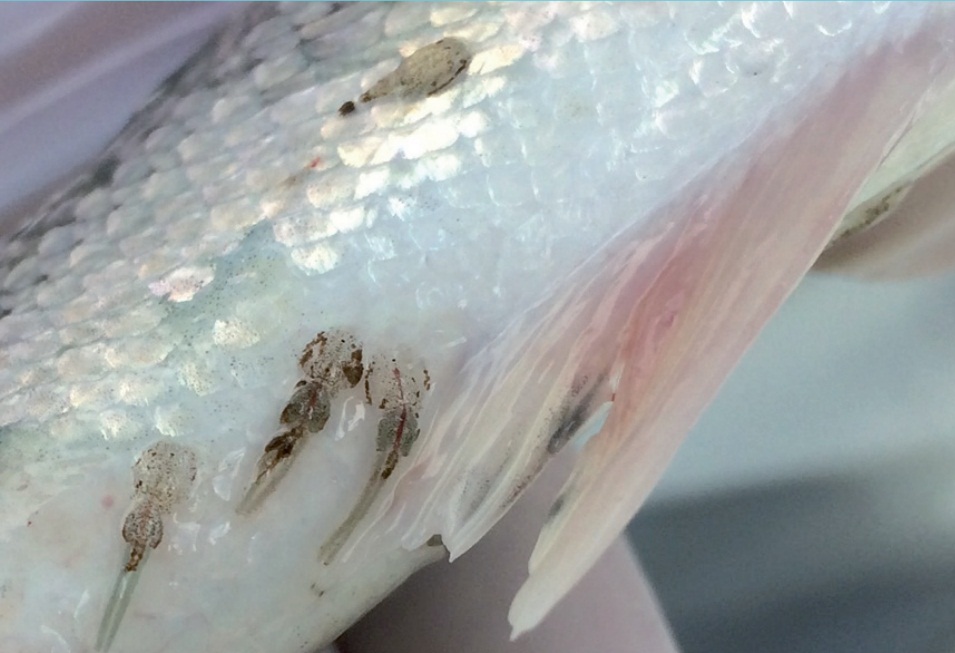
The initiative driven by UNAB in collaboration with INCAR, Salmones Antártica S.A. and Tecnovax Chile SpA, hopes to produce a formula for industrial tests, liquid or in powder, for immersion baths.
The National Agency for Research and Development, ANID, released the results of the IDeA I+D 2025 competition, which supports co-financing of applied research and development projects with a strong scientific component, for the development of technologies that can become new products, processes or services.
Among the selected projects stands out Development of antiparasitic nanoformulations for the mitigation of infestations by Caligus rogercresseyi in salmon farmingawarded by the Academic from the Andrés Bello University, Dr Yorley Duarte, in which the Academic from the University of Concepción (UdeC) and Deputy Director of the Interdisciplinary Center for Aquaculture Research (INCAR), Dr Cristian Gallardo-Escárate, participates, and which has as associated entities Salmones Antártica S.A. and Tecnovax Chile SpA.
"This is a project that comes from previous collaborations with UNAB researchers in the development of nanocomposites with biological activity. Our participation will be in the evaluation of the formulations developed during the project in our fish experimental system," added Dr. Cristian Gallardo-Escárate.
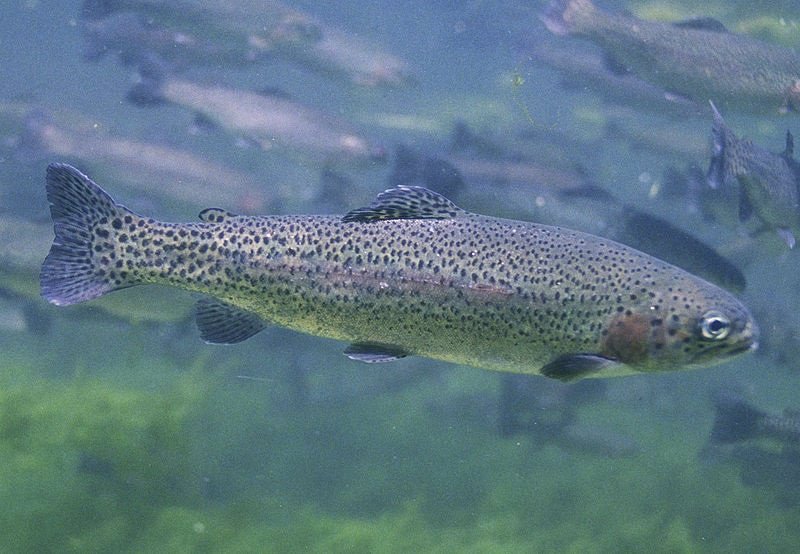
The project focuses on developing a new generation anti-parasitic bath to control sea lice (Caligus rogercresseyi) in salmon. “We will use two unpublished molecules that attack a parasite protein, and incorporate them into various nanoforms (small systems that improve drug delivery),” explains Dr. Yorley Duarte about it.
Nanoforms have several advantages over other mechanisms, especially in terms of resistance. “The new protein and the two new compounds have never been used in treatments, so we avoid the problem of parasites resistant to commonly used drugs,” he added.
In addition, these nanoforms improve effectiveness and have less environmental impact, allowing the drug to adhere better to the parasite and release in a controlled manner, so less active substance is used, much less than current therapies, which means less chemical waste in water and seabed.
Dr. Gallardo-Escarete is a key part of the project and generates a total synergy between research and industrial application. It will conduct the crop efficacy tests. Caligus rogercresseyi and safety studies in salmon, checking that nanoforms eliminate the parasite without compromising the health of fish or leaving residues. In addition, it makes these results operational protocols for salmon farming. “In short, Dr. Gallardo is the critical link that ensures that our solution is effective against the parasite, safe for fish and viable under Chilean regulations,” explained Dr. Yorley Duarte.
The project will be extended for 24 months (2025-2027) and it is expected that a ready formula for industrial tests—liquid or powder—for immersion baths will be obtained at the end.