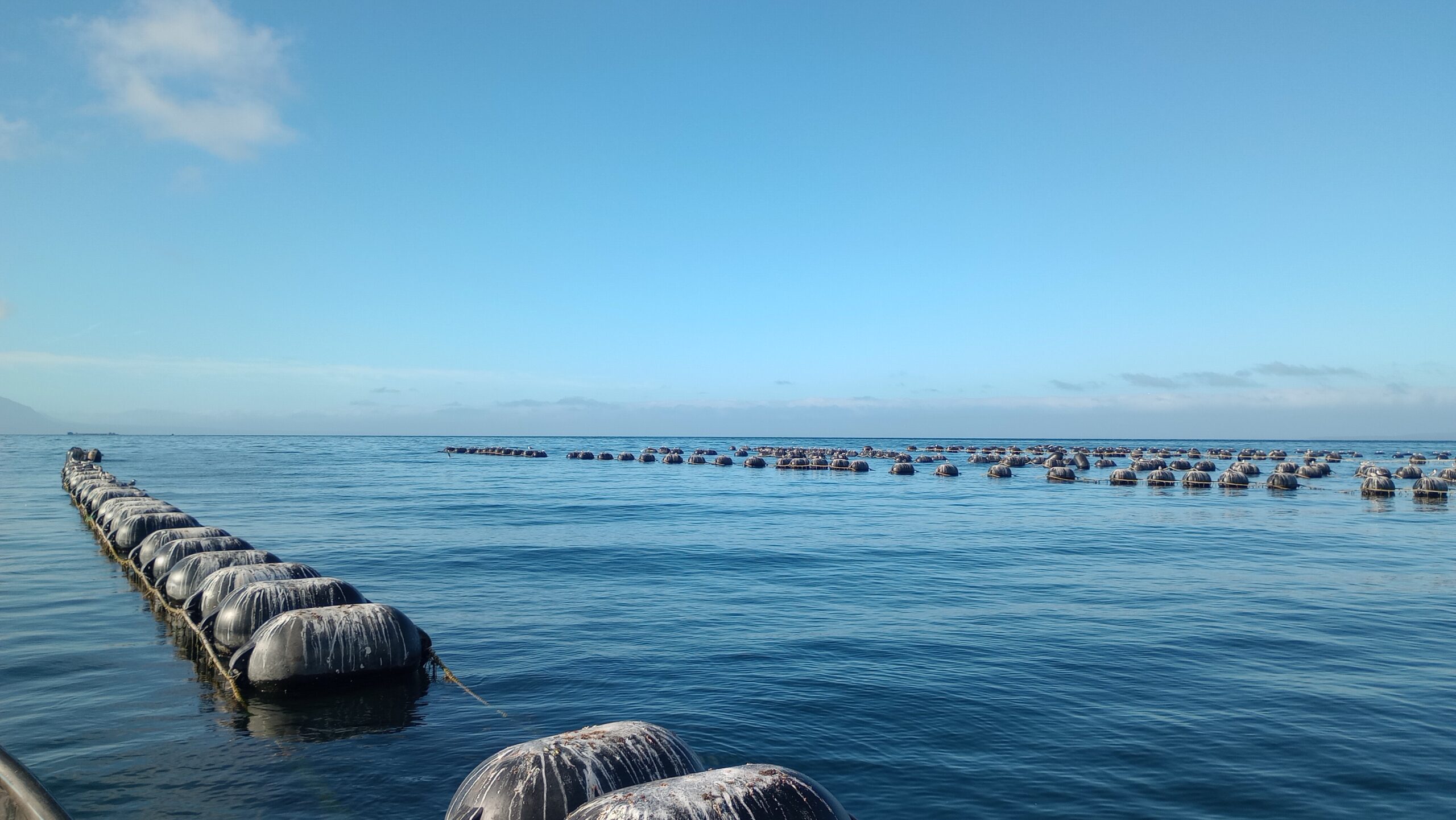
Through mathematical modeling, the research predicted the potential habitat changes that the different species of mussels cultivated around the world could experience due to the effects of climate change.
Habitat displacement of cultivated scallop species due to climate change published in the scientific journal Aquaculture, is the name of the research conducted by Felipe Torres, a doctoral student in Sciences with a focus on Biodiversity and Bioresources at the Catholic University of the Holy Concepción (UCSC). His thesis director is Dr. Carlos Lara and his co-supervisor is Dr. Bernardo Broitman, a professor at Adolfo Ibáñez University and researcher at the Millennium Institute in Coastal Socio-Ecology DRIED.
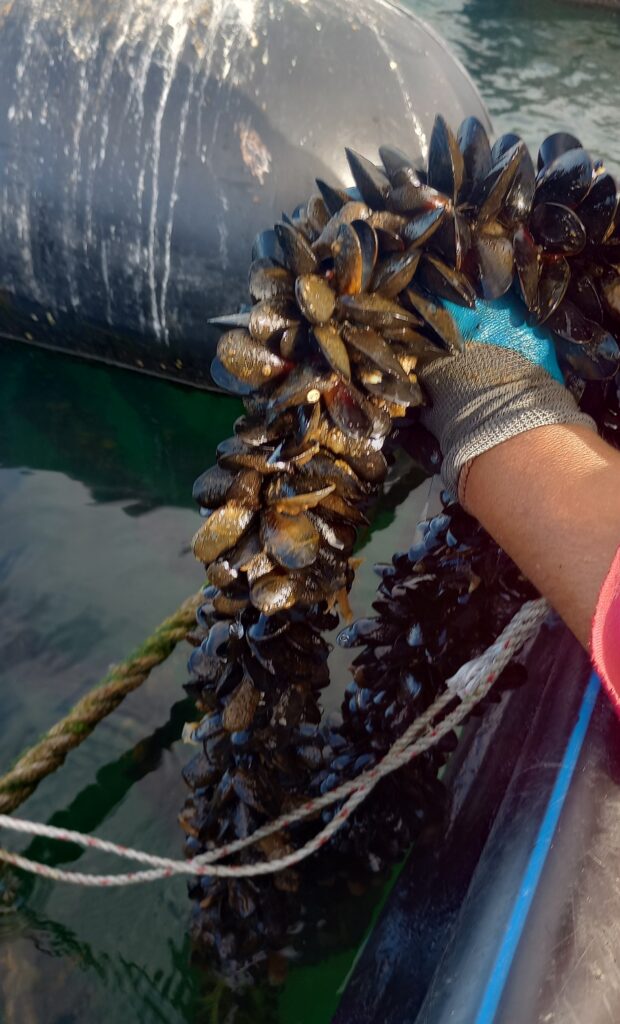
Marine species are changing the places where they live in the oceans in response to climate change, causing them to move towards the poles or towards deeper waters. "The problem with this phenomenon is that it causes coastal communities to reorganize in new ways. This has implications, as it could affect marine species that are of great economic, ecological, social and cultural importance, such as the case" of the mussels. Unlike other species, mussels are farmed directly in the environment, in open farming systems," explained Felipe Torres.
Clams are the most cultivated molluscs around the world. That is why the six most important species for aquaculture were worked on worldwide: Chilean clam (Chilean mussel), Mediterranean mussel (Mytilus galloprovincialis), common mussel (Blue mussel), Korean mussel (Mytilus unguiculatus), Pacific oyster (Green mussel) and New Zealand mussel (Green-lipped mussel).
"Those six species account for 99% of global production. It is crucial to understand how these species will respond to climate change so that the associated industries can adapt and take measures," he added.
Methodology and main results
The research considered a climate projection from 2040 to 2050. This, through mathematical models known as ecological niche modeling.
The idea is to understand which environmental factors present explain the distribution of the species, and then project these relationships in the future using niche models with climate projections.
The environmental variables considered were salinity, surface temperature of the sea and speed of currents. The results show that different species will respond differently to climate change, with some more impacted than others.
“There are species that will experience habitat loss at low latitudes and habitat gain at higher latitudes, that is, their distribution ranges expand towards the poles and lose habitat near the Ecuador line,” Felipe Torres added.
One of the most affected species would be the Mediterranean mussel, as it would lose a lot of habitat. “The entire southern coast of the Mediterranean, the African coast, would no longer be a suitable habitat for this species. Habitats would also be lost on the coast of Greece, which is one of the main producing countries of this species. Other countries such as Spain and Italy would not be so affected,” he said.
In the case of the Chilean chorito, no major climate impacts are expected, since the environment would become unfavorable at the limit of its northern distribution, close to the Biobío and the Gulf of Arauco, but not in the area where it is mainly cultivated. “However, in the Los Lagos Region, under this climate change scenario, the environmental conditions conducive to this species would be maintained and their aquaculture will continue to be developed,” explained.
The results of this study suggest that, under the climate change scenario projected for 2040-2050, environmental conditions in the area where mussel cultivation is currently developing in Chile could remain relatively stable. “However, these results should be interpreted with caution, as they depend on modelling based on specific variables and do not consider all factors that might influence the future of the industry,” he added.
With regard to the relevance of the topic, in addition to its economic importance, it also has an ecological significance. “These organisms are called ecosystem engineers, as they create environments for other species, such as algae, snails, lapes or fish. In addition, choritos can be an alternative food for the future, of low cost, enormous nutritional value and with a carbon and water footprint less than all other sources of protein land,” he said.
The results of the study show that species of choritos important for aquaculture are responding differently to climate change. While climate change is shifting chorito habitats to poles in many parts of the world, conditions in Chile for the vast majority of the mill industry will remain adequate. “Being prepared and adapting to these changes is key to ensuring the sustainability of aquaculture and food security,” concluded Felipe Torres.
Study link: https://doi.org/10.1016/j.aquaculture.2025.742304