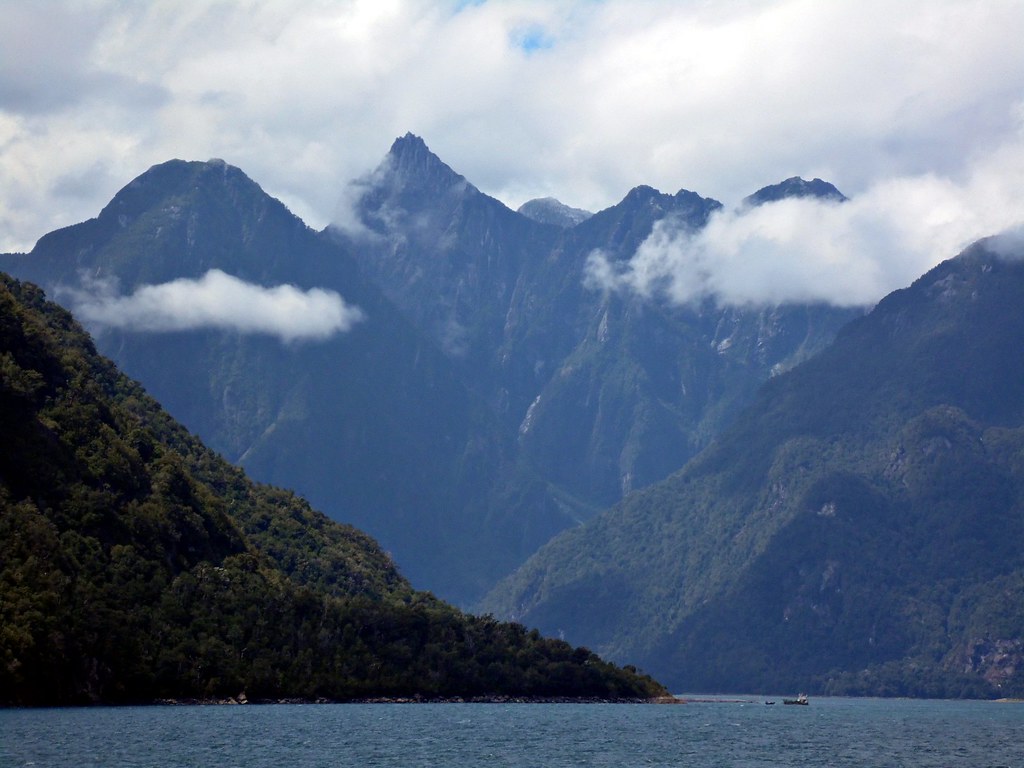
Innovative research by INTESAL's Science Plan deploys aerospace technology to reveal the hydrodynamic dynamics of the Comau Fjord and optimize productive and environmental management, breaking the paradigm of low ventilation in this ecosystem.
The Salmon Technology Institute (INTESAL), the scientific arm of SalmonChile has revealed the results of a pioneering study that uses advanced hydrodynamic modeling to characterize the circulation and ventilation patterns of the Comau Fjord, providing crucial information for more accurate and preventive environmental management of aquaculture.
In the context of its Science Plan, this unique study used the Computational Fluid Dynamics (CFD), a cutting-edge simulation technology used in the aerospace industry, adapted to model the hydrodynamics of geophysical fluids. The objective was to understand in detail the water residence times and ventilation processes throughout the year, integrating natural forcing factors such as wind, river flows, tides and the hydrodynamic effect of fattening centers.
The results of the research are categorical and break with the paradigm of an ecosystem with low ventilation, providing a more accurate view of its behavior. The study revealed that the hydrodynamics of Comau Fjord presents seasonal ventilation patterns characterized by vortices and meanders key to water exchange.
The research showed that for the northern and central sectors of Comau fjord, average water residence times were determined in the range of 4 to 30 days, reflecting a high capacity for renewal and dispersion of loads. The findings showed that ventilation is more intense during autumn and winter in the central and southern areas, while in spring and summer low speed currents prevail that generate conditions of lower turnover, especially in the southern section of the fjord, where residence times reach a maximum of nearly 45 days.
The availability of this robust scientific evidence is fundamental for the sustainable future of the sector, as it allows identifying areas with higher vulnerability to accumulation processes, and thus support strategic decisions regarding the location of centers, the redistribution of biomass and the design of environmental management plans.
"For the first time we have robust scientific information on the internal dynamics of Comau fjord, including its residence times. This evidence allows us to move towards more preventive, planned and knowledge-based aquaculture. In addition, these results challenge the paradigm of an ecosystem with low ventilation, providing a more accurate view of its behavior," said Felipe Tucca, from INTESAL.
Regarding this, Dr. Pablo Cornejo, researcher at INCAR of the University of Concepción, highlighted the technological leap: "The use of cutting-edge simulation technologies has allowed to reveal valuable information to project advances in strengthening the productive and environmental management of aquaculture. I think that technologies of this nature are the gateway for aquaculture to reach the technological standard of" the industry 4.0, an essential basis for planning the growth of this important productive industry.
This work was part of the strategic lines of the INTESAL scientific plan, aimed at providing technical knowledge for sectoral and regulatory decision-making, and strengthening public-private collaboration in the environmental management of marine ecosystems.