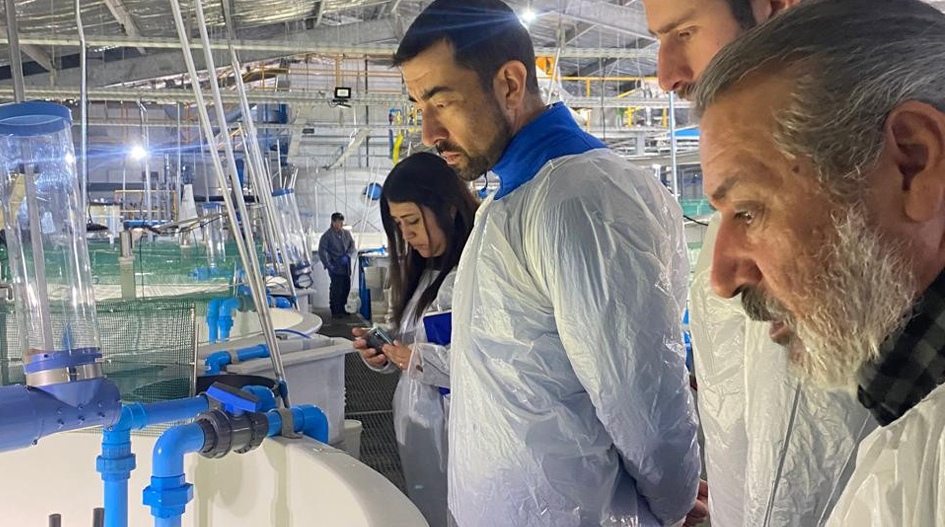
Technology developed by the academics from the Faculty of Engineering of the Catholic University of the Holy Concepción, Pablo Venegas and Katherine Llancaleo, is in the scaling phase.
Hub APTA it aims to manage new business opportunities based on science, identifying the potential of the R&D capabilities of its partners, such as universities and national research centers, to connect them with global markets.
In that context, in its 2023 Report, Hub APTA highlighted as a success case the Self-Cleaning System for Aquaculture led by academics Pablo Venegas and Katherine Llancaleo, from the Faculty of Engineering from the Catholic University of the Holy Concepción.
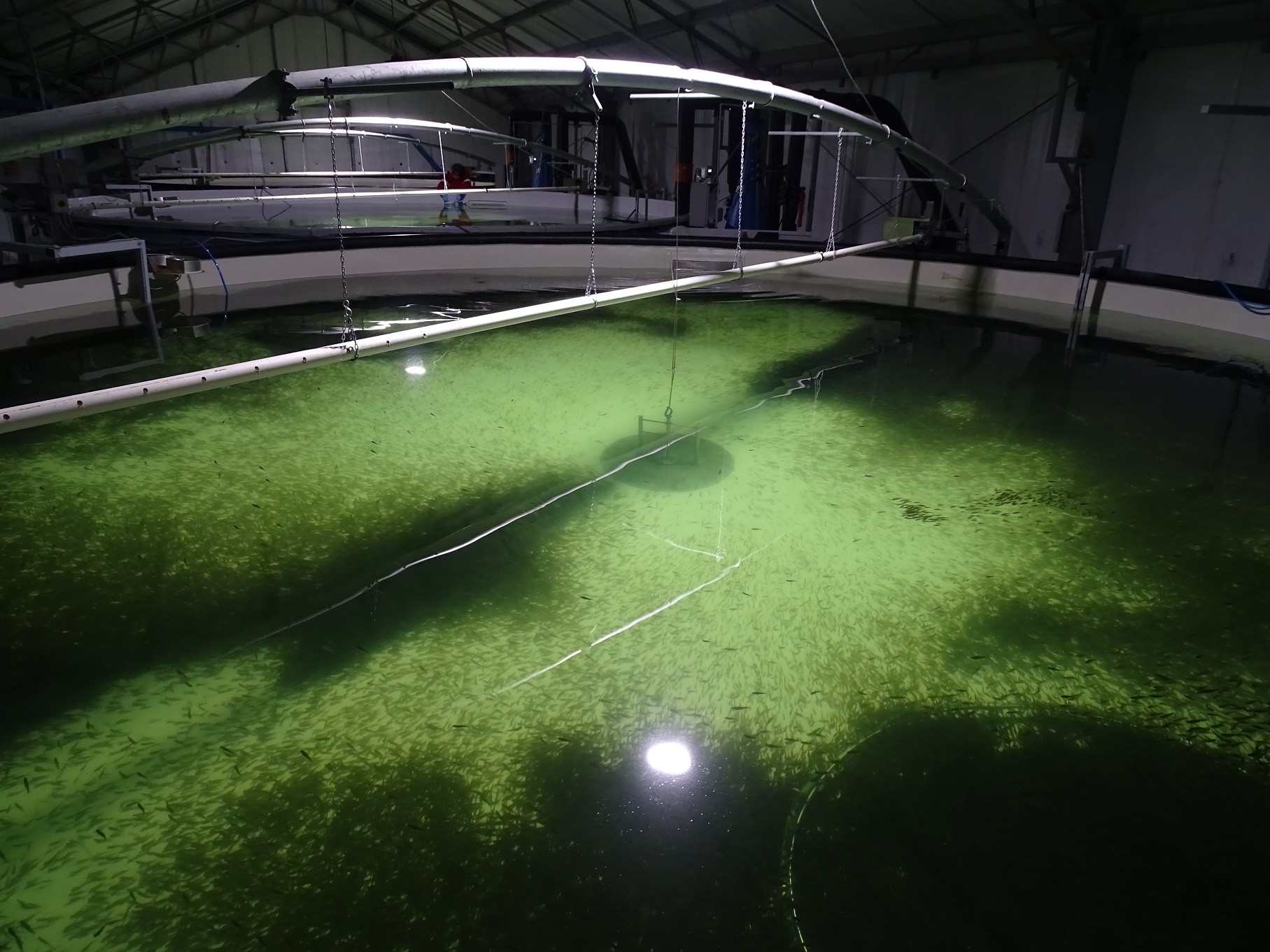
According to the publication, "the Self-Cleaning System promises to improve water conditions in productive environments to increase the survival rate of fry, improve animal welfare and produce healthier salmon. During 2022, thanks to the support of APTA through Fill the Gap, the team from the Catholic University of the Holy Concepción was able to validate the safety in a series of first feeding fry" of the system and obtain the first indications of the expected health benefits.
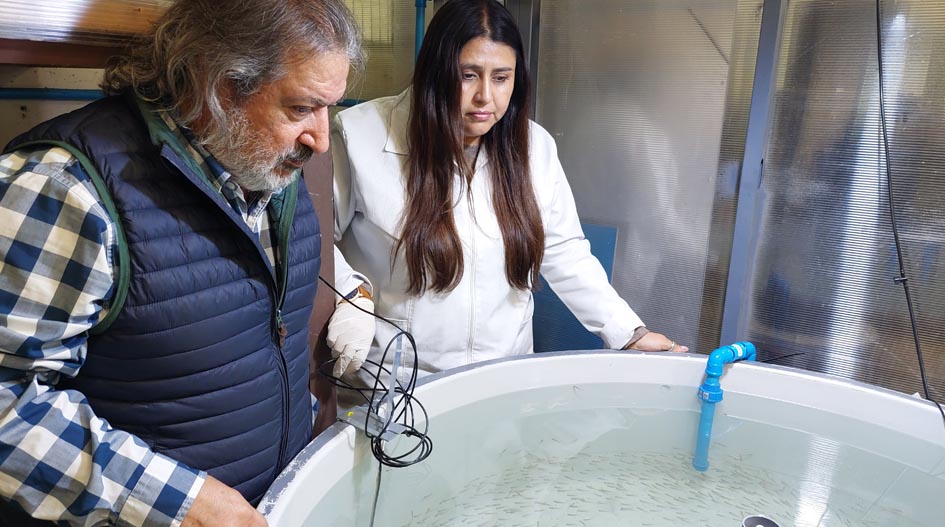
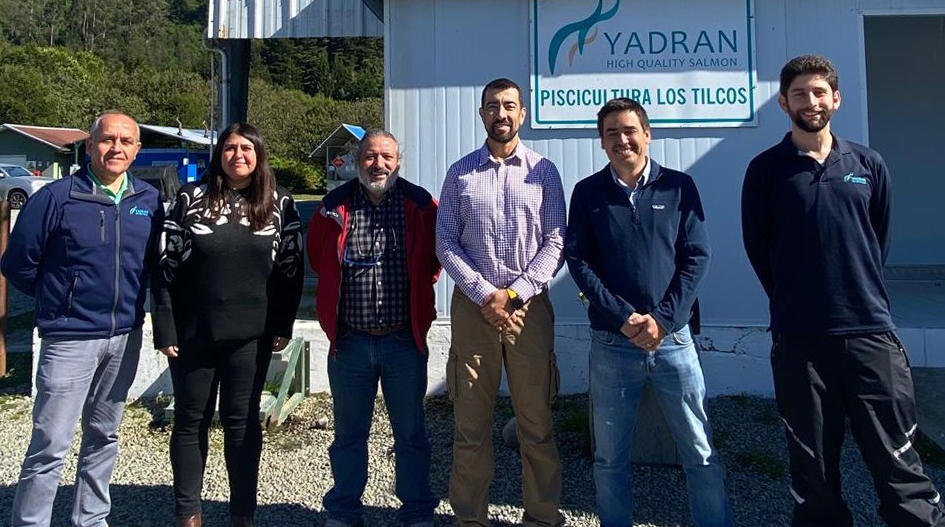
With these results and the linkage with a potential user of the Yadran salmon farming company, during 2023 the project was awarded the Corfo Cree y Valida programme, achieving the maximum subsidy of the call for $420 million, of which $140 million will be for the work to be carried out at UCSC. These funds will be used to implement the technology in real operational scale, with real cultivation densities and to demonstrate its operational and health benefits in at least 2 or 3 complete farming cycles," highlighted Hub APTA.
Success case
Katherine Llancaleo pointed out that "it is very satisfying that our work has been shown by this organization as a success case and that they have contributed to promote and scale the technology, validate its safety and demonstrate its economic and health benefits in a controlled laboratory environment with first feeding fry."
He said that undoubtedly, this is a very important contribution, the recognition and support have allowed them to continue advancing the technology with potential users and/or customers from the salmon farming industry.
In turn, Pablo Venegas pointed out that he found it interesting to appear in the Hub APTA Memory, considering that innovation is not something that happens from one day to the next and it has its time to mature. "Moreover, the publication highlights women's work, such as that of my colleague Katherine Llancaleo, who also participates in the patents," he emphasized.
Meanwhile, Jorge Espinoza, Director of Innovation at UCSC, valued that the technology was highlighted by Hub APTA, considering it is the most important Hub in Chile, where several of the most productive universities in terms of technology and applied research are located. "It is very positive that one of the technologies that has been in development for some time is being recognized, as it is a success case," he emphasized.
While, from the Technology Transfer Office of the Innovation Directorate of the University of the Holy Concepción, Jorge Mancilla, R&D+i manager of the Engineering 2030 Project of the Institution, added that programs such as Fill the Gap, from Hub APTA, highlight the self-cleaning disc technology, "it is important to accelerate the transfer, negotiation and commercialization in order to reach the market with the best" strategies. In this way, bidirectional benefits are generated for institutions carrying out R&D and productive companies.
Finally, Varinka Farren, Executive Director of Hub APTA, stated that they are pleased with the results of the self-cleaning disc for aquaculture ponds, which is a project awarded by the Fill The GAP of the first generation (2021), where there was joint work with the UCSC team.
We wanted to be very involved to discover different models provided by our partner institutions and companies in order to reach the Crea and Valida of Corfo. We believe that collaboration is very important, in this case with UCSC, with the researchers and with the Hub, as this opened up different perspectives, we worked with several actors, people who have a lot of knowledge regarding how to use the disc. That it has managed to "support to continue testing and piloting, we find it fantastic," he appreciated.
The technology is currently in the scaling phase in the Aquatic Engineering Laboratory of UCSC and is expected to be tested in the Yadran company's facilities in Puerto Montt in June or July in a semi-industrial validation cycle.