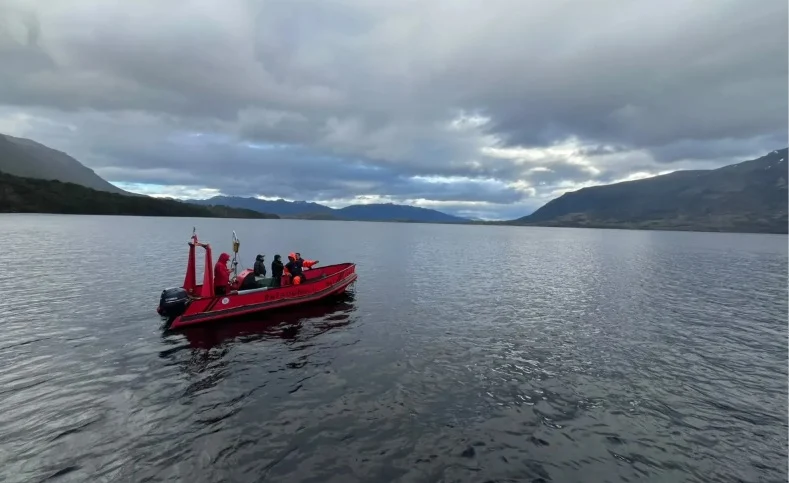
The work considers a baseline of benthic ecosystems and the development of tools to project climate and environmental variability in farming centers and groups of salmon farming concessions.
In the framework of its strategic objectives, the Interdisciplinary Center for Aquatic Research, Applied Research, INCAR² It launched its first scientific campaign in the Magallanes Region, an expedition that seeks to deepen the knowledge of the ecosystems that support salmon farming and provide tools for the sustainable development of the activity in the southernmost part of Chile.
The initiative is part of the RL6 Research Line, led by Doris Soto, whose main objective is to contribute to the strengthening of the resilience of aquaculture against external factors such as climate variability, taking into account that the productive activity itself can influence the resilience capacity of the natural ecosystems that support it.
One of the priority challenges for 2026 and 2027 is to begin addressing salmon farming in Magallanes in an integrated way, a region with unique environmental conditions and growth potential for the sector. For this, INCAR² has defined two complementary lines of action.
The first consists of developing a baseline of natural benthic ecosystems, which will serve as a reference to assess potential effects of aquaculture activities on the environment. This task is particularly relevant because the marine ecosystems of Magallanes are among the most pristine in the world; because salmon farming has a more recent history in the region than in other parts of the country; because their environmental and productive indicators show favorable results; and because much of the activity takes place within or near marine areas subject to different levels of protection.
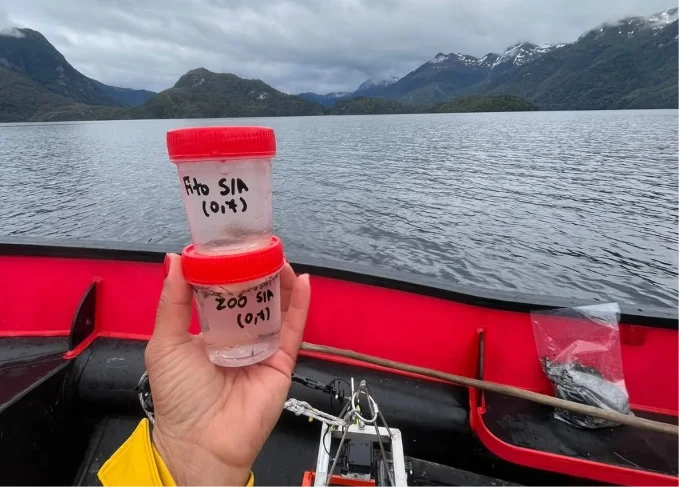
According to the center, the generation of solid scientific information will contribute evidence to strengthen the trust of society and consumers that aquaculture production can be developed within the limits and capacities of the ecosystems. This line of research is led by Claudia Daniela Andrade, academic from the University of Magallanes (UMAG), and Adjunct Researcher of RL6 of INCAR².
The second line of work contemplates the development of a climate projection and environmental variability model for the aquaculture centers in Magallanes. This tool will incorporate environmental variables into models for productive and ecological risk assessment for Salmon Farming Clusters (ACS) and aquaculture centers. The work is led by Jorge León-Muñoz with the support of Pamela Linford, postdoctoral researcher recently incorporated into the line.
From Bahía Tranquila to the Taraba Sound
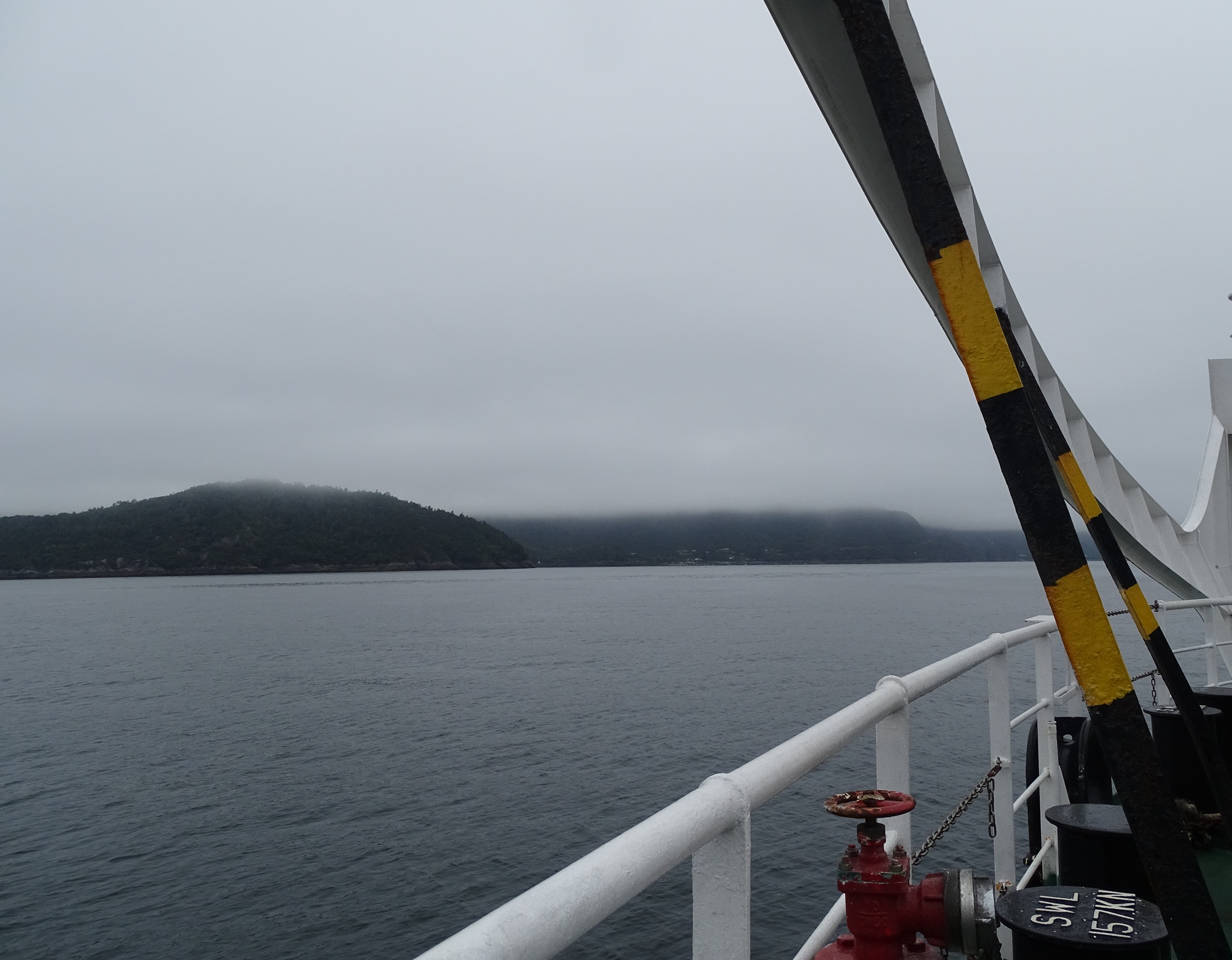
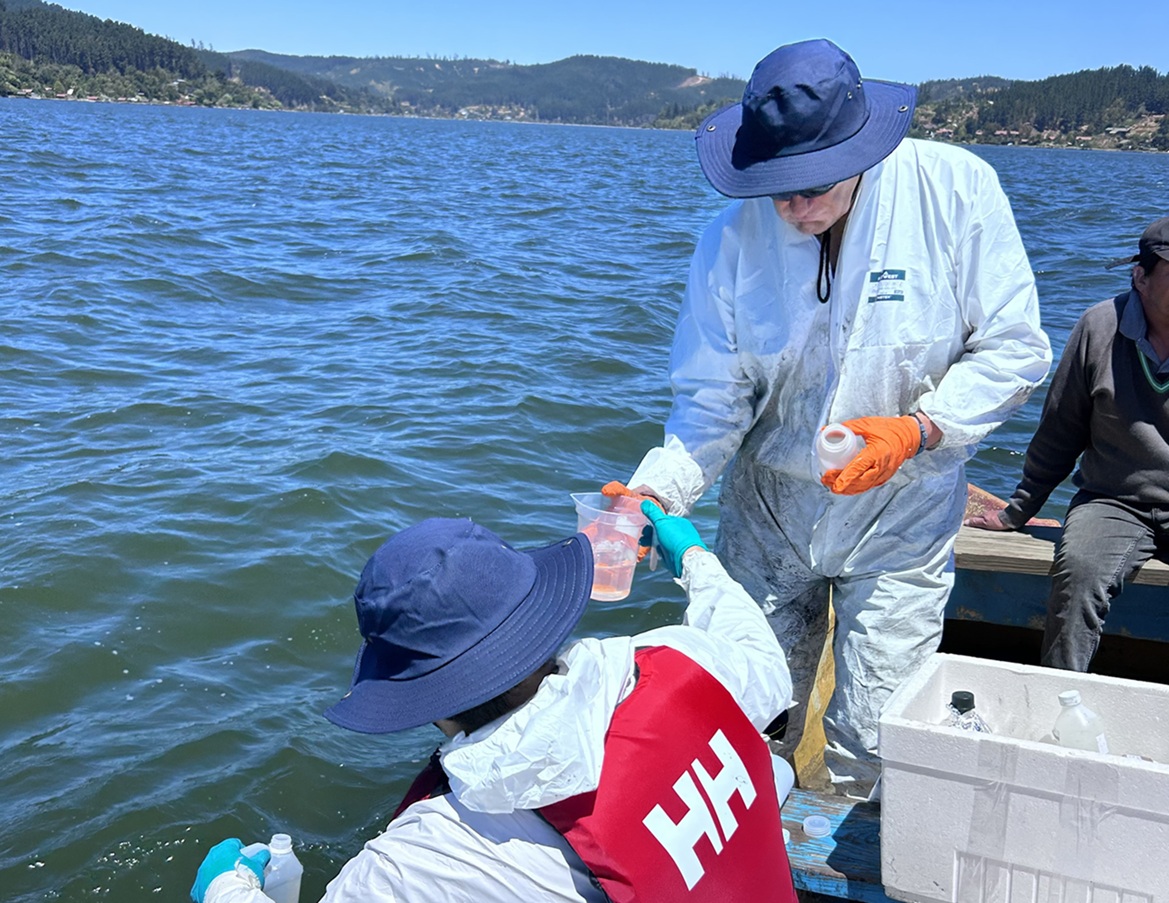
As part of these actions, on Sunday 18 October a ship-based research campaign was launched by Andrade and his team from the Ecology Laboratory of the University of Magallanes. The expedition includes sampling of benthic communities and oceanographic variables in ACS 47 and 48, located in the Bahía Tranquila area of the Golfo Almirante Montt.
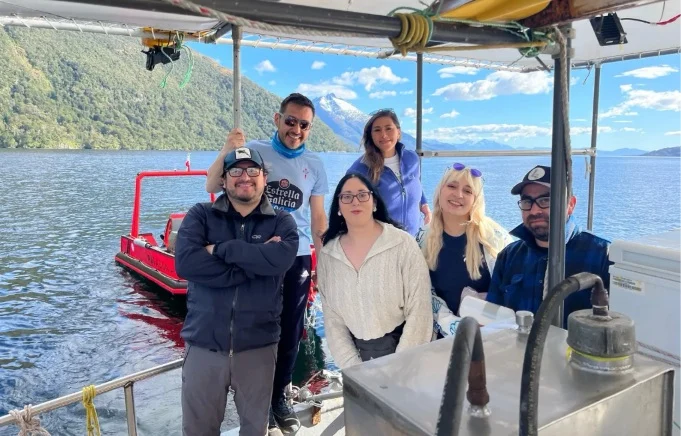
The main purpose of this campaign is to contribute to the construction of a baseline that allows characterizing the natural state of the benthic ecosystems, evaluating their resilience capacity and identifying indicators that help determine environmental impact levels compatible with sustainable salmon farming.
The research will also take advantage of the experience accumulated by the Functional Ecology Laboratory of UMAG in the study of different natural factors affecting these communities, among them the recurrent harmful algal blooms (HABs) and the influence of glaciers on environmental conditions and the biodiversity of the territory.
For this reason, the campaign will also include sampling in the Seno Taraba, corresponding to ACS 43, a sector that has markedly different oceanographic characteristics from Bahía Tranquila. In this area a non-toxic algal bloom was recently recorded that caused the death of more than 900 tonnes of salmon, therefore it is of great scientific interest to understand the environmental dynamics affecting the activity, especially considering the possible effects of the Niño that we are experiencing.
From INCAR² they highlight that the participation of the Functional Ecology Laboratory of the University of Magallanes, led by Dr. Claudia Daniela Andrade, is being key to promoting new research capabilities in the region and generating knowledge that contributes to the development of a more sustainable, resilient and evidence-based aquaculture.